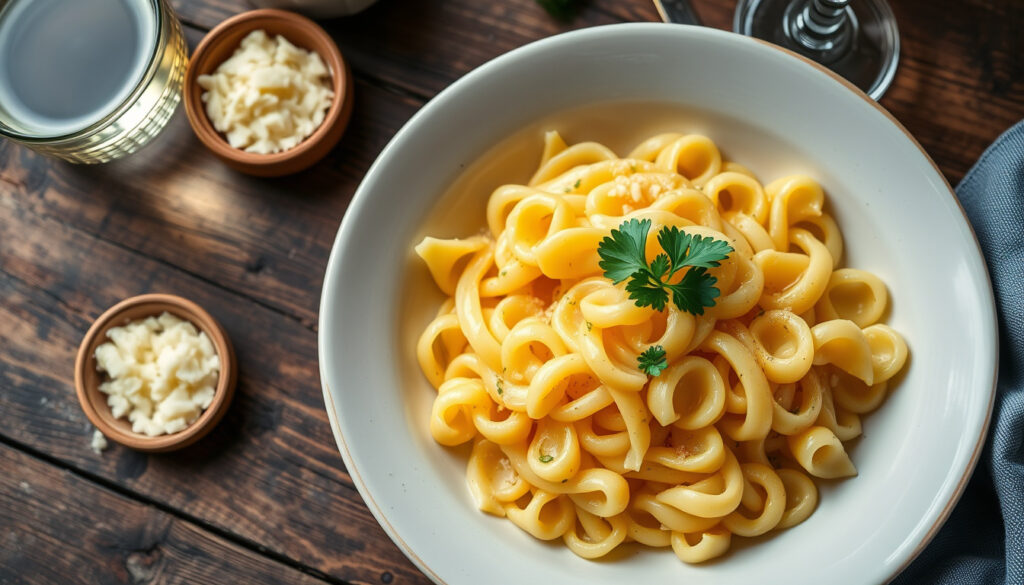
What Is a Spaetzle? Ingredients, Taste, and Best Pairings
If you’ve ever caught sight of a heap of soft, irregularly shaped dough swimming in butter and cheese, you’ve probably wondered what that bowl of goodness is called. It’s spaetzle (pronounced SHPEH-tsleh), the rustic egg noodle from southwestern Germany that occupies a spot somewhere between a noodle and a dumpling—and this guide explains what it’s made of, what it tastes like, how it differs from pasta, and how Germans have been pairing it with everything from cheese to lentil stew for centuries.
Name meaning: Little sparrows · Type: Fresh egg noodle or dumpling · Origin: Swabia, southwestern Germany · Base dough: Flour, eggs, salt, water or milk · Texture: Soft, springy, chewy with a rough surface · Classic serving: Cheese spaetzle with melted cheese and onions
Quick snapshot
- Spaetzle is an egg-based dough from Swabia, Germany (Wikipedia)
- Basic ingredients: flour, eggs, salt, and water or milk (TasteLab Food)
- Often served with cheese, butter, or gravy (Dictionary.com)
- Whether to classify spaetzle as a pasta or a dumpling varies by source (Merriam-Webster)
- Exact spelling and regional names differ (Spätzle, Spätzla, Knöpfle) (German Wikipedia)
- Calorie counts vary widely depending on cooking method and toppings (Merriam-Webster)
- Whole-grain and gluten-free spaetzle are growing in popularity
- Spaetzle makers and extruders are becoming common kitchen tools beyond Germany
For home cooks who want an affordable, forgiving dough that clings to sauce, spaetzle delivers exactly what pasta can’t: a rough, porous surface and a soft chew that needs no special equipment beyond a colander.
Here is a quick-reference snapshot of what spaetzle is at a glance.
| Property | Details |
|---|---|
| Also known as | Spätzle, Spaetzle, Knöpfle (smaller variant) |
| Type | Fresh egg noodle or dumpling |
| Origin | Swabia, Baden-Württemberg, Germany |
| Main ingredients | Flour, eggs, salt, water or milk |
| Gluten | Contains gluten |
| Typical toppings | Butter, cheese, gravy, mushrooms |
What is a spaetzle?
Spaetzle is a soft, fresh egg dough from southwestern Germany. The name is a Swabian diminutive of Spatz (sparrow), referring to the small, irregularly shaped pieces that resemble little birds. The dough is pushed through holes into boiling water, producing pieces that range from short squiggles to long strands, each with a rough, porous surface (Wikipedia).
It is most strongly associated with the Swabia region of Baden-Württemberg, though it is also a staple in Austria, Switzerland, and parts of Alsace (WisdomLib). Smaller variants are sometimes called Knöpfle (German Wikipedia).
What are spaetzle noodles?
- They are not a single noodle shape — every strand or lump is different because the dough is pushed through a hole-pressed device, resulting in pieces that range from short squiggles to long strands.
- Several major dictionaries, including Merriam-Webster, define spaetzle as “a small dumpling cooked by running batter through a colander into boiling water,” emphasizing its dumpling-like handling rather than a strict pasta identity.
- Cambridge Dictionary classifies it as a food term for a German dish and provides pronunciation variants (Cambridge Dictionary).
Is spaetzle German?
Yes, but with a precise region: it originates from Swabia, the part of southwestern Germany that now falls within Baden-Württemberg. The German Wikipedia entry notes that Spätzle are a “southern German egg pasta” and that regional names include Spätzla, Spatzen, Spatzeln, Spätzli, and Spätzlich. It is so central to Swabian identity that in 2016 the Swabian region even designated Spätzle as an intangible cultural heritage.
Bottom line: Spaetzle is a soft, irregular egg dough from Swabia, not a standardized pasta shape. Its rough texture and dumpling-like body are its defining assets.
What is German spaetzle made of?
The ingredient list for spaetzle is short: flour, eggs, salt, and a liquid (water or milk). Most culinary references agree on this core (TasteLab Food; Draeger’s Market). Some recipes add a pinch of nutmeg (Kitchen Project).
What makes spaetzle distinct from dried pasta is the dough hydration. Spaetzle batter is soft and sticky — it should be thick enough to slowly drip from a spoon, but not so stiff that it can be rolled. This soft dough is what gives spaetzle its characteristic chewy-tender bite.
How do you make spaetzle at home?
Six steps, no pasta machine needed:
- Mix the batter. Combine 2 cups flour, 3 eggs, ½ tsp salt, and about ¼ cup water or milk. Stir until smooth and sticky. Let rest 15 minutes.
- Bring a pot of salted water to a boil.
- Press the dough through holes using a spaetzle maker, a colander, or a board-and-scraper technique.
- Cook until they float — usually 1–2 minutes.
- Drain.
- Sauté in butter or layer with cheese and bake.
The implication: the soft, sticky batter is what separates spaetzle from every other noodle—learn it once and you can replicate it without a recipe.
What does spaetzle taste like?
Spaetzle has a mild, eggy flavor similar to fresh egg noodles. The texture is soft on the outside with a springy, chewy center. Because the shape is irregular and the surface is rough, it clings to butter, sauce, and cheese better than smooth pasta (Dictionary.com).
Plain spaetzle is rarely eaten alone. It is a base—like plain rice or polenta—that takes on the flavour of whatever it’s paired with. That’s why questions like “what does spaetzle taste like?” often lead to answers about what it’s cooked with.
How is spaetzle different from pasta?
This is the question that trips up most people. The easiest answer: dried pasta is made from durum wheat semolina and water, then extruded and dried; spaetzle is a fresh, high-hydration egg dough that is boiled immediately. But there are deeper contrasts worth examining.
Three key differences, one pattern: dough handling determines everything.
| Attribute | Spaetzle | Dry pasta (spaghetti, penne, etc.) | Fresh egg pasta (pappardelle, tagliatelle) |
|---|---|---|---|
| Dough base | All-purpose flour, eggs, water/milk | Durum semolina + water | “00” flour + eggs |
| Hydration | High (soft, sticky batter) | Low (firm, kneadable dough) | Medium (smooth, rolled) |
| Shaping method | Pressed/scraped through holes | Extruded or rolled and cut | Rolled and cut into sheets or strands |
| Texture | Soft, chewy, rough surface | Al dente, smooth, firm | Tender, silky, can be thin |
| Cooking time | 1–2 minutes (fresh) | 8–12 minutes (dried) | 2–4 minutes (fresh) |
| Typical use | Side dish for meat, cheese, or sauce | Main course with heavy sauce | Main course with delicate sauce |
The trade-off: dry pasta offers convenience and shelf-stability; spaetzle offers a unique, rustic texture that no dried noodle can mimic.
What’s the difference between spaetzle and schnitzel?
They are not similar at all. Schnitzel is breaded, fried veal or pork. Spaetzle is the starch side dish that often accompanies schnitzel on German plates.
Are gnocchi and spaetzle the same?
No. Gnocchi is typically made from potatoes and flour, then boiled; spaetzle uses eggs and flour as the primary binders. The texture is different: gnocchi is pillowy and dense, while spaetzle is more elastic and irregular.
What pasta is similar to spaetzle?
The closest relatives are fresh egg noodles (like tagliatelle or pappardelle) and maltagliati—the “badly cut” scraps that Italian cooks make from leftover pasta dough. But none of them replicate spaetzle’s rough, dimpled surface.
Is spaetzle healthy to eat?
Spaetzle is primarily carbohydrates from white flour with protein from eggs. A typical serving of plain boiled spaetzle (about 1 cup) provides roughly 220–250 calories, 8–10 g protein, and 40 g carbohydrates. But the real nutritional impact comes from what you add: a cheese spaetzle dish with butter and melted Gruyère can easily top 600 calories per serving and 30 g of fat.
- Plain spaetzle is moderate in sodium and contains B vitamins from eggs.
- Whole-wheat spaetzle adds fiber and lower glycemic impact.
- Toppings such as brown butter or cream sauces significantly raise saturated fat and calorie density.
For anyone watching their intake, the verdict is: spaetzle itself is not unhealthy, but the classic pairings push it into indulgence territory.
What do Germans eat with spaetzle?
This is where spaetzle shines. The dish is rarely served alone; it is designed to soak up flavours. The two most famous preparations are:
- Cheese spaetzle (Käsespätzle): Spaetzle layered with Alpine cheese (Emmentaler, Gruyère, or mountain cheese) and topped with fried onions. A Swabian comfort classic.
- Lentil stew with spaetzle: A hearty vegetarian combination where the spaetzle is served alongside or mixed into a thick lentil stew.
Meat pairings include schnitzel, roast pork (Schweinebraten), rouladen, sausages, and game.
What goes well with spaetzle for dinner?
Beyond the classic pairings, spaetzle works as a side with roasted poultry, braised beef, or mushroom ragout. It also stands alone as a main when baked with cheese, onions, and herbs.
What kind of sauce goes with spaetzle?
Common sauces include brown butter, mushroom cream, gravy, and lentil stew. The rough surface of spaetzle holds sauce better than smooth pasta, which is why it pairs well with both thin broths and thick reductions.
What cheese is best with spaetzle?
Melting cheeses like Emmentaler, Gruyère, and mountain cheese are preferred for traditional Käsespätzle. These Alpine cheeses provide the nutty, creamy flavor that defines the dish.
“One of Germany’s most beloved foods, spaetzle should be made at home for the authentic, homemade version.”
— Daring Gourmet (recipe intro)
The pattern: spaetzle’s neutral flavor makes it the perfect canvas for rich, bold toppings that define German comfort food.
Clarity: what we know and what remains fuzzy
Confirmed facts
- Spätzle is an egg-based noodle or dumpling from Germany (Wikipedia).
- The basic dough is made from flour, eggs, salt, and water or milk (TasteLab Food).
- Spätzle is a Swabian dish named after little sparrows (Wikipedia).
- Spaetzle is served with cheese, sauces, or as a side to meat dishes.
What’s unclear
- Exact spelling and accent vary by region: Spätzle, Spaetzle, Spätzli, or Knöpfle (German Wikipedia).
- Whether to classify spaetzle as pasta or dumpling varies by source and region (Merriam-Webster).
- Exact calorie counts depend heavily on recipe and cooking method.
- Whether spaetzle should be categorized as a main dish or side dish changes with preparation and region.
“Spätzle is a type of southern German egg pasta of irregular form with a rough, porous surface.”
— Wikipedia (Spätzle entry)
For American home cooks searching for an easy, crowd-pleasing alternative to boxed pasta, spaetzle offers a forgiving dough that needs no special expertise. For health-conscious eaters, the plain version fits a balanced diet, but classic cheese spaetzle is best treated as an occasional treat.
For anyone curious about German home cooking, spaetzle is the dish that bridges noodle and dumpling, mild enough to pair with anything yet distinctive enough to stand out. The choice is clear: keep spaetzle as your go-to weeknight side, or invest in a spaetzle maker and explore the dozens of regional variations. Either way, you’ll be eating a piece of Swabian tradition that has survived for centuries for a reason.
Related reading: What is Spaetzle? A Complete Guide to This German Egg Pasta · The Origin of Spaetzle – Oktoberfest and Culinary History
en.wikipedia.org, merriam-webster.com, simple.wikipedia.org, dictionary.com
Frequently asked questions
How is spaetzle eaten?
Spaetzle is eaten as a side dish with meat and sauce, as a main course with cheese (Käsespätzle), in lentil stew, or simply sautéed in butter with herbs.
How do you pronounce spaetzle?
The word is pronounced SHPEH-tsleh. The “z” makes a “ts” sound, and the “ä” is like the “e” in “bed.”
What is a spaetzle maker?
A spaetzle maker is a hand-held tool with a hopper and a sliding base that presses the soft dough through holes into boiling water. Some are press-style; others are like a coarse grater.
Can you make spaetzle without a spaetzle maker?
Yes. Use a colander with large holes, a slotted spatula, or the traditional board-and-scraper method where dough is scraped off a wet board into boiling water.
Are spaetzle and egg noodles the same?
Not exactly. Both use eggs and flour, but egg noodles are typically rolled and cut into consistent shapes, while spaetzle is pressed through holes, creating irregular, soft lumps and strands.
More related posts
 New Ubin Seafood CHIJMES Menu: Must-Try Dishes & Prices
 Best Digital Door Lock Singapore: Top HDB Picks
 Custom Engagement Rings Singapore: Best Prices & Options
 White-Bellied Sea Eagle: Facts, Habitat, and Comparisons
 Seminar Buffet Catering Singapore: Prices, Reviews & Best Providers
 How to Top Up TikTok Coins: Safe Ways to Buy Online
 Gold Rate in Singapore Today: 22K & 24K Per Gram
 Blue Piano Sheet Music: Free Downloads for Yung Kai, Roblox & More
