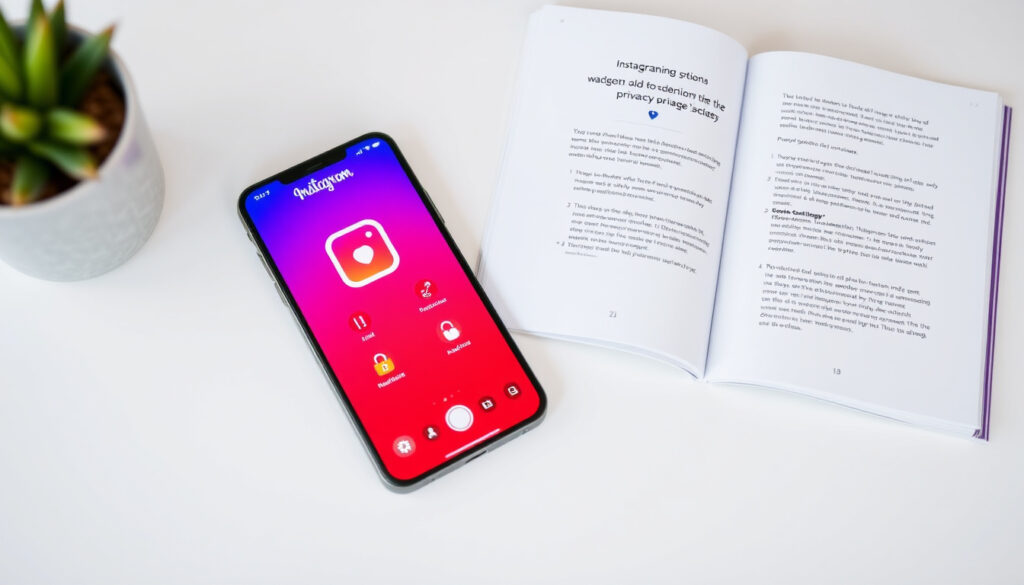
How to Use Instagram: Beginner’s Guide, Rules, and Privacy Tips
You’ve just downloaded Instagram, and the first thing you notice is how much it already knows about you. That’s by design — but the platform gives you more control than most people realize. This guide walks through the privacy settings, account rules, and trade-offs that matter most for a beginner, using official guidance from Instagram and independent testing from Consumer Reports.
Instagram at a glance: 2 billion+ monthly active users, 500 million daily active Stories users, 95 million posts per day, 62% of users under 35, and a recommended photo resolution of 1080 x 1080 px.
Quick snapshot
- You can control who sees your posts, who comments, and who follows you (Instagram Help Center)
- Turning your account private is the main privacy toggle (Consumer Reports)
- Close Friends lists limit Story visibility to selected people (Consumer Reports)
- You can limit ad targeting and off-Meta data sharing via Accounts Center (Consumer Reports)
- Whether Instagram will ever introduce profile view notifications
- Exact algorithm weighting for privacy-focused content strategies
- How Instagram’s ad targeting changes after disconnecting off-Meta activity
- Whether Instagram’s privacy guidance will ever be consolidated into a single checkup like Facebook
- No current timeline for profile view notifications (Instagram Help Center)
- Privacy Checkup on Facebook has been updated; Instagram’s controls remain spread across multiple settings (Facebook Help Center)
- Review your privacy settings within the first week of using the app (Consumer Reports)
- Check phone-level location permissions for Instagram separately (Consumer Reports)
Privacy controls are spread across multiple menus, not a single dashboard.
| Control | How to access | What it does |
|---|---|---|
| Private account | Settings → Privacy → Account privacy | Only approved followers see your posts and Stories (Consumer Reports) |
| Close Friends | Profile → Close Friends list | Limit Story visibility to a custom list (Consumer Reports) |
| Comment controls | Settings → Privacy → Comments | Block comments from specific accounts or keywords (Instagram Help Center) |
| Ad preferences | Accounts Center → Ad preferences | Limit how Instagram uses your activity for ads (Consumer Reports) |
| Off-Meta activity | Accounts Center → Your information and permissions | Disconnect data from other apps and websites (Consumer Reports) |
How to use Instagram for beginners?
How to sign up and set up your profile
- Download the app from the App Store or Google Play, then sign up using your email or phone number (Instagram Help Center).
- Choose a username that represents your brand or personal identity.
- Add a profile photo and a short bio — this is what people see first.
- Find friends by syncing your contacts or searching for accounts.
How to navigate the Instagram app
- The bottom bar gives you access to Home (feed), Search, Reels, Shop, and your Profile.
- Tap the + icon to create a new post, Story, or Reel (Instagram Help Center).
- Use the heart icon to like and the speech bubble to comment.
How to post your first photo or video
- Tap +, select a photo or video from your camera roll, or take one in-app.
- Apply filters, adjust brightness, and crop.
- Write a caption, add location, and tap Share.
The implication: The steps above get you online, but the privacy choices you make in the first 15 minutes will shape your entire experience.
What is the 5-3-1 rule on Instagram?
What is the 3-second rule on Instagram?
- The 5-3-1 rule is a content strategy: 5 posts from others, 3 of your own, 1 promotional. It’s not an official Instagram policy, but a widely used engagement framework.
- The 3-second rule states that users decide whether to watch a Reel within the first 3 seconds.
- Both rules aim to boost engagement and retention, though their exact impact on the algorithm is unconfirmed.
The implication: these rules are community-driven, not platform-enforced. What matters more is consistency and relevance to your audience.
Do and don’ts of Instagram?
Do: use high-quality visuals, engage with followers
- Do post consistently and use relevant hashtags to reach new audiences.
- Do respond to comments and direct messages — engagement signals to the algorithm (Consumer Reports).
- Do use the Close Friends feature for Stories you want to share selectively.
Don’t: buy followers, post irrelevant content
- Don’t spam or use automated engagement tools — they violate Instagram’s terms and can get your account restricted.
- Don’t post copyrighted material without permission (Instagram Help Center).
- Don’t share sensitive personal information publicly.
The pattern: The do’s and don’ts form a clear boundary — authentic engagement builds reach, while shortcuts invite penalties.
Why do people use Instagram instead of Facebook?
What are some negatives about Instagram?
- Instagram is more visual and mobile-first, appealing to users who prefer photos and short videos over text-heavy posts (Instagram Help Center).
- Younger demographics (under 35) strongly favor Instagram over Facebook — 62% of Instagram users are under 35.
- Instagram’s algorithm prioritizes engagement (likes, comments, shares) more heavily than Facebook’s, which also considers personal updates.
- Negatives: comparison anxiety, addictive design, and privacy concerns from being part of Meta’s larger data ecosystem (Consumer Reports).
The trade-off: Instagram gives you a cleaner, more curated feed, but that curation comes at the cost of less control over your data compared to Facebook’s more explicit privacy checkup.
Instagram and Facebook share a parent company but diverge sharply in how they handle privacy controls.
| Feature | ||
|---|---|---|
| Privacy settings location | Spread across Privacy, Interactions, and Accounts Center | Consolidated in Settings → Audience and Visibility |
| Profile view notifications | No notification for profile visits | No notification for profile visits |
| Privacy Checkup | No branded checkup; settings are manual | Dedicated Privacy Checkup flow (Facebook Help Center) |
| Location permissions | Controlled via phone OS settings, not in-app (Consumer Reports) | Controlled via phone OS settings, not in-app |
| Ad targeting control | Accounts Center → Ad Preferences | Accounts Center → Ad Preferences |
The catch: While Facebook offers a guided Privacy Checkup, Instagram leaves users to hunt for settings — a difference that matters for beginners.
Instagram’s fragmented privacy controls mean beginners must actively seek out each setting. Facebook’s Privacy Checkup is a single walkthrough — Instagram offers no equivalent. The consequence: users who don’t dig into settings may leave location access on and ad targeting wide open.
Does Instagram tell you if someone keeps looking at your profile?
Can someone tell if you’ve been looking at their Instagram?
- Instagram does not notify users of profile views — there is no feature that tells you who viewed your profile (Instagram Help Center).
- Business accounts can see aggregate profile visit data (how many visits, not who).
- Third-party apps claiming to show profile viewers are scams — they violate Instagram’s terms and can compromise your account.
The pattern: Instagram’s privacy model is built around content visibility, not profile surveillance. If you want to know who’s interested, rely on engagement metrics (likes, comments, follows) rather than viewing logs.
Upsides
- No profile view notifications means you can browse freely
- Private account gives you full control over who sees your content
- Close Friends lists let you share Stories selectively
- You can limit ad targeting and off-Meta data sharing
Downsides
- Privacy settings are scattered across multiple menus
- No central Privacy Checkup like Facebook
- Location access is only controllable through the phone’s OS
- Third-party apps claiming to show profile viewers are scams
How to set up your Instagram privacy (step-by-step)
- Make your account private — go to Settings → Privacy → Account privacy and toggle on Private Account (Consumer Reports).
- Review who can message you — in Settings → Privacy → Messages, choose who can send direct message requests.
- Set up Close Friends — add trusted people to your Close Friends list from your profile.
- Limit comment interactions — in Settings → Privacy → Comments, block specific accounts or keywords.
- Check location permissions — on your phone, go to Settings → Apps → Instagram → Permissions and set Location to Never or While Using.
- Control ad targeting — in Accounts Center → Ad Preferences, turn off ads based on your activity off Meta.
- Disconnect off-Meta activity — in Accounts Center → Your information and permissions → Off-Meta activity, clear your history and disconnect future activity.
A beginner who follows these seven steps takes control of their Instagram footprint within 15 minutes. The trade-off: a completely private account means fewer followers and less reach, but for personal use, that’s exactly the point.
What this means: The seven steps are a checklist that any beginner can execute in one sitting. Doing so transforms Instagram from a data-hungry app into a controlled sharing tool.
Confirmed facts vs. what’s unclear
Confirmed facts
- Instagram does not notify users when someone views their profile (Instagram Help Center).
- You can make your account private and control who follows you (Consumer Reports).
- Close Friends lists limit Story visibility to a custom group (Consumer Reports).
What’s unclear
- Whether Instagram will ever introduce profile view notifications.
- Exact algorithm weighting for the 5-3-1 rule’s effectiveness.
- How Instagram’s ad targeting changes after disconnecting off-Meta activity.
- Whether Instagram will consolidate privacy settings into a single checkup like Facebook.
- Whether Instagram’s privacy guidance commonly starts with the private/public account toggle (as suggested by some sources, but not consistently).
For a beginner on Instagram, the choice is clear: invest 15 minutes configuring your privacy settings now, or risk leaving your data exposed to a wider audience than you intended. The platform’s unwritten rules reward intentionality — and the first rule is that you control the keys.
“Consumer Reports recommends turning off location access for Instagram through the phone’s OS privacy settings, not only inside the app.” — Consumer Reports
“Instagram Help Center says users can control who sees their posts, who comments, and who follows them.” — Instagram Help Center
facebook.com, facebook.com, youtube.com, facebook.com, youtube.com, youtube.com, youtube.com
Frequently asked questions
How do I create an Instagram account?
Download the app from the App Store or Google Play, then tap “Sign up” and enter your email or phone number. Choose a username and password, add a profile photo, and you’re ready to go (Instagram Help Center).
How do I post a photo on Instagram?
Tap the + icon at the bottom of the screen, select a photo from your camera roll, apply filters if desired, write a caption, and tap “Share” (Instagram Help Center).
How do I use Instagram Stories?
Tap your profile photo at the top of the feed or swipe left from anywhere in the app. You can take a photo, record a video, or add text and stickers. Stories disappear after 24 hours unless saved to highlights (Instagram Help Center).
What are Instagram Reels?
Reels are short, full-screen videos (up to 90 seconds) that you can edit with audio, effects, and text. They appear on the Reels tab and can be discovered by anyone, even if your account is private.
How can I make my Instagram account private?
Go to your profile, tap the three lines (menu), then Settings → Privacy → Account privacy, and toggle on “Private Account” (Consumer Reports).
How do I block someone on Instagram?
Go to the person’s profile, tap the three dots in the top right corner, and select “Block.” You can also restrict an account instead of blocking (Instagram Help Center).
What is an Instagram hashtag and how do I use it?
A hashtag is a word or phrase preceded by # that categorizes your post. Tap the # symbol in the caption or comments, then type your keyword. Use relevant hashtags to reach people interested in that topic.
Learn more about creating visual content with our guide on how to edit a video and explore free tools with our list of best QR code generators.
More related posts
 Link Gacor Asia303 Online: Access & Login Guide
 Happy Birthday Wishes for a Friend: Best Messages & Tips
 Where to Go in Malaysia: Best Places & Travel Guide
 A2 Size in cm: Exact Dimensions and Uses
 Employment Contract Lawyer Singapore: Termination & Breach
 What Is Sample Count – How to Calculate for Accurate Research
 Crowd Surge at Ci Yuan CC: Cause, Review & Next Steps
 Ejen Ali The Movie 2: Release Date, Netflix, Villain, and More
