Best Salmorejo Near Me: Top Spots in Spain
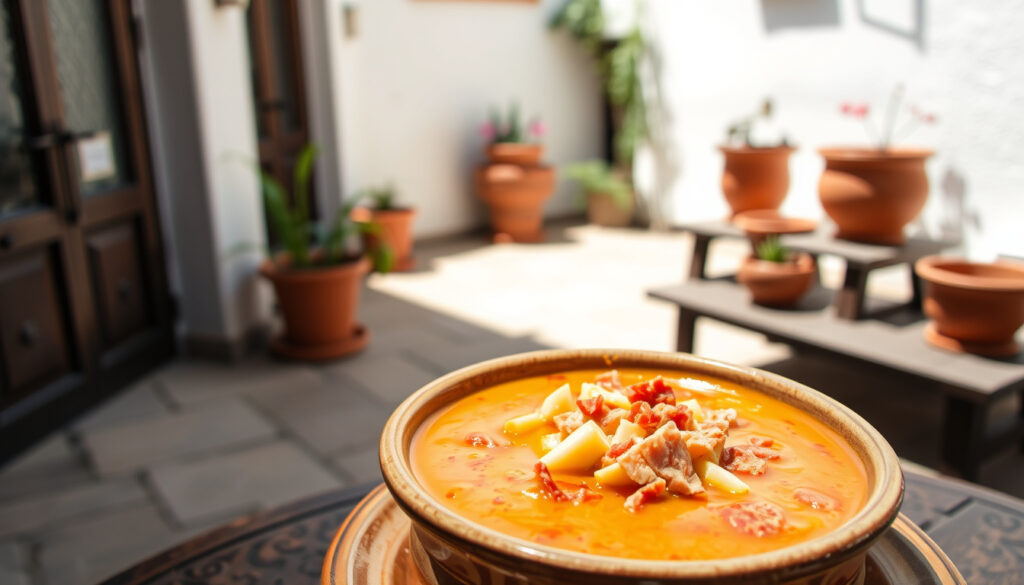
Anyone who has ordered gazpacho in a Madrid tavern and received a thicker, creamier bowl of cold tomato soup has already met salmorejo — they just didn’t know its name yet. It was born in Córdoba, a chilled emulsion of ripe tomatoes, day-old bread, garlic and extra-virgin olive oil, traditionally finished with shaved serrano ham and hard-boiled egg, per Explore Córdoba (local food guide). Here’s where the best versions hide, how to eat them properly, and how to spot a thin impostor from across the room.
Origin: Córdoba, Spain · Main ingredients: Tomato, bread, garlic, olive oil · Traditional garnish: Serrano ham and hard-boiled egg · Popular Madrid spot: Bodega de la Ardosa · Dish type: Cold soup, thicker than gazpacho
Quick snapshot
- A chilled Córdoba soup of tomato, bread, garlic and olive oil, served cold in a clay bowl — Viaggi in Chiaro (Córdoba travel guide)
- The authentic recipe uses 200 g of two-day-old Telera Cordobesa bread and 100 ml of extra-virgin olive oil — El Confidencial (Spanish news outlet)
- A proper bowl holds its shape on the spoon — if it pours, the kitchen skipped the bread (Viaggi in Chiaro (Córdoba travel guide))
- One travel list dates a Madrid tavern’s salmorejo tradition to 1892 — an unverified claim — Wanderlog (travel planning app)
- Balsamic and bread-stick toppings are modern Madrid license, not Córdoba canon — City Confidential (Madrid food site)
- The exact date salmorejo was “born” — and whether taverns or home kitchens invented it — is not documented (Wanderlog (travel planning app))
- One historical narrative traces salmorejo’s technique to Roman moretum and Moorish mazamorra cordobesa, long before tomatoes arrived in the 16th century — Explore Córdoba (local food guide)
- University of Córdoba research supports a common restaurant standard — Cofradía del salmorejo cordobés (Córdoba’s salmorejo guild)
- The consensus recipe is a modern agreement, not a medieval decree (Explore Córdoba (local food guide))
- In Madrid, Taberna La Gaditana markets itself as serving traditional Córdoba-origin salmorejo — Taberna La Gaditana (Madrid tavern chain)
- La Ardosa signals its style with toppings — scrambled egg and mojama instead of the classic ham and egg — Time Out Madrid (city guide)
- The Priego de Córdoba tourism board publishes a regional variant with green bell pepper — Turismo de la Subbética (regional tourism board)
The fastest way to read a salmorejo menu: seven facts, one pattern — the fewer the ingredients, the more the bowl depends on their quality.
A proper salmorejo holds its shape on the spoon; if it pours, the kitchen skipped the bread. That thickness is the dividing line between salmorejo and gazpacho.
| Label | Value |
|---|---|
| Origin | Córdoba, Andalusia |
| Main ingredients | Tomato, bread, garlic, olive oil, vinegar |
| Typical garnish | Diced hard-boiled egg, shaved serrano ham — Viaggi in Chiaro (Córdoba travel guide) |
| Best city for authentic salmorejo | Córdoba |
| Average price in Madrid | €4–€8 per serving — Taberna La Gaditana (Madrid tavern chain) |
| Serving temperature | Served cold, traditionally in a clay bowl |
| Regional variant | Priego de Córdoba adds green bell pepper — Turismo de la Subbética (regional tourism board) |
How to eat salmorejo?
Serving temperature
- It should arrive properly cold — lukewarm salmorejo is a kitchen failure, not a style choice
- In Córdoba, the clay bowl is part of the ritual: it keeps the cold on the table longer
- Give the bowl a minute before judging: the olive oil improves as it warms slightly
Salmorejo is eaten with a spoon, not drunk. It is too dense for a glass, and pouring it would hide the texture that separates it from gazpacho.
Classic toppings
- The Córdoba default is minimal: diced hard-boiled egg and shaved serrano ham — Viaggi in Chiaro (Córdoba travel guide)
- In Madrid, La Ardosa makes its salmorejo with bread, garlic, olive oil and tomatoes, then tops it with scrambled egg and mojama — salted, cured tuna — Time Out Madrid (city guide)
- Other Madrid bars reach for crunchy ham, balsamic or bread sticks — City Confidential (Madrid food site)
The garnish is a regional identity badge. Ham-and-egg says “Córdoba rules”; mojama says “Madrid owns the experiment”. Neither is wrong — they’re just different arguments.
Eating as a starter or main
- In a tapa-bar flow, salmorejo opens the meal; it is a first course, not a dessert
- In Córdoba, a deeper bowl with the full ham-and-egg garnish works as a light lunch
- Portion size is the tell: a shallow bowl means tapa; a deeper one means main
Order it early. A good salmorejo tastes cleanest before the fried things arrive and reset your palate.
Wine pairings
- A dry fino or manzanilla sherry matches the garlic and tomato intensity
- A crisp white — Verdejo or Albariño — is the easy modern alternative
Salmorejo is a test of ingredients, not technique: good tomatoes, good olive oil and day-old bread do all the work. Too much bread turns it to paste; too little turns it back into gazpacho with good branding.
The implication: the best bowl depends entirely on the quality of four ingredients. A tavern that treats each one with respect will win, regardless of its décor or pedigree.
What is a must eat in Madrid?
Salmorejo as a must-try
- Time Out Madrid puts La Ardosa — Bodega de la Ardosa — on its best-tapas list and calls the bar centuries old — Time Out Madrid (city guide)
- Taberna La Gaditana serves that Córdoba pitch at three Madrid addresses: Goya, Castellana and Retiro — Taberna La Gaditana (Madrid tavern chain)
- City Confidential maps a wider scene where Madrid bars dress salmorejo with crunchy ham, balsamic or mojama — City Confidential (Madrid food site)
Madrid doesn’t own salmorejo — Córdoba does. But Madrid adopted it so completely that it now appears on tapas lists all over the center, often one tavern apart from the squid sandwich.
Top Madrid taverns for salmorejo
- Bodega de la Ardosa — the Time Out pick; order the version with scrambled egg and mojama
- Taberna La Gaditana — three Madrid addresses, one Córdoba recipe pitch
- Look for a chalkboard that says salmorejo casero — house-made is the phrase that separates pride from production
The strongest indicator is whether the bar treats salmorejo as a signature or as a menu afterthought.
Other Madrid classics
- Cocido madrileño — the chickpea-and-meat stew that defines Madrid’s comfort food
- Bocadillo de calamares — fried squid in a baguette, a plaza-level classic
Salmorejo is the city’s best cold hit, but these two warm classics complete the must-eat triangle.
Córdoba keeps the garnish quiet — egg and ham. Madrid’s La Ardosa scrambles the egg and adds mojama, a salty cured tuna that changes the whole bowl. Tradition or swagger: both are correct, and both are worth ordering.
The pattern: Madrid’s best salmorejo is rarely at the fanciest table — it is at the bar with the most history. Order before you even sit down.
Which city in Spain is considered the best for food?
Córdoba: birthplace of salmorejo
- Priego de Córdoba’s tourism board publishes its own recipe — hard wheat bread, a two-hour rest, and green bell pepper — Turismo de la Subbética (regional tourism board)
- The tomato arrived in the 16th century and turned an older bread-and-garlic dish into the salmorejo we taste today
- The debate over the “one true recipe” is part of the dish’s identity, not a bug
Anyone who wants the birthplace version should start in Córdoba, where the cold soup is a point of civic pride rather than a tourist novelty.
Madrid: capital of variety
- Madrid is where Córdoba’s cold soup became a tapas superstar, served alongside squid sandwiches and croquetas across the center
- Variety is the city’s argument: every bar offers a slightly different theory of the same bowl
Madrid doesn’t fight Córdoba’s claim; it plates a hundred local opinions of the same dish.
San Sebastián: pintxos capital
- San Sebastián is the city food critics usually crown, thanks to pintxos culture and a remarkable run of Michelin-starred kitchens
- Its signature bites arrive on bread, not in a bowl — a different game from Córdoba
If the question is “where do chefs go to eat”, San Sebastián wins often; if the question is “where does salmorejo live”, it doesn’t.
Barcelona: modern cuisine
- Barcelona layers Catalan tradition under avant-garde dining rooms
- Salmorejo appears there as a guest, not a native
Barcelona is the best answer for people who want a tasting menu after the beach, not a clay bowl at noon.
The pattern: Córdoba wins if the question is salmorejo; San Sebastián wins if the question is stars; Madrid wins if the question is variety. Choose the city by the question you are actually asking.
What is the #1 restaurant in Spain?
Michelin-starred contenders
- There is no official #1, but shortlists usually circle DiverXO in Madrid and El Celler de Can Roca in Girona
- The same names appear in “best restaurant in Spain” roundups because their reputations rest on tasting menus, not tapas
For anyone chasing salmorejo, the #1 question matters less than the #1 bowl.
Top-rated by critics
- Critic rankings change as guides refresh, so whatever answer you read has a shelf life of about a year
- For salmorejo, the rating that matters is the garnish balance, not the guidebook score
The ranking debate is entertainment; the cold soup is lunch.
Best for salmorejo
- In Madrid, Bodega de la Ardosa is the name that keeps coming up — the Time Out pick mentioned earlier
- In Córdoba, locals point to century-old tabernas like Taberna Salinas, and Destination Eat Drink recommends Restaurante Sociedad Plateros María Auxiliadora for excellent salmorejo
If you want the closest thing to a “#1 restaurant for salmorejo”, you are looking for a tavern with a decades-old rhythm, not a reservation line.
The implication: asking for the #1 restaurant in Spain is the wrong question when salmorejo is the goal — the best bowl answers to a tavern, not a trophy.
Which restaurant in Spain has 3 Michelin stars?
List of 3-star restaurants
- Spain’s three-star tier includes El Celler de Can Roca, Martín Berasategui and Azurmendi, among others
- DiverXO in Madrid also sits in that tier
The exact list shifts with each guide update; the stable fact is that Spain holds one of Europe’s deepest collections of three-star kitchens.
Culinary significance
- Three stars signal a kitchen worth traveling for — the opposite of the counter-seat culture where salmorejo lives
- Starred dining is about reinvention; taberna cooking is about repetition done right
Both worlds are valid, but they reward different habits of attention.
Salmorejo at Michelin-starred venues
- Occasionally, a starred kitchen plates a refined or deconstructed salmorejo — a nod to tradition, not a homecoming
- The dish’s real habitat is the taberna, where the recipe rarely changes because it doesn’t need to
“Traditional” is a marketing word in Madrid. Ask whether the kitchen uses ajo morado de Montalbán — the garlic named in El Confidencial’s breakdown of the authentic recipe — El Confidencial (Spanish news outlet). A house that knows the detail will say yes proudly.
What this means: if the best salmorejo is the goal, aim for the clay bowl, not the chef’s table. Stars are earned; so is a great batch of cold soup.
How to find the best salmorejo near you
- Decide which salmorejo you want: the Córdoba classic (diced hard-boiled egg, shaved serrano ham) or a Madrid remix (scrambled egg, mojama). The choice changes which tavern you cross town for.
- Search for bars that list salmorejo as a house specialty and preferably name a Córdoba-style recipe — that signal separates pride from production.
- Read recent reviews for words like “thick”, “creamy” and “garlic”. Travelers are loud when a version is thin.
- Go at lunch, when the soup is freshly made and the bar is at its best. A tavern that sells out of salmorejo is doing something right.
- Order it before the main plate, with a fino sherry or a crisp white wine. Eat it with a spoon, straight from the clay bowl.
- If the menu offers both gazpacho and salmorejo, the salmorejo should arrive visibly thicker. If it doesn’t, send it back with a smile.
The pattern: the best “near me” answer is not the highest-rated room — it is the bar where salmorejo is a source of pride, not a menu filler.
What’s confirmed, what’s still unclear
Confirmed
- Salmorejo originated in Córdoba, Spain, as a cold soup of tomato, bread, garlic, olive oil and salt — Explore Córdoba (local food guide)
- A shared Córdoba restaurant standard is backed by University of Córdoba Food Science research — Cofradía del salmorejo cordobés (Córdoba’s salmorejo guild)
- Traditional toppings are diced hard-boiled egg and shaved serrano ham — Viaggi in Chiaro (Córdoba travel guide)
- Priego de Córdoba publishes a regional variant that includes green bell pepper — Turismo de la Subbética (regional tourism board)
Still unclear
- The exact date salmorejo was invented is undocumented — the dish changed across centuries
- Whether salmorejo was first served in taverns or home kitchens is an open question
- A travel-list claim puts one Madrid tavern’s salmorejo at 1892 — treat the year as a claim, not a receipt — Wanderlog (travel planning app)
- Balsamic and bread-stick toppings may be modern Madrid additions, not Córdoba tradition — City Confidential (Madrid food site)
The balance is honest: the dish’s identity is confirmed, its biography is not. That gap is exactly why local taverns still matter — they carry the details written records lost.
What travelers and critics say
Praise for salmorejo tends to be short and specific, which makes it more trustworthy than most review copy.
“Madrid’s best salmorejo!”
Tripadvisor reviewer, on Bodega de la Ardosa
“For excellent salmorejo, the local favorite is Restaurante Sociedad Plateros María Auxiliadora.”
Destination Eat Drink, Córdoba restaurant guide
For a more technical take, the Cofradía del salmorejo cordobés (Córdoba’s salmorejo guild) says the standard recipe was homogenized from University of Córdoba Food Science research to reflect common restaurant practice.
The pattern: the loudest praise follows the simplest bowls — tomato, bread, garlic and oil, doing exactly what they were meant to do.
The takeaway
Salmorejo is one of Spain’s least complicated icons: tomato, bread, garlic, olive oil, patience, and a garnish that tells you which city you are in. For anyone typing “best salmorejo near me” before a trip to Madrid or Córdoba, the choice is clear: follow the taverns and tabernas where the dish is a point of pride — Bodega de la Ardosa in Madrid, Taberna Salinas in Córdoba — or spend the trip wondering what the fuss was about. The best bowl answers to a tavern that knows its ingredients, not a reservation line.
Frequently asked questions
What is salmorejo?
Salmorejo is a cold Spanish soup from Córdoba, made from tomato, bread, garlic, olive oil and salt. It is thicker and creamier than gazpacho and usually served with diced hard-boiled egg and shaved serrano ham.
How is salmorejo different from gazpacho?
Gazpacho is a thinner, drinkable cold soup; salmorejo uses more bread and olive oil, giving it a richer texture that holds its shape on a spoon. If it pours like a smoothie, it is gazpacho.
What are the best toppings for salmorejo?
The classic Córdoba toppings are diced hard-boiled egg and shaved serrano ham. In Madrid, places like La Ardosa add scrambled egg and mojama, while some bars finish the bowl with balsamic or bread sticks.
Can I find salmorejo outside Spain?
Yes — Spanish restaurants and tapas bars across Europe, the U.S. and Latin America serve it, though quality varies. The most reliable sign of a good version is a thick, creamy texture and a clear olive oil finish.
Is salmorejo gluten-free?
No — bread is a defining ingredient, so traditional salmorejo contains gluten. A gluten-free version would be a different dish, closer to gazpacho.
What is the best time of year to eat salmorejo?
Salmorejo is a summer dish by tradition, since that is when Córdoba’s tomatoes are at their peak. Madrid taverns now serve it year-round, but quality follows the tomatoes.
How do I make salmorejo at home?
Blend ripe tomatoes, two-day-old bread, garlic and extra-virgin olive oil until thick, rest it cold, then finish with diced hard-boiled egg and shaved serrano ham. The key is restraint: four core ingredients, no shortcuts.
Related reading
More related posts
 Real Food Orchard Central Menu: Vegetarian Guide & Prices
 Fabrizio Romano Man Utd: Transfer News and Updates
 Senior Bonus Payout Date 2025 – When and How Much
 PS.Cafe Marina Bay Sands Menu: Prices, Dishes & Reservations
 Tan Son Nhat Airport Guide: Terminals & Tips
 New Tamil Movies Download 2026: Free and Legal Options
 Where to Stay in Guangzhou: Best Areas & Districts
 How to Top Up TikTok Coins: Safe Ways to Buy Online
