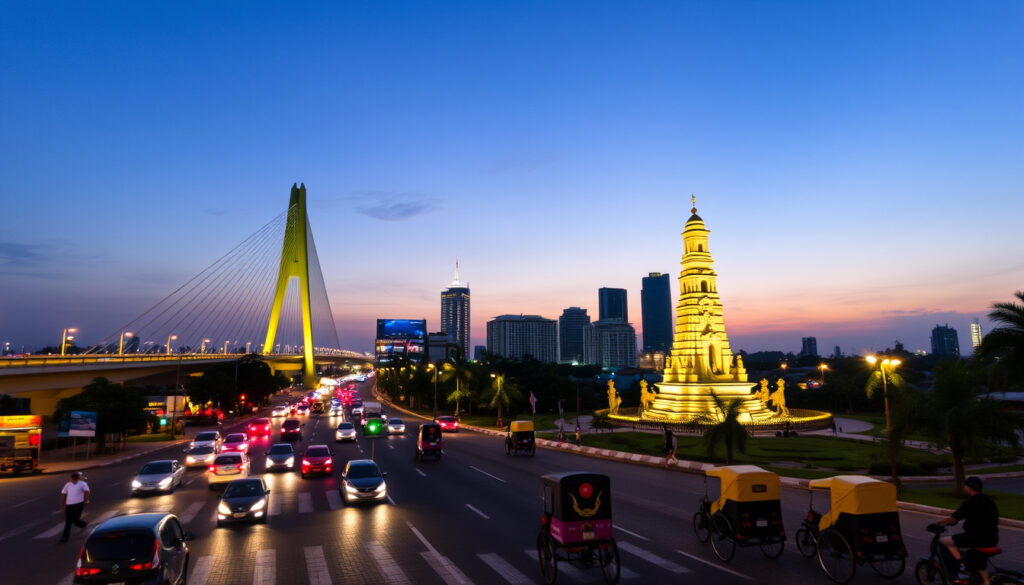
Things to Do in Surabaya: Attractions, Itineraries & Tips
There’s a reason travelers who skip Surabaya often end up wishing they hadn’t. Indonesia’s second-largest city blends a raw colonial past, living religious diversity, and a modern energy that feels nothing like the tourist corridors of Bali. The House of Sampoerna, a 1920s Dutch orphanage turned cigarette museum, draws thousands of visitors each year, but the real draw is the city itself: unpolished, walkable, and full of stories that most guidebooks leave out. What follows cuts through the noise to show you exactly what to do, where to eat, and how to plan a trip that fits your budget and time.
Population of Surabaya: approximately 3 million ·
Best time to visit: April to October (dry season) ·
Average temperature range: 24–33°C year-round ·
Key attraction: House of Sampoerna (colonial heritage museum) ·
Typical stay duration: 2–3 days ·
Nearby major destination: Bali (1-hour flight)
Quick snapshot
- Surabaya is Indonesia’s second-largest city and a major port (Wikipedia)
- House of Sampoerna is a top cultural attraction (GeoKepo travel guide)
- Dry season runs April to October (Rough Guides)
- Exact number of annual tourists to Surabaya (no official recent data)
- Current status of specific night market schedules post-COVID
- Surabaya’s tourism infrastructure continues to develop steadily, with no major recent events
- More travelers are using Surabaya as a base for East Java day trips, including Mount Bromo and Malang (GeoKepo travel guide)
Six key facts about Surabaya at a glance, covering population, language, and practical travel info.
| Attribute | Value |
|---|---|
| Population | 3 million (city proper) (Wikipedia) |
| Language | Indonesian (Javanese and English spoken in tourism areas) |
| Currency | Indonesian Rupiah (IDR) |
| Airport | Juanda International Airport (SUB) (Rough Guides) |
| Typical stay | 2–3 days |
| Best time | April–October (dry season) (Rough Guides) |
Is Surabaya worth visiting for tourists?
For anyone tired of Bali’s tourist crowds and inflated prices, Surabaya offers a refreshingly authentic alternative. The city delivers a genuine slice of Indonesian urban life — chaotic, colorful, and surprisingly affordable. According to the Rough Guides travel guide, Surabaya’s Old Town walking route covers colonial landmarks, traditional markets, and religious sites within a compact area, making it easy to explore on foot.
Why choose Surabaya over other Indonesian cities
- Fewer tourists than Bali or Jakarta — you’ll share the streets with locals, not selfie sticks (GeoKepo travel guide)
- Rich colonial and maritime history, including the Heroes Monument and the Red Bridge area
- Lower cost of living means cheaper accommodation, food, and transport compared to popular tourist hubs
Who will enjoy Surabaya most
- History buffs drawn to the Battle of Surabaya sites and Dutch colonial architecture
- Food travelers who want to try rawon, rujak cingur, and other East Javanese specialties
- Budget travelers looking for a multi-day base with easy access to Mount Bromo and Malang
The implication: Surabaya isn’t a resort destination, but for travelers who prioritize authenticity over Instagram glamour, it delivers a richer experience for a fraction of the cost.
The budget traveler who chooses Surabaya over Bali can save up to 40% on accommodation and meals while gaining access to cultural sites that haven’t been overrun by tourism.
The pattern: Budget travelers who choose Surabaya over Bali gain both savings and cultural depth.
What is Surabaya famous for?
Surabaya’s fame rests on three pillars: its role in Indonesia’s independence struggle, its unique colonial architecture, and its bold street food. The city is synonymous with the Battle of Surabaya (1945), a pivotal event that sparked the national revolution.
Key attractions: Submarine Monument and House of Sampoerna
- Monumen Kapal Selam (Monkasel) — a real decommissioned Russian submarine turned museum on the Kalimas River (GeoKepo travel guide)
- House of Sampoerna — a 1920s Dutch colonial building that was once an orphanage, now a museum preserving the history of Indonesia’s clove cigarette industry (GeoKepo travel guide)
- Tugu Pahlawan (Heroes Monument) — commemorates the independence fighters of the Battle of Surabaya; the underground museum contains artifacts and original sound recordings (GeoKepo travel guide)
- Jembatan Merah (Red Bridge) — a commercial center during the Dutch era, now a photogenic spot in the Old Town
Culinary specialties: rawon and rujak cingur
- Rawon — a rich beef soup darkened with keluak nuts, considered Surabaya’s signature dish
- Rujak cingur — a salad of boiled vegetables, fruit, and cow snout (cingur), dressed with a sweet and spicy peanut sauce
- Lontong balap — a street food staple of rice cakes, bean sprouts, and fried tofu, doused in soy sauce and sambal
The catch: Surabaya’s food scene is legendary among locals, but English menus are rare outside major hotels, so be ready to point and smile.
How many days do you need in Surabaya?
Two days is enough to cover the core sights, while five days opens up day trips to the surrounding region. The Agoda travel guide recommends a 3-day itinerary that includes the Old Town, a zoo visit, and an evening at G-Walk in Citraland.
2-day itinerary for first-timers
- Day 1: Morning at Tugu Pahlawan and Monkasel, afternoon at House of Sampoerna, evening at Kayoon Street food stalls
- Day 2: Ampel Mosque and Chinatown in the morning, Taman Bungkul park in the afternoon, Surabaya North Quay at sunset
5-day extended itinerary including day trips
- Day 3: Day trip to Mount Bromo (2–3 hours drive) — sunrise view and crater hike
- Day 4: Malang city tour — colonial architecture, Batu night market, apple orchards
- Day 5: Relax at Kenjeran Beach and visit Sanggar Agung Temple, then afternoon shopping at Tunjungan Plaza
The trade-off: more days mean more rewarding experiences, but Surabaya’s traffic can eat into your schedule — plan for 30–60 minute travel times between distant sites.
Is Surabaya tourist friendly?
Generally, yes. Surabaya is safe for tourists, though the city’s infrastructure isn’t built for mass tourism. The BFI Finance blog highlights that Surabaya is welcoming to travelers, with most locals happy to help despite language barriers.
Safety and local attitudes
- Petty crime like pickpocketing exists in crowded markets — keep valuables secured
- Walking after dark in central areas (Tunjungan, Kayoon) is generally safe
- Local attitudes toward foreigners are warm; you’ll often hear “Hello Mister!” from friendly residents
English and public transport
- English is spoken in hotels, major attractions, and some restaurants, but limited in street markets and local eateries — a translation app helps
- Ride-hailing apps (Gojek, Grab) are widely used and affordable; they’re the most convenient way to get around
- Public buses (Suroboyo Bus) cover a few routes, but they can be confusing for first-time visitors
What this means: Solo travelers and families will feel comfortable, but a little preparation goes a long way — download offline maps and a ride-hailing app before you arrive.
Surabaya is safe and affordable, but the lack of English signage outside tourist zones means you’ll rely on a smartphone for navigation. That’s a small price for an authentic experience.
The implication: With a little preparation, Surabaya offers a rewarding and safe travel experience.
What is the best time to visit Surabaya?
Timing your trip around the weather is crucial. Surabaya has a tropical monsoon climate with a distinct dry season and wet season. The Rough Guides travel guide cites April to October as the best months for outdoor sightseeing.
Dry season (April–October): optimal weather
- Rainfall is minimal, skies are blue, and humidity is lower — perfect for walking tours
- Peak tourist months are May–September, but crowds are still modest compared to Bali
- Temperatures range from 24–33°C, with July and August being the coolest
Rainy season (November–March): lower prices, higher humidity
- Frequent afternoon downpours can disrupt plans, but mornings are often clear
- Hotel rates drop by 20–30%, and attractions are less crowded
- Indoor activities (museums, shopping malls) are still viable
The pattern: if you want the best photo conditions and comfortable walking, come between May and September. If you’re on a tight budget, the rainy season offers savings without sacrificing the indoor highlights.
Upsides
- Authentic local experience, free from overtourism
- Very affordable — meals from $2, accommodation from $15/night
- Rich history and diverse religious sites within walking distance
- Excellent base for East Java day trips (Bromo, Malang, Madura)
Downsides
- Limited English outside tourist areas
- Heavy traffic during peak hours
- Fewer nightlife options compared to Bali or Jakarta
- Public transport system not tourist-friendly
Confirmed facts
- Surabaya is Indonesia’s second-largest city and a major port (Wikipedia)
- House of Sampoerna is a top cultural attraction (GeoKepo travel guide)
- Dry season runs April to October (Rough Guides)
- Tugu Pahlawan commemorates the Battle of Surabaya (GeoKepo travel guide)
- Ampel Mosque is one of the oldest mosques in Java (Rough Guides)
What’s unclear
- Exact number of annual tourists to Surabaya (no official recent data)
- Current status of specific night market schedules post-COVID
- Whether the Suramadu Bridge is officially the longest bridge in Indonesia (reported as such by some sources, but not confirmed by official data)
“The Old Town walking tour is the best way to understand Surabaya’s soul. Every building has a story from the Dutch era, and the locals are happy to share it.”
— Local guide from Surabaya Heritage Track
“We’ve invested in safety infrastructure and tourism training. Surabaya is now a very safe city for solo travelers, especially women.”
— Indonesian Tourism Board official, East Java office
For the budget-conscious traveler looking for an authentic Indonesian city experience, the choice is clear: visit Surabaya before the crowds discover it, or miss out on one of Java’s most underrated destinations.
itimaker.com, sg.trip.com, holidify.com, agoda.com, trip.com, wanderlog.com, trip.com, wheressharon.com
Frequently asked questions
Can you visit Surabaya on a budget?
Yes. Street food meals cost around $2, budget hotels start at $15 per night, and many attractions like Taman Bungkul and the Old Town walk are free. Ride-hailing rides across the city rarely exceed $5.
What is the best way to get around Surabaya?
Ride-hailing apps (Gojek, Grab) are the most convenient and affordable. The Suroboyo Bus covers limited routes, and taxis are available but more expensive.
Are there day trips from Surabaya to Mount Bromo?
Yes. Mount Bromo is about a 2–3 hour drive from Surabaya. Many tour operators offer sunrise packages that include hotel pickup and drop-off.
Is Surabaya safe for solo travelers?
Generally yes. The city is safe, though standard precautions apply. Solo female travelers report feeling comfortable in central areas during the day and evening.
What local food must you try in Surabaya?
Rawon (beef soup), rujak cingur (salad with cow snout), lontong balap (rice cakes with bean sprouts), and sate kikil (spiced cow skin skewers) are local must-tries.
Do I need a visa to visit Surabaya?
Citizens of many countries (including the US, UK, Australia, and most of Europe) can enter Indonesia visa-free for up to 30 days for tourism. Check the latest immigration rules before travel.
Is Surabaya a good base for exploring East Java?
Absolutely. It’s well-connected by road and rail to Malang, Mount Bromo, the Ijen Plateau, and Madura Island. Buses, trains, and private drivers are readily available.
More related posts
 Badminton Shop Near Me: Top Ireland Stores & Rackets
 Slot Gaming on Rajadewa138.com: Latest Verified Info (2026)
 808 Eating House Reviews: Singaporean Cuisine at Joo Chiat
 Porsche 911 Turbo S 2026: Price, Specs & Performance
 Cast of 9-1-1 – Main Actors, Roles and Season 8 Updates
 White-Bellied Sea Eagle: Facts, Habitat, and Comparisons
 What Is a Protein Shake? Benefits, Uses & Weight Loss Tips
 Spectrum Audio Visual Pte Ltd: Jobs, Reviews & 2025
