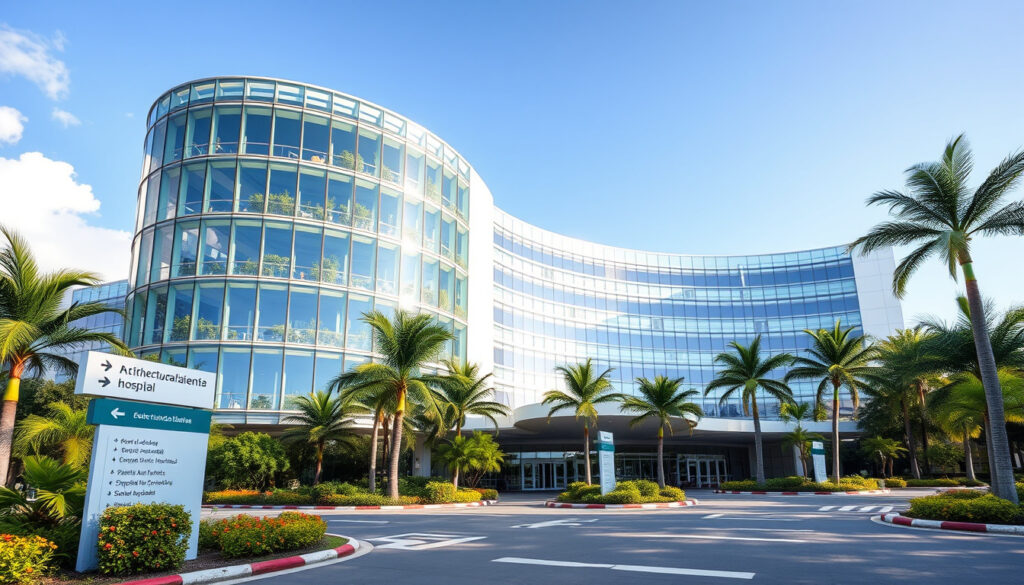
Sengkang General Hospital Photos: Architecture & Visitor Tips
You’ve probably seen Sengkang General Hospital (SKH) from the LRT—a sprawling, blocky complex that looks more like a modern resort than a hospital. With 1,000 beds in the general hospital and a separate community hospital next door, it’s a mini-city dedicated to healthcare.
Key Facts at a Glance
- Full name: Sengkang General Hospital (SKH) (SKH Moving Around page)
- Beds: 1,000 (general hospital) + 400 (community hospital) (WSP project profile)
- Category: Acute general & community hospital ((SKH Moving Around page))
- Phone: +65 6930 5000 (SKH Moving Around page)
- Address: 110 Sengkang East Way, Singapore 544886 (SKH Moving Around page)
- Healthcare group: SingHealth (SingHealth Visitor Guide)
- Year opened: August 2018 (WSP project profile)
- Height: 31 storeys ((WSP project profile))
- Project achievement: 30% energy savings vs. local code (WSP project profile)
- Design firm: WSP (engineering & design) (WSP project profile)
- Design brief: Unified medical campus (Archello/DP Architects)
- Campus type: General hospital + community hospital + specialist outpatient clinics ((WSP project profile))
What Makes the Architecture Stand Out?
SKH isn’t just another HDB-adjacent hospital. The design philosophy here was to create a “unified medical campus” that integrates a general hospital, a community hospital, and specialized outpatient care under one roof—or interconnected roofs, to be precise. According to the WSP project profile (the engineering and design consultancy), this integration allows for seamless patient flow between different levels of care.
The result is a 31-storey tower that doesn’t feel institutional. The massing is broken up with green terraces and naturally ventilated corridors, a deliberate move to aid in healing. A notable engineering achievement, as highlighted by WSP, is that the project achieved a 30% energy savings compared with the local building code—not a small feat for a facility running 24/7. This focus on environmental performance is baked into the design, not as an afterthought but as a core principle, making the building a talking point among healthcare architects.
“The project achieved 30% energy savings compared with the local building code.” — WSP project profile
The implication: this design sets a benchmark for future hospital builds in land-scarce Singapore.
Inside the Campus: Where to Go and What to Expect
Navigating the interior is easier if you understand the division of spaces. The general hospital (1,000 beds) handles acute and specialist care, while the community hospital (400 beds) focuses on rehabilitation and step-down care. The design brief emphasized that the campus is not self-contained; it’s connected to the surrounding Sengkang community, which means you’ll find retail and dining options on the lower floors, typical of Singapore’s newer healthcare developments.
When you enter, you’re met with light-filled atriums and wayfinding that relies on distinct zones rather than long, monotonous corridors. For visitors, this means the café on level 1 is a common meeting point, as is the main lobby. The emergency department has its own entrance on the same level as the pick-up/drop-off points, which helps decongest the main arrival areas. It’s a layout designed to handle heavy foot traffic, especially during visiting hours.
The integration with the community hospital means that patients can be transferred between acute and rehab care without leaving the campus, but it also means the corridors are longer than you might expect. Wear comfortable shoes—you’ll likely hit 10,000 steps just moving between the specialist outpatient clinics (SOCs) and the main tower.
What this means: planning your route ahead of time can save considerable time and energy.
Visitor’s Guide to the Wards
If you’re visiting a patient, you should know the rules. According to the official Moving Around Sengkang General Hospital page, visiting hours for general wards are strictly 12pm–2pm and 5pm–8pm. This is not a flexible “any time” policy; the security and nursing staff are strict about these hours.
There are specific restrictions you must respect. Only 2 visitors are allowed at a patient’s bedside at any one time during these hours. SKH Visiting Policy also states that children below 12 years old are generally not allowed in the wards, except under exceptional circumstances where parents or guardians must sign an indemnity form. Additionally, there’s a strict zero-tolerance policy on photography and recording inside the wards; the hospital’s visitor guide explicitly forbids capturing images of patients and staff to protect their privacy.
“Photography, video recording, and audio recording of patients or staff are not allowed in the wards.” — SKH Visitor Information
Given the 1,000-bed capacity, the hospital operates like a small town. It’s advisable to check the official visitor information page before you come, as specific wards might have different isolation protocols or special restrictions that override the general schedule.
The catch: families with young children may need to make alternative arrangements.
What Makes This Hospital Unique in Singapore’s Landscape?
Most Singaporeans have a passing familiarity with the big names like SGH or NUH, but SKH occupies a nice middle ground. Its “integrated” model—combining a general hospital, a community hospital, and specialist clinics on a single campus—is a model that WSP points out as a forward-thinking approach for land-scarce Singapore. It allows patients to be transferred to a lower-cost community bed without leaving the campus, which is a major logistical win.
While the design and the integration are the headline acts, there’s perhaps one subtle aspect that gets less attention: the way the hospital is designed to support “step-down” care. Most visitors just see a big hospital; the smart ones understand that the community hospital’s 400 beds are part of the same team, working as an extension of the acute ward. This is a crucial detail for families, because it often means the patient’s stay doesn’t end when they leave the general ward bed—they just move to the building next door for rehab.
The pattern: this integration directly reduces transfer time and stress for patients and families.
Which healthcare group does Sengkang hospital belong to?
Sengkang General Hospital is part of the SingHealth group, one of Singapore’s two major public healthcare clusters. This affiliation ensures that SKH follows the same standards and offers integrated care pathways with other SingHealth institutions like Singapore General Hospital and Changi General Hospital. For official confirmation, see the SingHealth Visitor Guide for SKH.
What kind of food is served at Sengkang General Hospital?
The hospital offers a food court with Asian and Western dishes on the lower floors, open to the public. Special dietary meals are available for patients, including diabetic and halal-friendly options, but outside food is discouraged for general ward patients due to dietary restrictions. For visitors, there are multiple cafes and vending machines throughout the campus. More details can be found on the SKH Billing Page, which notes food services.
What is Sengkang General Hospital known for?
SKH is known for its award-winning architecture—a 31-storey tower with green terraces and energy-saving features—and its integrated healthcare model that combines acute, community, and outpatient services on one campus. It provides comprehensive acute and specialist care, and its design has been recognized by industry professionals for achieving 30% energy savings versus code. The WSP project profile highlights these achievements.
Visitor Steps: How to Prepare for Your Visit
- Check visiting hours: General wards 12pm–2pm and 5pm–8pm.
- Bring a valid photo ID, patient’s name, ward, room, and bed number.
- Use the automated visitor registration system or pre-register online to skip queues.
- Remember the two-visitor limit at the bedside.
- Leave cameras and recording devices at home when entering wards.
- If bringing a child under 12, contact the ward in advance for exceptional approval.
skh.com.sg, wsp.com, skh.com.sg, skh.com.sg, shutterstock.com, skh.com.sg, landezine-award.com, skh.com.sg
Frequently Asked Questions
Are there any famous landmarks near Sengkang General Hospital?
The hospital is located beside Sengkang Riverside Park, a popular spot for fishing and cycling. Also nearby is the Sengkang Floating Wetland (a well-known man-made wetland), which is a short drive away.
Is photography allowed inside the Sengkang General Hospital campus?
Not in the wards or treatment areas; the public zones like the main lobby and gardens are fine, but you cannot take photos of staff or patients without consent. The hospital’s visitor information explicitly prohibits capturing images of patients and staff in the wards.
Can I order food delivery or outside food into the wards?
While food is not restricted from being brought in, the hospital discourages outside food for general ward patients due to dietary restrictions. However, for visitors, there are multiple food courts and cafes within the basement levels of the hospital for convenience.
Where do I park if I drive to Sengkang General Hospital?
The hospital provides a multi-storey car park located at Basement 1 to Basement 3, with entrances off Sengkang East Way. The car park is a short walk to the main lift lobby, which takes you directly to the main concourse. Parking is free for the first hour with a minimum spend at the retail shops.
What are the visiting hours for the community hospital?
The community hospital operates on the same visiting hours as the general hospital: 12pm–2pm and 5pm–8pm. This is because they share the same campus policy for visitor management to avoid confusion for families moving between buildings.
What is the primary angle of this guide?
We focus on the practical, architectural, and visitor-focused aspects of SKH that are not commonly covered—the integration of the two hospitals, the operational rules, and the design intent.
How does this article connect to the Sengkang community?
We highlight how the hospital’s design supports community integration, such as the use of public areas, the location near the Riverside Park, and the specific rules that protect patients’ privacy in a densely populated area.
Confirmed Facts
- SKH is part of SingHealth.
- Hospital address is 110 Sengkang East Way, Singapore 544886.
- Building is 31 storeys tall.
- General hospital has 1,000 beds; community hospital has 400 beds.
- Visiting hours for general wards: 12pm–2pm and 5pm–8pm.
What’s Unclear
- Exact number of publicly available photos online.
- Whether photography is allowed in all public areas without prior permission.
Internal links: For more healthcare facility guides in Singapore, see our Mount Elizabeth Novena Hospital Guide and Man Fut Tong Nursing Home Guide.
Note: The information provided here is based on the official SingHealth communications and project profiles. If you have a specific medical query, always contact the hospital’s main line at +65 6930 5000 for the most current patient information.
More related posts
 How Did Michael Jackson Die? Cause, Date & Final Moments
 NTUC FairPrice CNY 2026 Opening Hours: Extended & 24/7
 Thai Baht to MYR: Current Exchange Rate & Travel Cost Comparison
 Swansea vs Nottm Forest: TV, result, Snoop Dogg & rivalry
 Set Vietnamese for Telegram on Phone (Android & iOS Guide)
 Real Food Orchard Central Menu: Vegetarian Guide & Prices
 Old Airport Road Hawker – Stalls, Timings and Safety Tips
 Potato Corner Singapore Menu: Prices, Flavors & Sizes
