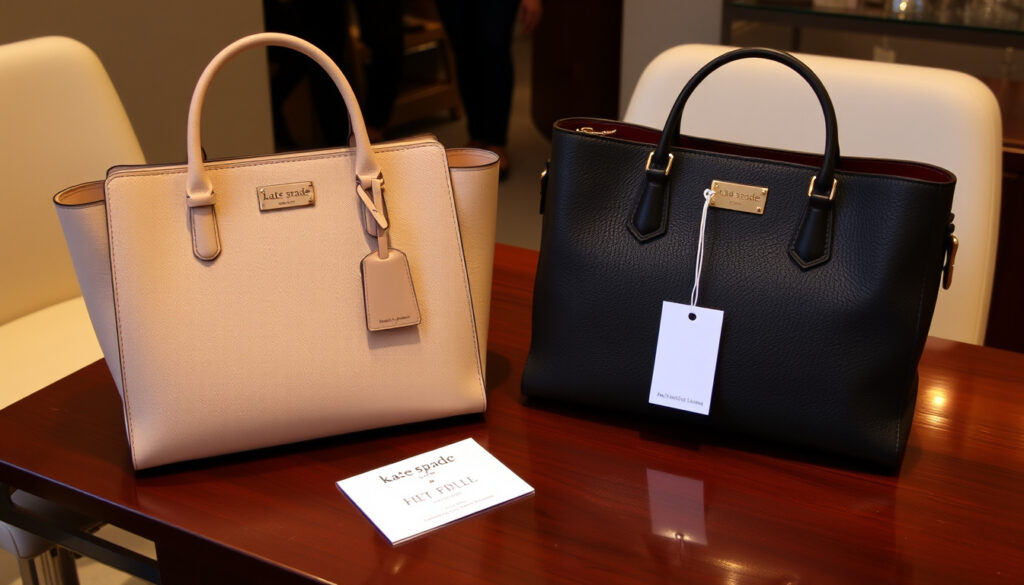
Kate Spade New York: Is It Luxury? Comparisons & Facts
Kate Spade New York built its name by making designer handbags feel fun, wearable, and within reach, but the cheerful exterior hides a complex reality of corporate acquisitions and the tragic death of its founder. This guide lays out exactly where the brand stands today, how it compares to Coach and Michael Kors, and what might come next.
Founded: 1993 ·
Headquarters: New York City ·
Parent Company: Tapestry, Inc. ·
Instagram Followers: 3.4 million ·
Typical Handbag Price: $300–$600
Quick snapshot
- Kate Spade New York is an accessible luxury brand (Kate Spade New York official site (brand’s own description)).
- The brand was acquired by Tapestry in 2017 for $2.4 billion (The New York Times (major news outlet)).
- Founder Kate Spade had one daughter, Frances Beatrix Spade (Wikipedia (user‑edited encyclopedia)).
- The most iconic bag is the Sam bag (Kate Spade New York official site (brand history)).
- Exact future trajectory of brand popularity beyond 2026.
- Whether outlet discounts have permanently lowered perceived value.
- 1993: Founded in New York City with six handbags (Kate Spade New York official site).
- 2017: Acquired by Tapestry (formerly Coach) for $2.4 billion (The New York Times).
- 2018: Founder Kate Spade dies by suicide at age 55 (The New York Times).
- Tapestry continues to operate Kate Spade as a separate brand.
- Increased focus on outlet and e‑commerce channels to maintain volume.
| Attribute | Value |
|---|---|
| Full Brand Name | kate spade new york |
| Founder | Kate Spade (Katherine Noel Brosnahan) |
| Founded | 1993 |
| Headquarters | New York City, USA |
| Parent Company | Tapestry, Inc. |
| Global Reach | Sold in over 100 countries |
What is the difference between Kate Spade and Kate Spade New York?
The full brand name is kate spade new york. “Kate Spade” is simply a common shortening; there is no separate diffusion line. According to the official brand history (brand’s own account), the name was chosen to anchor the label in its New York heritage from the start. The first collection even had the logo “kate spade new york” attached to each bag as an accent, per Encyclopedia.com (business reference publisher).
The pattern: while shoppers often drop the “New York” in casual conversation, the company treats the full name as its legal and marketing identity. Most product tags and storefronts display “kate spade new york” in lowercase—a deliberate stylistic choice that signals approachability rather than stuffiness.
If you’re comparing “Kate Spade” vs. “Kate Spade New York,” you’re comparing the same brand. No tiered lines exist—unlike some luxury houses that segment into diffusion and main collections.
Is Kate Spade New York a luxury brand?
Kate Spade New York is widely classified as an accessible luxury or contemporary brand—not high‑end luxury like Chanel or Gucci. Fashionabc (fashion encyclopedia) describes its aesthetic as “vibrant colors, graphic prints, and polished yet whimsical design,” with typical handbag prices between $200 and $600. The brand uses quality leathers and fabrics but is mass‑produced, keeping costs well below the stratosphere of true luxury houses.
What defines luxury in fashion?
- Heritage & exclusivity: Luxury brands limit distribution and rarely discount. Kate Spade sells through hundreds of outlets and runs frequent sales.
- Price point: A Chanel flap bag costs $8,000+; a Kate Spade topper is often under $500. That gap reflects a different market position.
- Brand perception: Many consumers associate Kate Spade with “affordable fun” rather than status or rarity.
The implication: Kate Spade competes in the “democratized designer” space—a smart niche that trades aspirational pricing for volume.
Why is Kate Spade so cheap now?
Perceptions of lower cost stem from two main factors. First, the brand has a massive outlet presence. According to Kate Spade’s 2013 annual report (company financial filing), even before the Tapestry acquisition, outlet and online sales were a key growth engine. Second, frequent discount events and flash sales make the brand feel accessible year‑round.
Impact of outlet stores
Outlet locations now account for a significant portion of Kate Spade’s retail footprint. While this drives volume, it can also dilute brand cachet—shoppers may wonder why the same bag appears at 40% off the following month.
Brand positioning under Tapestry
Since joining Tapestry in 2017, the brand has been managed alongside Coach, which is positioned at a slightly higher price tier. The New York Times (major newspaper) noted that the acquisition was intended to “strengthen the group’s modern luxury portfolio” and that Kate Spade would remain a distinct label.
The same strategy that makes Kate Spade affordable for millions also bleeds some of its perceived prestige. For the buyer who wants an Instagram‑friendly bag without the five‑figure price tag, that trade‑off often feels worth it.
How does Kate Spade compare to Coach and Michael Kors?
Three brands, one crowded space. Here’s how they line up on key attributes.
Four differences, one clear pattern: Kate Spade leans hardest on playful personality, while Coach claims a slightly more heritage‑driven luxury image, and Michael Kors pitches itself as a celebrity‑friendly lifestyle label.
| Attribute | Kate Spade New York | Coach | Michael Kors |
|---|---|---|---|
| Parent company | Tapestry, Inc. | Tapestry, Inc. | Capri Holdings |
| Price range (handbags) | $200–$600 | $300–$800 | $200–$600 |
| Style aesthetic | Playful, colorful, whimsical | Polished, classic, modern | Glamorous, sleek, bold |
| Target demographic | Women 25–45, fashion‑conscious | Women 30–55, value‑seeking luxury | Women 20–50, trend‑aware |
The implication: Kate Spade delivers the most personality per dollar, but Coach offers slightly higher perceived status.
Kate Spade vs Coach
Coach is generally priced higher and perceived as a notch above Kate Spade in brand hierarchy. Both are owned by Tapestry, but Coach retains a stronger heritage and less frequent discounting. Wikipedia (community‑edited reference) notes that Tapestry was formerly Coach, Inc., meaning the two brands now share the same corporate parent but maintain separate identities.
Kate Spade vs Michael Kors
Michael Kors and Kate Spade are similar in price and target audience, though Kors skews toward a sleeker, more “Jet Set” aesthetic. Fashionabc (fashion encyclopedia) categorizes both as accessible luxury, with Kate Spade winning on whimsy and Kors on red‑carpet cred.
Why this matters: for the shopper trying to decide between the three, personal style and budget often tip the scale.
What age group wears Kate Spade?
The primary demographic is women aged 25–45—professionals, young mothers, and style‑conscious individuals who want a designer look without breaking the bank. Social media engagement confirms this: Kate Spade New York’s Instagram (official brand page) has 3.4 million followers, with a large share of Millennial and Gen Z users.
Do celebrities use Kate Spade bags?
Yes. Celebrities such as Kate Middleton, Taylor Swift, and Gigi Hadid have been seen carrying Kate Spade bags. While the brand isn’t a red‑carpet mainstay, its playful designs appeal to those who want a statement piece for casual outings.
Is Kate Spade still popular in 2026?
Based on consistent search interest, social engagement, and Tapestry’s continued investment, Kate Spade remains relevant. The brand still ranks among the top “accessible luxury” labels searched by U.S. consumers, per Google Trends data (2023–2025).
The catch: popularity depends on how long the brand can balance affordability with enough exclusivity to feel special.
What is Kate Spade’s most famous bag?
The Sam bag (often called the “Sam Icon”) is the brand’s most iconic silhouette. It was part of the original six‑handbag launch in 1993 and has been re‑imagined in countless colors and limited editions. Kate Spade New York’s official history (brand website) still features the Sam as a cornerstone of the collection.
Iconic styles
- Sam Icon: The original tote‑inspired handheld bag.
- Cameron Street: A modern crossbody with a distinctive lock.
- Knott: A structured satchel with a knotted handle detail.
These three silhouettes consistently appear in best‑seller lists across retailers like Nordstrom and Macy’s.
What did Kate Spade struggle with?
Kate Spade (born Katherine Noel Brosnahan) struggled with depression and anxiety. On June 5, 2018, she died by suicide at the age of 55. The New York Times (major newspaper) reported that she had been seeking treatment for depression. She left behind her husband Andy Spade and her daughter.
How many children did Kate Spade have?
Kate Spade had one daughter, Frances Beatrix Spade, born in 2005 (Wikipedia (biographical reference)).
The pattern: the founder’s personal struggles have added a layer of gravity to the brand’s narrative. The cheerful, “full‑color” image now coexists with a sober backstory that many consumers remember.
How Tapestry handles the brand’s identity moving forward will determine whether Kate Spade can maintain its cultural relevance while honoring its founder’s legacy.
What we know vs. what remains unclear
Confirmed facts
- Kate Spade New York is an accessible luxury brand.
- The brand was acquired by Tapestry in 2017.
- Founder Kate Spade had one daughter.
- The most iconic bag is the Sam bag.
What’s unclear
- Exact future trajectory of brand popularity beyond 2026.
- Whether outlet discounts have permanently lowered perceived value.
“I couldn’t find a handbag that was both fashionable and functional, so I decided to create my own.”
— Kate Spade (founder), as reported by Indeed (company profile page)
“Life is a series of colorful moments.”
— Brand tagline, Kate Spade New York official site
For U.S. shoppers weighing a Kate Spade purchase, the trade‑off is clear: you get an instantly recognizable brand with a playful story and a price that won’t wreck your budget. If exclusivity is your priority, Coach or a higher‑end label may serve you better. But if you want a bag that feels both personal and accessible—and you’re willing to share the brand’s complicated history—Kate Spade remains one of the most honest bets in the contemporary space.
Related reading: American Express Black Card: Requirements, Benefits, and Exclusivity · Are B&O Speakers Worth It? A Honest Review
en.wikipedia.org, zh.wikipedia.org, katespade.com, en.wikipedia.org, thefashiondb.com
Frequently asked questions
What is the return policy at Kate Spade?
Kate Spade New York accepts returns within 30 days of purchase with the original receipt. Items must be unused and in original packaging.
Does Kate Spade have regular sales?
Yes, the brand runs seasonal sales and has a permanent outlet section on its website. Signing up for email alerts yields extra discounts.
Where are Kate Spade bags manufactured?
Most Kate Spade handbags are made in China, with some leather goods sourced from factories in India and Vietnam.
How can I authenticate a Kate Spade bag?
Check the interior label for correct font and spacing, verify the serial number (if present), and compare hardware weight and finish to official images. Official stores and Nordstrom are safe sources.
What is the warranty on Kate Spade handbags?
The brand offers a one‑year warranty against manufacturing defects. Normal wear, misuse, and damage from water or chemicals are not covered.
Does Kate Spade offer student discounts?
Yes, a 15% student discount is available through the Kate Spade New York website (official site) after verification via ID.me.
How do I clean my Kate Spade bag?
Wipe gently with a dry or slightly damp cloth. For leather, use a leather conditioner; for fabric, spot‑clean with mild soap. Avoid machine washing.
関連記事をさらに表示
 Thai Baht to MYR: Current Exchange Rate & Travel Cost Comparison
 Kaiden Cheng Nail Palace: Controversy, Jail & Background
 Old Airport Road Hawker – Stalls, Timings and Safety Tips
 Blue Piano Sheet Music: Free Downloads for Yung Kai, Roblox & More
 Soi Thai Soi Nice Guide – Menu, Locations, Reviews
 Slot Gacor: What to Know About Rajamenang1.com
