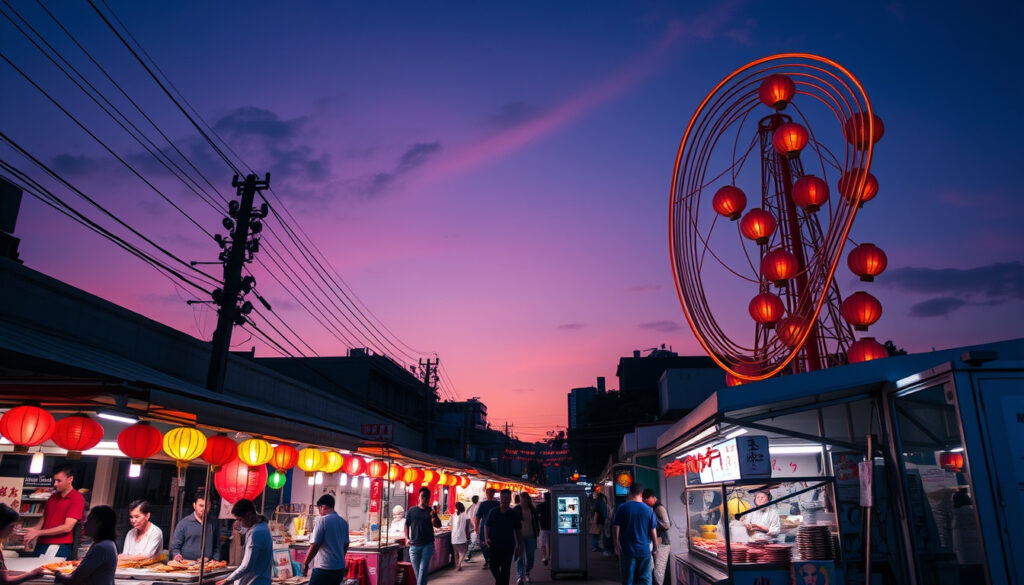
What to Do in Kaohsiung: Night Markets, Art & Budget Tips
There’s something about Kaohsiung that makes first-time visitors wonder why they didn’t come sooner. Taiwan’s southern port city offers a laid-back atmosphere, rich maritime culture, and some of the best street food in the country — all at a fraction of the cost of Taipei.
Population of Kaohsiung: approx. 2.7 million ·
Average hotel cost per night (budget): $40–$80 USD ·
Average night market meal cost: $3–$6 USD ·
High-speed rail Kaohsiung to Taipei: 1.5 hours ·
Climate: Subtropical, average 25°C
Quick snapshot
- Liuhe Tourist Night Market is open daily 17:00–01:00 (Kaohsiung Travel (official tourism site))
- Rueifong Night Market has over 1,000 stalls (Kaohsiung Travel)
- Jilin Night Market is open daily 15:00–01:00 and is near Kaohsiung Railway Station (Kaohsiung Travel)
- Pier 2 Art Center is a converted warehouse district for contemporary art (Just Go Abby (budget travel blog))
- Exact annual visitor numbers for Kaohsiung are not officially published.
- Precise cost-of-living comparison with Thailand varies by region and spending habits.
- Best weather months: October to April, with average temperature 25°C.
- Check the official Kaohsiung Travel website for event schedules and night market opening days.
Key facts at a glance reveal Kaohsiung’s practical profile for travelers.
| Field | Value | Source |
|---|---|---|
| Official language | Mandarin Chinese (with Hokkien) | General knowledge |
| Currency | New Taiwan Dollar (TWD) | General knowledge |
| Population | approx. 2.7 million | General knowledge |
| Climate | Subtropical, average 25°C | Kaohsiung Travel |
| Time zone | UTC+8 | General knowledge |
Is Kaohsiung worth visiting?
For travelers weighing whether to include Kaohsiung on a Taiwan itinerary, the answer depends on what they value. The city delivers a relaxed, walkable core, strong food culture, and lower costs than Taipei — but it lacks the sheer density of museums and historic sites found in the capital. Taiwan Obsessed (travel guide) calls Liuhe Night Market “one of the most popular in the city center,” and first-hand reports from budget travelers confirm that a full day of eating and sightseeing often totals under $30 USD.
Pros and cons of visiting Kaohsiung
Upsides
- Lower accommodation and food costs than Taipei (Just Go Abby reports a PHP 15,000 weekend budget)
- Fewer crowds and a more laid-back atmosphere
- Excellent night market scene with over a thousand stalls at Rueifong alone (Kaohsiung Travel)
- Direct ferry to Cijin Island for beaches and seafood
Downsides
- Fewer large museums and historic sites compared to Taipei
- Public transit (MRT) is good but less extensive than Taipei’s network
- English signage is less common outside tourist zones
The trade-offBudget-conscious travelers get more bang for their baht in Kaohsiung, but history buffs may prefer Taipei’s deeper cultural roster. Nick Kembel (travel blogger) notes that Ruifeng Night Market is “Kaohsiung’s most famous among local youths,” underscoring the city’s appeal to younger visitors.
Budget comparison: Kaohsiung vs other Asian cities
One pattern stands out: Kaohsiung offers a middle ground between Bangkok-level street food prices and Taipei’s higher accommodation costs. Budget travelers report spending $30–$60 per day in Kaohsiung, compared to $50–$90 in Taipei. Just Go Abby’s detailed itinerary shows a weekend trip including accommodation, food, and transport for under $300 USD total.
What is Kaohsiung famous for?
Kaohsiung is best known for its role as Taiwan’s largest port city, a fact that shapes its maritime culture, seafood cuisine, and public art. The city’s top draws include a repurposed warehouse art district, a stunning MRT dome, and night markets that define local life. Kaohsiung Travel lists over a dozen night markets, confirming that food is at the city’s core.
Pier 2 Art Center
Pier 2 is a former warehouse district turned contemporary art hub. Budget travel blog Just Go Abby includes Pier 2 on a standard weekend itinerary, highlighting its street murals, galleries, and weekend markets. The area is within walking distance of the MRT and offers covered spaces for rainy days.
Lotus Lake and its temples
Lotus Lake is home to several temples, including the Dragon and Tiger Pagodas and the Confucius Temple. The site is a short bus ride from the city center. Taiwan Obsessed recommends pairing a temple visit with a stop at Ruifeng Night Market for an efficient day out.
Liuhe and Ruifeng night markets
Liuhe Tourist Night Market is a 200-meter lane with 138 stalls open from 17:00 to 01:00 daily (Kaohsiung Travel). Ruifeng Night Market, open Tuesday, Thursday–Sunday 16:00–00:00, packs over 1,000 stalls near Kaohsiung Arena (Kaohsiung Travel). Nick Kembel notes that Ruifeng is especially popular with local youth.
Formosa Boulevard MRT Dome of Light
The Dome of Light at Formosa Boulevard Station is a massive glass installation by Italian artist Narcissus Quagliata. The station is a transfer point for the Red and Orange MRT lines and offers a quick photo stop. The dome is visible from the paid area of the station, so no ticket needed for a quick look.
Why this mattersKaohsiung’s famous landmarks are compact enough to cover in a single day, which is exactly what most visitors do. The combination of art, temples, and night markets gives the city a distinct flavor that differs sharply from Taipei’s more formal attractions.
Which is better, Taipei or Kaohsiung?
Choosing between Taipei and Kaohsiung often comes down to budget, pace, and travel style. Taipei offers more museums and historic sites, while Kaohsiung provides beach access, cheaper food, and fewer crowds. Nick Kembel describes Kaohsiung’s night markets as “more local and less touristy” than Taipei’s Shilin, a distinction that matters for travelers seeking authenticity.
Cost comparison: accommodation, food, transport
The cost gap between the two cities is significant for budget travelers.
| Category | Kaohsiung | Taipei |
|---|---|---|
| Budget hotel / hostel | $40–$80 | $50–$100 |
| Street food meal | $3–$6 | $4–$8 |
| MRT single ride | $0.50–$1 | $0.70–$1.50 |
| Beer (bar) | $2–$4 | $3–$5 |
| Attraction entry fees | $0–$5 | $0–$10 |
Kaohsiung consistently undercuts Taipei by 20–30% on accommodation and dining. Just Go Abby’s detailed cost breakdown confirms that a weekend in Kaohsiung runs about PHP 15,000 (≈$270 USD) including flights, lodging, and activities from the Philippines.
Nightlife and cultural scene comparison
Taipei’s nightlife is broader with more clubs and concert venues. Kaohsiung’s nightlife centers on night markets, the Love River promenade, and a growing craft beer bar scene. For daytime culture, Taipei wins on museum density (National Palace Museum, Museum of Contemporary Art), while Kaohsiung offers outdoor attractions like Cijin Island beaches and the Lotus Lake compound.
Which city for first-time visitors?
First-time travelers to Taiwan often start in Taipei because of its flight connections and iconic skyline. However, Taiwan Obsessed argues that Kaohsiung provides a more accessible introduction to Taiwanese street food culture, with shorter lines and lower prices. The high-speed rail makes a visit to both cities easy: 1.5 hours each way.
What to do in Kaohsiung for a day?
A one-day itinerary is feasible with focused sightseeing and efficient use of the MRT and ferry. Just Go Abby mapped a weekend itinerary that covers the city’s highlights, and the same route works for a single day with slight compression.
Morning: Lotus Lake temples and Cijin Island
Start at Lotus Lake to see the Dragon and Tiger Pagodas (free entry). Then take the MRT to Sizihwan Station and walk to the ferry terminal for a 10-minute ride to Cijin Island. The island offers a beach, a lighthouse, and seafood stalls. The ferry costs about $0.80 USD.
Afternoon: Pier 2 Art Center and Formosa Boulevard
Take the ferry back and walk 5 minutes to Pier 2 Art Center. Wander the open-air galleries, murals, and pop-up shops. Next, ride the MRT to Formosa Boulevard Station to see the Dome of Light. The station is on the way to the night market area.
Evening: Ruifeng Night Market
Head to Ruifeng Night Market (MRT Kaohsiung Arena, Exit 1). The market opens at 16:00 but comes alive after 18:00. Try the grilled squid, oyster omelet, and bubble tea. The market is closed Mondays and Wednesdays (Kaohsiung Travel). Nick Kembel recommends Ruifeng for its variety and popularity among locals.
What to do in Kaohsiung at night?
After dark, Kaohsiung transforms into a night market city with illuminated temples, waterfront walks, and buzzing food alleys. The official Kaohsiung Travel site lists more than a dozen night markets, each with a distinct character.
Night markets: Liuhe vs Ruifeng
Liuhe Tourist Night Market is a 200-meter strip with 138 stalls, open daily 17:00–01:00. It’s conveniently located by Formosa Boulevard Station. Ruifeng Night Market is larger (over 1,000 stalls) but closed Monday and Wednesday. Nick Kembel notes that Ruifeng is “more popular with locals,” while Liuhe is more tourist-oriented. Just Go Abby adds that Liuhe can be slightly pricier for the same items.
Love River night walk and light shows
The Love River promenade runs through the city center and is illuminated at night with bridges and art installations. Several cafes and bars line the river. A river cruise costs about $5 USD and lasts 30 minutes.
Cijin Island sunset and seafood
The ferry to Cijin Island runs until about 11 PM on weekends. The island offers a sunset view over the Taiwan Strait and a row of seafood restaurants serving grilled fish and squid. Taiwan Obsessed suggests pairing Cijin sunset with a visit to a nearby night market for maximum food variety.
Bar and live music venues
Kaohsiung has a growing craft beer and live music scene, concentrated around the Pier 2 area and Sanduo Shopping District. Venues include Rock the Beach and The Wall. Prices are lower than Taipei, with pints costing $2–$4. Nick Kembel mentions that the city’s nightlife is more laid-back but still offers enough variety for a weekend visit.
What to eat in Kaohsiung?
Kaohsiung’s food culture is anchored by its port location, which delivers fresh seafood directly to street stalls. The city is known for oyster omelets, grilled squid, bubble tea, and danzai noodles. Kaohsiung Travel emphasizes that night markets are the best places to sample these dishes.
Must-try dishes
- Oyster omelet: A Taiwanese classic made with fresh oysters, eggs, and tapioca starch. Available at every night market for about $2–$3 USD.
- Grilled squid: Often basted with a sweet soy glaze. A staple at Ruifeng and Liuhe markets.
- Bubble tea: Taiwan’s iconic drink; Kaohsiung has numerous tea shops. Expect to pay $1–$2 USD.
- Danzai noodles: A savory noodle soup with minced pork and shrimp. Nick Kembel includes it in his night market recommendations.
- Seafood platters: On Cijin Island, restaurants grill whole fish, squid, and shrimp. A full meal costs $8–$12 USD.
Best night market food stalls
At Ruifeng, stalls 80–120 specialize in meat skewers and fried snacks. At Liuhe, stalls near the center of the lane offer the freshest seafood. Just Go Abby recommends trying the papaya milk shake at Liuhe as a palate cleanser.
Seafood specialties on Cijin Island
Cijin Island’s seafood street has a row of restaurants with tanks of live fish, crab, and lobster. Most places offer set meals for two or three people. The grilled squid and fried milkfish are local favorites. The ferry ride from Sizihwan Station takes 10 minutes and costs $0.80 USD.
What to watchSome seafood stalls on Cijin have been reported to overcharge if you don’t confirm the price before ordering. Always ask the total in Chinese or show a calculator – it’s common practice and accepted.
Confirmed facts
- Liuhe Night Market opens daily 17:00–01:00 (Kaohsiung Travel)
- Ruifeng Night Market has over 1,000 stalls (Kaohsiung Travel)
- Jilin Night Market is located at the rear entrance of Kaohsiung Railway Station (Kaohsiung Travel)
- Rueifong Night Market is closed Mondays and Wednesdays (Nick Kembel)
What remains unclear
- Exact annual visitor numbers for Kaohsiung are not officially published.
- Precise cost-of-living comparison with Thailand varies by region.
“Kaohsiung’s night markets are the heart of the city’s food scene. I keep coming back to Ruifeng for the grilled seafood and the energy of the crowds.”
– Travel blogger from girlonazebra.com
“If you want beaches without the hassle of Kenting, Cijin Island is perfect. The ferry is cheap and there are so many food options.”
– Reddit user in r/taiwan
For a similar mix of temples, markets, and budget-friendly eats, check out this Bangkok travel guide for another Southeast Asian city worth exploring.
Frequently asked questions
What is the best time to visit Kaohsiung?
October to April offers the most comfortable weather, with average temperatures around 20–28°C. May through September is hotter and rainier, though still manageable with indoor backup plans.
How many days do you need in Kaohsiung?
Most visitors find 2 full days sufficient to cover the main attractions (Lotus Lake, Pier 2, Cijin Island, and two night markets). One day works for a tight itinerary, but you will miss some depth.
Is Kaohsiung safe for solo travelers?
Yes. Kaohsiung is generally safe, even at night in tourist areas. Street crime is rare. Solo female travelers report feeling comfortable, but normal precautions apply.
Do I need a visa to visit Taiwan?
Visitors from many countries (USA, Canada, UK, Australia, New Zealand, Japan, South Korea, and most EU nations) get visa-free entry for up to 90 days. Check Taiwan’s Bureau of Consular Affairs for your nationality.
Can I drink tap water in Kaohsiung?
Tap water in Taiwan is generally not recommended for drinking without boiling. Most locals buy bottled water or use dispensed filtered water stations. Hotels usually provide bottled water.
What is the main airport in Kaohsiung?
Kaohsiung International Airport (KHH) serves domestic and regional flights. It is connected to the city by the MRT Red Line (20 minutes to city center).
How do I get from Kaohsiung to Kenting?
Buses from Kaohsiung’s Zuoying HSR station run to Kenting every 30–60 minutes. The trip takes about 2 hours and costs $8–$12 USD. Alternatively, you can take a taxi for about $60–$80 USD.
For travelers deciding between Taiwan’s two largest cities, the choice is not binary. Kaohsiung offers a slower pace, lower costs, and direct access to beaches and night markets that Taipei cannot match. For the budget-conscious traveler looking for a three-day weekend escape, the southern port delivers outsized value: eat well, sleep cheap, and experience a city that feels far less crowded than its northern rival. The implication is clear: skip Kaohsiung only if your itinerary absolutely requires Taipei’s museum density. Otherwise, book the HSR ticket south.
More related posts
 Soo Kee Jewellery Employee Fraud: Case, Signs & Prevention
 Singapore to Kolkata Flights: Guide to Times, Prices & Booking
 Ceiling Fan Climate Voucher: State Rebate Guide Australia
 Best Pasta in Singapore: Reddit Picks & Handmade Gems
 Burnley F.C. vs Chelsea F.C. Lineups – Predicted XIs, Injuries, Team News
 Melbourne Free Tram Zone: Map, Eligibility & How It Works
 Chye Seng Huat Hardware: Singapore Cafe Guide, Menu & Reviews
 Dust Mite Vacuum Cleaner Singapore: What Works
