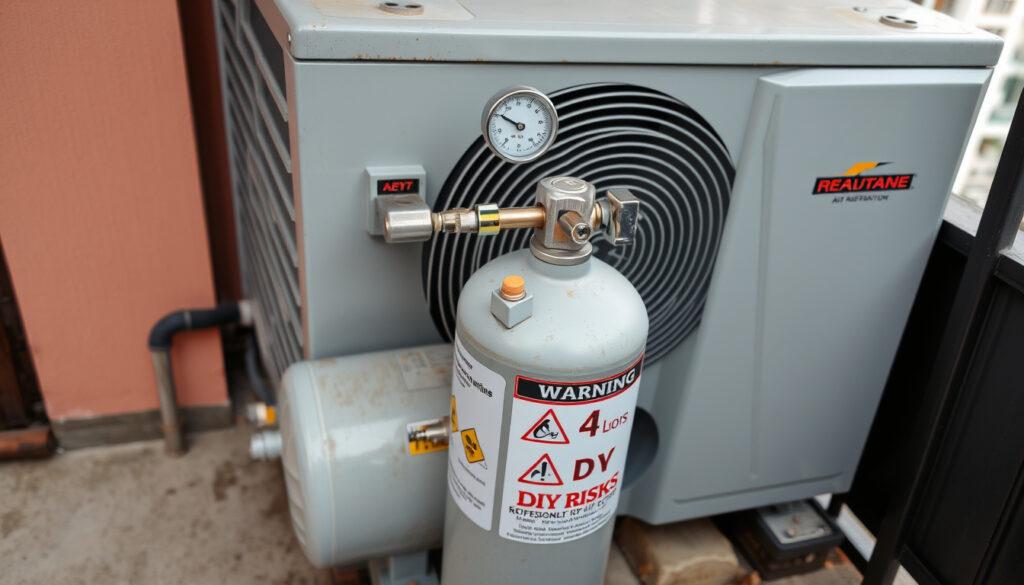
Aircon Gas Top Up Singapore: Costs, DIY Risks & When You Need It
There’s a moment every Singapore homeowner knows: the aircon starts blowing warm air, and the first thought is “need to top up gas.” But here’s the thing — a properly sealed aircon system shouldn’t need a refill more than once every one to two years. If you’re reaching for the top-up phone number more often, you might be masking a leak, and that’s where the real cost hides. Before you book a service, it pays to know what you’re actually paying for — and whether it’s even legal for you to do it yourself.
Typical Cost Range
S$50–S$200 depending on gas type (R22, R410A, R32)
Refill Frequency
Every 1–2 years if no leak exists
DIY Legality
Illegal in Singapore — requires licensed technician
Hidden Risk
Frequent top-ups signal an untreated leak — repair costs more
Before booking, here are the key facts you need to understand about aircon gas top-up pricing and frequency in Singapore.
| Key Fact | Detail |
|---|---|
| Typical cost range | S$50–S$150 |
| Average refill frequency | Every 1–2 years if no leak |
| Service duration | 30–60 minutes |
| Legal DIY? | No — work requires a licensed technician |
| Leak detection cost | S$120–S$200 for concealed ducted systems |
| R22 top-up | S$50–S$80 |
| R410A top-up | S$60–S$150 |
| R32 top-up | S$80–S$200 |
| Common hidden issue | Refrigerant leak or airflow problem |
In reality, a properly sealed aircon system loses refrigerant very slowly — if at all. Billy Aircon (Singapore aircon servicing company) states that every top-up should include a leak check, because a sealed system should not lose gas in the first place.
When does your aircon actually need a gas top-up?
If your unit is blowing warm air, the first instinct might be to call for a gas top-up. But not every cooling problem is a refrigerant problem — and paying for gas without a diagnosis can waste money.
- Leak = repeated top-ups: If your unit needs gas every year or more often, there’s almost certainly a leak somewhere.
- Legitimate refill cycle: A normal top-up every 1–2 years is fine — especially after installation or a major repair.
- Gas isn’t a consumable: Unlike filter cleaning, refrigerant doesn’t “run out” over time in a sealed system.
The upshot: if a technician says you need a top-up but doesn’t check for leaks first, you’re being set up for repeat visits. The honest fix is leak detection plus a proper refill — and that’s a different service entirely.
What does aircon gas top-up actually cost in Singapore?
Pricing varies by refrigerant type and whether the technician needs to find a leak. Here’s how the Singapore market splits costs across the three most common gas types.
| Provider | R22 | R410A | R32 | Notes |
|---|---|---|---|---|
| Billy Aircon | S$50–S$80 | S$60–S$150 | S$80–S$200 | Leak check included — non-negotiable |
| Fixmove | S$50–S$80 | S$60–S$150 | S$80–S$200 | Lists pressure test and fault check first |
Before anyone touches the valve, Fixmove (Singapore aircon repair provider) says the first step should be a pressure and fault check — because the gauge reading against the nameplate specification determines whether a top-up is even needed.
The catch: if the technician skips the leak hunt, you’re gambling on a recurring bill. The price difference between a top-up and a leak repair can be significant, so knowing what you’re paying for matters more than the per-visit quote.
Is DIY aircon gas top-up legal in Singapore?
The short answer is no — and the reasons go beyond just the law. Handling refrigerant requires certification under Singapore’s environmental regulations, and getting it wrong can damage your unit or harm the environment.
- Legal requirement: Only licensed technicians can handle refrigerant gases under Singapore’s National Environment Agency (NEA) rules.
- Equipment cost: Manifold gauges, refrigerant canisters, and leak detectors cost more than a single professional service.
- Safety risk: Refrigerant can cause frostbite or asphyxiation if handled incorrectly.
A DIY top-up usually ends in one of three ways: overcharging the system (damaging the compressor), undercharging (the unit still blows warm air), or introducing air into the line (contaminating the refrigerant). None of these are cheap fixes.
What are the signs your aircon actually needs gas?
Not every aircon problem is a refrigerant problem. A clogged filter, a failing compressor, or even a blocked drain line can make your unit blow warm air. If you pay for a top-up without any diagnosis, you might be throwing money at a symptom.
- Warm air at the vent: Set the thermostat low and confirm the air isn’t just lukewarm.
- Ice on the copper lines: This can indicate low refrigerant, but it can also mean a blocked filter.
- Hissing or bubbling sounds: These often point to a refrigerant leak, not just low gas.
- Higher electricity bills: A struggling compressor uses more power.
Leaking refrigerant is the one case where a top-up helps — but only if you fix the leak first. A proper diagnosis — pressure test, leak check, airflow verification — is what separates a real repair from a temporary patch.
How much does leak detection cost for concealed ducted systems?
Leak detection isn’t just a bolt-on service — it’s the difference between paying S$80 once and paying S$80 every few months. When a technician finds a leak, the gas top-up only works if the leak is sealed.
| Service | Typical cost | What it includes |
|---|---|---|
| Standard leak check | S$120–S$200 | Electronic detection, pressure testing, visual inspection |
| City Cooling Engr (Singapore aircon gas refill specialist) | Varies by job | Detection, pressure testing, refrigerant top-up to manufacturer specs, performance verification, service warranty |
AirconServices.sg (Singapore aircon service directory) notes that concealed ducted systems often require specialised electronic equipment and can cost about S$120 to S$200. If your aircon is concealed, budget for the extra diagnostic cost.
Related reading: Round Dining Table Singapore: Best Options & Buying Guide · Round Dining Table Singapore
lioncityaircon.sg, aircons.sg, pacificaircon.com.sg, aircons.sg, breeeasy.com, weiweiaircon.com.sg, lioncityaircon.sg, zoom-cool.com.sg
Frequently asked questions about aircon gas top-up in Singapore
How often should an aircon need a gas top-up?
Only once every 1–2 years, and only if there’s no leak. If you need more frequent refills, there’s almost certainly a leak that needs fixing first. A sealed system shouldn’t need frequent top-ups — that’s the clearest warning sign of an underlying issue.
Can I DIY an aircon gas top-up in Singapore?
No. Under Singapore law, handling refrigerant requires a licensed technician. Even if it were legal, DIY top-ups risk overcharging the compressor, introducing air into the system, or simply masking a leak — all of which lead to costlier repairs.
Why is R32 top-up more expensive than R410A?
R32 is a newer, more environmentally friendly refrigerant that requires different handling equipment and training. The gas itself is more costly, and technicians charge a premium for the specialised knowledge and tools needed to work with it safely.
How do I know if my aircon needs gas or just a cleaning?
If the unit blows warm air even at the lowest thermostat setting, gas might be low. If the unit simply blows weak air, check the filter and airflow first — it might be a cleaning issue, not a gas issue. A technician’s pressure test against the nameplate spec settles it definitively.
Related articles from Singapore Home Maintenance
- How to Repair a Leaky Pipe – leak detection and home maintenance in Singapore
- Round Dining Table Singapore – furniture guide
- Gardens by the Bay Guide – Singapore attraction guide
Bottom line: pay for diagnosis, not just gas
Here’s the honest Singapore market picture: a legitimate aircon gas top-up costs between S$50 and S$200, depending on your refrigerant type. But the real question isn’t the per-visit price — it’s whether you need it at all. If your unit hasn’t been serviced in over two years and shows no leak signs, you probably don’t need gas.
More related posts
 Taxi From Singapore to JB – Costs, Booking and Full Guide
 Section 142(1) Income Tax Notice: How to Respond
 USD to SGD Rate: Live, Forecast & Why SGD Is So Strong
 iPhone X to Buy: Is It Still Worth It in 2026? Price & Specs
 300 RMB to SGD: Real Rate & Hidden Fees Explained
 Mount Pleasant BTO Flats 2025: Prices, Eligibility & Masterplan
 Sapna Shah Viral Video – Verified Facts and Timeline
 Swansea vs Nottm Forest: TV, result, Snoop Dogg & rivalry
