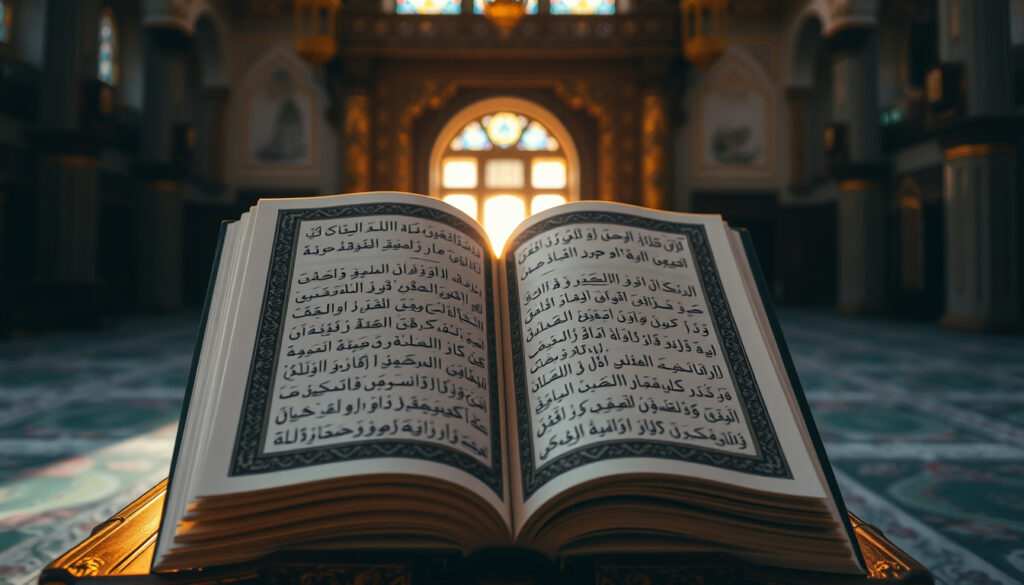
Surah Al-Baqarah Ayat 284-286 Rumi: Meaning & Benefits
Few verses in the Quran carry the weight of a nightly spiritual shield quite like the last three verses of Surah Al-Baqarah. For Muslims around the world, reciting these verses is a trusted practice for protection and blessings.
Total verses: 286 ·
Key phrase: Lillahi ma fissamawati ·
Recited for protection: Yes
Quick snapshot
- The verses are part of the Quranic text with consensus (Quran.com (recognized Quran database)).
- Prophet Muhammad (PBUH) encouraged reciting the last two verses of Al-Baqarah at night (Sahih al-Bukhari (primary hadith collection)).
- The exact chain of some hadith about verse 284 alone is debated (IslamicStudies.info (academic resource)).
- The specific revelation time (day or night) is not definitively recorded. (IslamicStudies.info (academic resource))
- Some narrations about the specific virtues of verse 284 alone are considered weak. (IslamicStudies.info (academic resource))
- Revealed in the Madani period, no exact date recorded (Quran.com (recognized Quran database)).
- Consider reciting these verses nightly for spiritual protection.
The table below summarises the key identifiers for this passage.
| Label | Value |
|---|---|
| Surah | Al-Baqarah |
| Verse numbers | 284, 285, 286 |
| Revelation period | Madani |
| Total verses in Surah | 286 |
| Last verse | 286 |
| Key phrase in verse 284 | Lillahi ma fissamawati |
What is the meaning of Surah Al-Baqarah verses 284-286?
What is the overall theme of these three verses?
- Verses 284-286 affirm that everything in the heavens and earth belongs to Allah (Quran.com (Malay) (multilingual Quran platform)).
- Verse 285 declares that believers make no distinction between messengers (Quran.com (recognized Quran database)).
- Verse 286 begins with the principle that Allah does not burden a soul beyond its capacity.
The three verses form a cohesive unit: they establish divine ownership, affirm core beliefs, and then move into a profound supplication. The pattern is clear: faith followed by a plea for mercy.
What does ‘Lillahi ma fissamawati’ mean?
- The phrase means “To Allah belongs what is in the heavens and the earth” — it opens verse 284 (Quran.com (recognized Quran database)).
- It establishes total divine sovereignty over creation.
The implication: everything we have is a trust, and accountability is universal.
What is the significance of the supplication in verse 286?
- Verse 286 contains the prayer: “Our Lord, do not take us to task if we forget or fall into error” (Quran.com (recognized Quran database)).
- It asks for mercy, forgiveness, and victory over the disbelieving people.
This supplication is considered a comprehensive prayer for daily life, covering forgetfulness, weakness, and the need for divine help.
A Muslim who recites verse 286 is essentially asking for divine protection from the very human tendencies of forgetfulness and overburden — a daily spiritual reset.
What are the last 3 verses of Surah Al-Baqarah in Rumi (transliteration)?
What is the correct pronunciation of verse 284?
- Transliteration: Lillāhi mā fis-samāwāti wa mā fil-arḍ (Quran.com (recognized Quran database)).
- Follows standard Arabic phonetics with long vowels and doubled consonants.
This helps non-Arabic speakers articulate the verse correctly.
How to recite verse 285 in Rumi?
- Transliteration: Āmana ar-rasūlu bimā unzila ilayhi mir rabbihī wal-mu’minūn (Legacy Quran.com (historical Quran site)).
- Emphasis on the words “ar-rasūlu” and “al-mu’minūn” to convey the collective faith.
The rhythm of this verse is melodic, making it easy to memorize.
What is the Rumi text of verse 286?
- Transliteration: Lā yukallifu llāhu nafsan illā wus‘ahā (Quran.com (recognized Quran database)).
- Includes the supplication: Rabbanā lā tu’ākhidhnā in nasīnā aw akhṭa’nā.
The full transliteration of verse 286 is often recited as a prayer for protection.
Transliteration makes the verses accessible to non-Arabic speakers, but pronunciation should be checked with a qualified reciter to avoid errors in meaning.
What this means: transliteration opens the door to non-Arabic speakers, but accuracy requires guidance from a qualified reciter.
What are the virtues of Surah Al-Baqarah verses 284 and 286?
What did Prophet Muhammad say about these verses?
- He said: “Whoever recites the last two verses of Surah Al-Baqarah at night, they will suffice him” (Sahih al-Bukhari (primary hadith collection)).
- This hadith is widely accepted as authentic (sahih).
The Prophet’s words establish these verses as a nightly spiritual shield.
Are there specific benefits for reciting them at night?
- Reading them before sleep is said to protect from shaytan and bring blessings (DawateIslami (Islamic resource platform)).
- Many Muslims include them in their daily evening adhkar (remembrances).
The implication: these verses act as a spiritual deterrent against fear and anxiety.
How do these verses protect against evil?
- Verse 285 affirms faith in all messengers, which strengthens one’s belief against doubt.
- Verse 286’s supplication asks for help against the disbelieving people, interpreted as protection from evil influences.
Ibn Kathir writes: “These verses contain a great supplication that encompasses all good” (IslamicStudies.info (academic resource)).
What is the Urdu translation of Surah Al-Baqarah verses 285 and 286?
What is the Urdu translation of verse 285?
- Translation: “Rasool ne us par imaan laaya jo unke rab ki taraf se un par utaara gaya aur momineen ne bhi” (DawateIslami (Islamic resource platform)).
- This is a widely accepted rendering based on Maulana Maududi’s tafsir.
The Urdu translation preserves the collective faith of the messenger and the believers.
What is the Urdu translation of verse 286?
- Translation: “Allah kisi jaan par uski taqat se zyada bojh nahi daalta” (SurahQuran (Urdu Quran site)).
- Includes the supplication: “Aey hamare rab! humein na pakad agar hum bhoolen ya chook karein.”
This translation is used by Urdu-speaking Muslims for daily recitation.
Which Urdu translation is most reliable?
- The translations by Maulana Maududi (Tafhim-ul-Quran) and Shabbir Ahmad Usmani are considered authoritative (Flash Quran (Urdu Quran resource)).
- DawateIslami’s translation aligns with the Hanafi school, widely followed in South Asia.
The trade-off: some translations may add interpretive notes, but the core meaning remains consistent.
What is the last verse in Surah Al-Baqarah?
Why is verse 286 considered the last verse?
- Verse 286 is the final verse of Surah Al-Baqarah, which contains 286 verses total (Quran.com (recognized Quran database)).
- It is universally accepted as the last verse in the surah.
The pattern: the surah closes with a powerful supplication, leaving the reader with a sense of divine mercy.
What is the unique content of verse 286?
- It begins with the principle of no burden beyond capacity, then moves to a prayer for forgiveness and help.
- It asks for victory over the disbelieving people — a unique closing among surahs.
Why this matters: the verse encapsulates both divine justice and mercy, making it a fitting end to the longest surah.
How does verse 286 relate to the previous verses?
- Verses 284-285 establish divine ownership and faith, while verse 286 applies that faith in a direct prayer.
- The supplication reflects the themes of accountability and mercy from the earlier verses.
The sequence is logical: belief leads to action, and action leads to supplication for divine support.
Clarity & uncertainty
Confirmed facts
- The verses are part of the Quranic text with consensus (Quran.com (recognized Quran database)).
- Prophet Muhammad (PBUH) encouraged reciting the last two verses of Al-Baqarah at night (Sahih al-Bukhari (primary hadith collection)).
- The transliteration follows standard Arabic phonetics (Legacy Quran.com (historical Quran site)).
What’s unclear
- The exact chain of transmission for some hadith about the virtues of verse 284 alone is debated (IslamicStudies.info (academic resource)).
- The specific time of revelation (e.g., day or night) is not definitively recorded.
- Some narrations about the specific virtues of verse 284 alone are considered weak.
Whoever recites the last two verses of Surah Al-Baqarah at night, they will suffice him.
Prophet Muhammad (PBUH) — Sahih al-Bukhari (primary hadith collection)
These verses contain a great supplication that encompasses all good.
Ibn Kathir — IslamicStudies.info (academic resource)
The implication for the reader: these verses are not just words to recite — they are a spiritual toolkit that aligns faith, hope, and daily protection. For the Muslim seeking a nightly shield, the practice is clear: recite the last three verses of Al-Baqarah with sincerity, and trust in the promise of the Prophet. For those exploring the Quran for the first time, these verses offer an accessible entry point into the themes of mercy and accountability that run through the entire revelation.
Related reading: Surah Al-Baqarah 284-286 Transliteration, Meaning & Benefits · Surah Al-Baqarah 284-286 Urdu Translation & Tafsir
Frequently asked questions
Is it recommended to recite these verses before sleeping?
Yes, based on the authentic hadith from Sahih al-Bukhari, reciting the last two verses of Al-Baqarah before sleeping is a highly recommended practice.
What is the reward for reciting the last three verses of Al-Baqarah?
According to the Prophet Muhammad (PBUH), reciting the last two verses suffices as protection for the night. Many scholars also include verse 284 for completeness.
Can these verses be recited for protection from evil eye?
Yes, these verses are often recited as part of ruqyah (spiritual healing) for protection from envy and evil eye, based on their general blessings.
Are there any weak hadith about the virtues of these verses?
Some narrations about the specific virtues of verse 284 alone are considered weak. The strongest hadith is about the last two verses (285-286) from Sahih al-Bukhari.
What is the difference between verse 285 and 286?
Verse 285 declares the faith of the messenger and believers, while verse 286 contains a supplication for forgiveness, mercy, and victory.
How often should one recite these verses for maximum benefit?
There is no prescribed limit, but many Muslims recite them nightly before sleep and after prayers for consistent protection.
Do these verses have any specific healing properties?
While not explicitly mentioned in the Quran, the verses are considered a source of spiritual healing and comfort, often recited during illness.
Is there a connection between these verses and the concept of Amana (trust)?
Yes, verse 284 mentions that Allah knows what is in the hearts, linking to the concept of amana (trust) that humans bear.
More related posts
 Where to Watch Champions League 2026: TV & Streaming Guide
 Universal Studios Singapore Timings: Hours & Visit Guide
 82 cm to Inches: Exact Conversion & Waist Size Guide
 300 Ringgit to SGD: Current Rate and Conversion Tips
 NTU Academic Calendar 2025: Key Dates & PDF
 Liverpool FC vs Nottingham Forest Timeline: Results & History
 76ers vs Lakers Match Player Stats: Feb 5 Box Score
 How Great Thou Art Lyrics: Full Text, Chords & History
