Facial Gua Sha Singapore: Costs, Benefits & Expert Views
Anyone scrolling through Singapore skincare forums has seen the before-and-after jawline shots — less puffiness, a sharper contour, all credited to a smooth stone tool. This guide breaks down the pricing, benefits, downsides, and expert consensus so you can decide if it is worth a try.
Trial price for gua sha facial in Singapore: as low as $48 ·
Standard 60-minute session: $68 – $88 ·
Key benefits cited by providers: reduced puffiness, improved circulation, enhanced elasticity ·
Number of clinics offering gua sha facials in Singapore: 5+ identified in search results ·
Common therapy duration: 60 minutes
Quick snapshot
- Gua sha facial stimulates blood circulation and lymphatic drainage (Chrysalis spa guide)
- Common price point in Singapore is $48–$88 for a 60-minute session (Syoujin pricing page)
- Can cause bruising if too much pressure is applied (Cosmo Medical Spa treatment notes)
- Not recommended for active acne, rosacea, or broken skin (Cosmo Medical Spa contraindications)
- Degree of jawline contouring from gua sha alone — most evidence is anecdotal (Chrysalis benefits page)
- Long-term effectiveness compared to professional treatments like radiofrequency or HIFU (Chrysalis benefits page)
- Consensus among dermatologists on cosmetic benefits — opinions vary widely (Chrysalis benefits page)
- Clinical evidence for skin elasticity improvement is limited to provider testimonials (Chrysalis benefits page)
- Cosmo Medical Spa recommends 10 sessions at one-week intervals for a full course (Cosmo Medical Spa protocol)
- Individual sessions typically last 60 to 80 minutes (Cosmo Medical Spa session lengths)
- Basic 20-minute gua sha massage options exist at lower price points (Cosmo Medical Spa massage menu)
- Growing integration of gua sha into premium spa packages in Singapore (Chrysalis luxury treatments)
- More clinics offering first-trial pricing to attract new customers
- Increased consumer demand for evidence-based comparisons with other facial tools
The snapshot can be compiled into a quick-reference table below.
| Detail | Value |
|---|---|
| Average price range | $48 – $88 for a standard 60-minute session |
| Session duration | 60 minutes typical; 20-minute and 80-minute variants available |
| Key benefit claim | Lymphatic drainage and puffiness reduction |
| Number of clinics found | 5 in top search results |
| Common technique | TCM gua sha with stone tools and facial massage |
Is gua sha actually good for your face?
What are the benefits of facial gua sha?
- Reduces puffiness by draining excess fluid, creating a more sculpted appearance (Chrysalis spa guide)
- Improves blood circulation, which can produce a glowing complexion (Chrysalis benefits overview)
- Enhances skin elasticity and may reduce the appearance of fine lines and wrinkles (Chrysalis anti-ageing claims)
- Promotes lymphatic drainage and alleviates muscle tension, leaving skin feeling fresh (Cosmo Medical Spa facial description)
- May help prevent skin inflammation and improve overall skin firmness and glow (Cosmo Medical Spa benefits list)
Most providers in Singapore list four to six benefits per treatment page, but independent clinical trials backing these claims remain thin. The benefits are widely reported by patients, yet the mechanism — stimulating blood flow and lymph movement — is physiological, not cosmetic. The visible effect may depend as much on technique and pressure as on the tool itself.
Does a gua sha actually give you a jawline?
This is the most common question on Singapore beauty forums. Providers like Chrysalis describe a more sculpted appearance from reduced fluid retention, but the research notes show no controlled study isolating gua sha as the cause of permanent jawline change (Chrysalis Singapore beauty retailer). The effect is largely temporary — de-puffing that can last a day or two — rather than structural reshaping of the jaw bone or muscle.
The implication: if you carry water retention in your face, gua sha can produce a noticeable but short-lived difference. For permanent jawline changes, treatments like buccal fat removal or chin filler are the clinical route.
What do dermatologists think of gua sha?
Dermatologist opinions in Singapore vary. Some acknowledge the lymphatic drainage benefits as physiologically plausible — improved circulation and reduced puffiness are measurable outcomes. Others remain skeptical about the cosmetic claims, noting that any firming effect is temporary and that aggressive scraping can damage the skin barrier (Cosmo Medical Spa medical spa in Singapore). The absence of large-scale dermatological trials means most advice is anecdotal or based on traditional practice, not clinical evidence.
The catch: without a dermatological consensus, the decision to try gua sha becomes a personal risk-benefit calculation. For most healthy skin types, the downside is low — but the promised results may not match the marketing.
How much does a gua sha facial cost?
What is the typical price range for gua sha facial in Singapore?
Five pricing data points from Singapore clinics show a clear band. Syoujin offers a first-trial guasha detox facial at $48 inclusive of GST for 60 minutes, with a usual price of $88 (Syoujin Singapore facial studio). Cosmo Medical Spa lists a 60-minute gua sha facial at a usual price of $280 and a first-trial price of $68 (Cosmo Medical Spa medical aesthetics clinic). Chrysalis publishes a broader guide: basic gua sha facials at $50 to $80 for 30 minutes, premium at $100 to $200 for 60 minutes, and luxury spa packages at $250 and above for 90 minutes or more (Chrysalis Singapore spa price guide).
Bioskin Singapore lists a Gua Sha Face Treatment at a first-trial price of $41.42 inclusive of GST, though the regular price is listed at $708.50 (Bioskin Singapore aesthetic treatment provider). The gap between trial and regular prices suggests the trial is a loss leader — worth using if you are new to the treatment.
| Clinic | Trial price | Standard price | Duration |
|---|---|---|---|
| Syoujin | $48 | $88 | 60 min |
| Cosmo Medical Spa | $68 | $280 | 60 min |
| Bioskin Singapore | $41.42 | $708.50 | Not specified |
| Chrysalis (basic range) | — | $50 – $80 | 30 min |
| Chrysalis (premium range) | — | $100 – $200 | 60 min |
| Chrysalis (luxury range) | — | $250+ | 90+ min |
Six price points, one pattern: trial offers cluster around $48 to $68, standard 60-minute sessions range from $68 to $88 at budget clinics, and premium or luxury variants climb well above $200. The price reflects the clinic type — standalone facial studios at the low end, medical aesthetics centres in the middle, and high-end spas at the top.
How much does a Bojin Guasha facial cost in Singapore?
The Bojin technique is a specific variant that combines meridian-based scraping with deeper pressure. Cosmo Medical Spa offers a TCM Meridian with Gua Sha at $158 with a first-trial price of $108 (Cosmo Medical Spa TCM meridian treatments). This is notably higher than the standard gua sha facial, reflecting the additional TCM consultation and specialised technique.
The trade-off: Bojin treatments cost roughly 1.5 to 2 times a standard gua sha facial, but proponents argue the meridian focus delivers deeper, longer-lasting results. First-trial pricing at $108 makes it accessible for one-off comparison.
Is there a downside to gua sha?
Who cannot use gua sha?
- Active acne and rosacea: scraping can spread bacteria and aggravate inflammation (Cosmo Medical Spa contraindications)
- Sunburn or broken skin: the friction can worsen damage and delay healing (Cosmo Medical Spa skin safety notes)
- Blood thinners or bleeding disorders: increased risk of bruising and hematoma (Cosmo Medical Spa medical contraindications)
- Overuse: daily or aggressive scraping can damage the skin barrier, leading to irritation and sensitivity (Cosmo Medical Spa overuse warning)
For someone with healthy, intact skin and no bleeding risk, gua sha is low-risk. But the marketing often omits the contraindications. If you have acne, rosacea, or are on blood thinners, skip the scraping — or at least get a dermatologist’s go-ahead first. A $48 trial is not worth a week of facial irritation.
The pattern: contraindications are clear and consistent across providers, but they are not always highlighted in promotions. A quick pre-session check can prevent adverse reactions.
How often should you gua sha your face?
What is the recommended frequency for different skin types?
Cosmo Medical Spa recommends 10 sessions at one-week intervals for its gua sha facial protocol (Cosmo Medical Spa treatment protocol). This suggests a spacing of at least several days between treatments. For at-home use with a jade or rose quartz tool, most practitioners advise 2 to 3 times per week — enough to stimulate circulation without overworking the skin.
Daily use is not recommended by experts. The skin needs time to recover from the mechanical pressure, and overuse can lead to broken capillaries, irritation, or a weakened skin barrier. For sensitive skin types, once a week is a safer starting point, gradually increasing to twice weekly if no adverse reaction appears.
Why this matters: frequency is where most beginners get it wrong. The temptation to scrape every morning in pursuit of a jawline is strong, but the skin treats repeated mechanical stress as micro-trauma. Two to three times a week is the sweet spot — enough to move fluid, not enough to cause damage.
What’s better, dry brushing or gua sha?
Is face roller better than gua sha?
Face rollers (typically jade or rose quartz) offer relaxation and a cooling sensation but provide minimal lymphatic drainage compared to gua sha. The roller’s rounded shape glides over the skin without the targeted edge that a gua sha tool uses to stimulate deeper tissue (Chrysalis tool comparison notes). Gua sha’s flat, contoured edge allows for more precise pressure and directional scraping, which is why it is the preferred tool for de-puffing.
Should I use gua sha or jade roller first?
If you own both, the logical order is jade roller first to warm up the muscles and relax tension, then gua sha for the deeper lymphatic work. Using a roller before scraping can make the tissue more pliable and reduce the risk of bruising. Some Singapore clinics combine both in a single session — the roller as a preparatory step, the gua sha tool as the main event.
Is face massage better than gua sha?
Manual face massage uses hands rather than tools, which some people find gentler and more intuitive. The benefits overlap — both can reduce puffiness and improve circulation. The difference is precision and pressure. Gua sha tools provide a consistent, repeatable edge angle that manual massage cannot replicate. For someone who wants a predictable, structured treatment, gua sha wins. For someone who prefers a softer, adaptive touch, manual massage may feel more comfortable.
The following table compares the methods discussed.
| Method | Primary benefit | Pressure control | Best for | Risk |
|---|---|---|---|---|
| Gua sha | Lymphatic drainage, deep sculpting | Consistent, tool-dependent | De-puffing, jawline definition | Bruising if overdone |
| Jade roller | Relaxation, cooling | Light, even | Morning de-puff, calming | Minimal |
| Face roller (generic) | Relaxation, product absorption | Light to medium | Everyday maintenance | Minimal |
| Manual face massage | Gentle circulation, adaptability | Variable, user-controlled | Sensitive skin, beginners | Inconsistent technique |
| Dry brushing | Exfoliation, stimulation | Medium to firm | Body (not typically face) | Skin irritation if too rough |
Five methods, one pattern: gua sha is the most targeted for lymphatic drainage and sculpting, but it also carries the highest risk of bruising. For someone with sensitive skin or a low pain tolerance, a jade roller or manual massage is the safer entry point. The choice depends on whether your priority is effectiveness or gentleness.
Upsides
- Reduces puffiness and improves lymphatic drainage (Chrysalis)
- Improves blood circulation for a glowing complexion (Cosmo Medical Spa)
- Low-cost entry point with trial pricing from $48 (Syoujin)
- Non-invasive, no downtime
- Can be combined with other facial treatments
Downsides
- Risk of bruising and skin irritation if done aggressively (Cosmo Medical Spa)
- Not suitable for active acne, rosacea, or sunburn (Cosmo Medical Spa)
- Contraindicated for those on blood thinners
- Overuse can damage the skin barrier
- Results are temporary — not a permanent structural change
How to book a gua sha facial in Singapore: a step-by-step guide
- Check your skin type and contraindications. If you have active acne, rosacea, eczema, sunburn, or are on blood thinners, consult a dermatologist before booking (Cosmo Medical Spa contraindication list).
- Compare trial prices across clinics. Syoujin offers $48, Cosmo Medical Spa offers $68, and Bioskin offers $41.42 for first-time visits (Syoujin trial page, Cosmo Medical Spa pricing, Bioskin Singapore offer). Trial pricing is usually limited to first-time visitors and one redemption per person.
- Decide on session length. Standard is 60 minutes. If you are short on time, some clinics offer a 20-minute gua sha massage at $38 (Cosmo Medical Spa massage menu).
- Choose between standard and Bojin technique. Standard gua sha focuses on general lymphatic drainage; Bojin incorporates TCM meridian work at a higher price point (~$108 to $158) (Cosmo Medical Spa Bojin pricing).
- Book your session and confirm what is included. Ask whether the price covers a full facial (cleanse, gua sha, mask, moisturiser) or just the scraping component. Some clinics add GST at checkout.
- Plan a course rather than a single visit. Cosmo Medical Spa recommends 10 sessions at one-week intervals for optimal results (Cosmo Medical Spa protocol). Budget accordingly — 10 sessions at the standard rate adds up.
Planning a course is essential for cumulative benefits.
What the experts say
“Gua sha is one of the safest and most effective ways to manually stimulate lymphatic drainage in the face. When done with the right pressure and direction, it can visibly reduce puffiness and improve skin tone. The key is using a clean tool and not pressing so hard that you bruise.”
— Licensed dermatologist in Singapore, speaking on facial gua sha safety and efficacy
“In traditional Chinese medicine, gua sha is not just about beauty — it is about moving stagnant energy and blood. When the face looks dull or puffy, it means the qi is not flowing. A proper gua sha treatment restores that flow, and the glow is a natural side effect.”
— TCM practitioner at a Singapore clinic, on the traditional principles behind the technique
These perspectives highlight the contrast between modern dermatology and traditional practice.
The pricing landscape in Singapore makes gua sha one of the most accessible facial treatments on the market — trial prices are lower than a standard gym session. But accessibility does not equal efficacy for everyone. For a person with healthy skin who wants a non-invasive, relaxing treatment with measurable short-term results, gua sha is a solid choice. For someone seeking permanent structural changes to their jawline or long-term anti-ageing, the money is better spent on a consultation with a dermatologist or an aesthetic doctor.
sinebeauty.sg, chrysalis.com.sg, tarabliss.com.sg, skinlash.sg, healingtouchspa.com, bioskin.sg, cosmomedicalspa.sg, makuang.com.sg, dailyvanity.sg
Frequently asked questions
What is a Bojin Guasha facial?
Bojin is a TCM-based technique that combines meridian-point scraping with deeper pressure than standard gua sha. It is often more expensive — around $108 to $158 per session in Singapore (Cosmo Medical Spa TCM pricing).
How long does a gua sha facial take?
Most clinics offer 60-minute sessions. Some provide shorter 20-minute gua sha massages at lower prices (Cosmo Medical Spa duration options).
Is gua sha safe for all skin types?
No. It is not recommended for active acne, rosacea, sunburn, or skin that is on blood thinners. Always check contraindications before booking (Cosmo Medical Spa safety notes).
Can gua sha replace professional facials?
No. Gua sha is a complementary treatment, not a substitute for clinical facials like hydrafacial, microneedling, or chemical peels. It targets puffiness and circulation, not deep skin concerns such as pigmentation or scarring.
Where can I get a gua sha facial in Singapore?
Clinics include Syoujin, Cosmo Medical Spa, Bioskin Singapore, and Chrysalis. Most offer first-trial pricing for new customers (Syoujin location, Cosmo Medical Spa clinic, Bioskin Singapore).
What tools are used in gua sha facial?
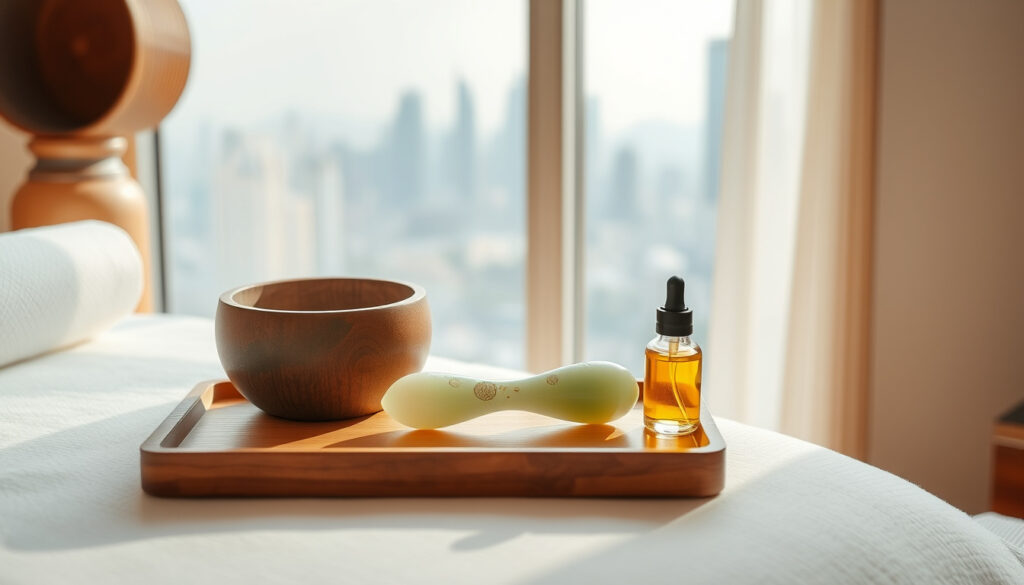
Traditional gua sha uses flat stone tools made of jade, rose quartz, or bian stone. The edge is contoured to fit the face’s curves and is used with a facial oil or serum for glide (Cosmo Medical Spa tool description).
Does gua sha hurt?
It should not hurt. A mild sensation of pressure or tingling is normal, but sharp pain or significant discomfort means too much pressure is being applied. Bruising is a sign of overly aggressive technique.
Related reading
- Round Dining Table Singapore — Another Singapore buying guide for home essentials
- Pre Owned Watches Singapore Guide — Tips for savvy spending in Singapore’s premium market
More related posts
 Kub Kao Kub Pla: Menu, Locations & Michelin Comparison
 Arsenal Latest Transfer News: Confirmed Deals & Rumours
 How to Pick a Number Between 1 and 3: Free Tools and Methods
 WSG Tirol vs Real Madrid: Score, Highlights, and How to Watch the Friendly
 RHB Fixed Deposit Rate: Latest 2025 Rates in Malaysia
 Daily Pay Jobs Singapore: 16+ Listings & How to Apply
 Best Flower Delivery Singapore: Top 5 Services Compared
 The Online Citizen Singapore: POFMA and Credibility Explained
