Concrete Floor Troweling: Process, Price & Rental Guide
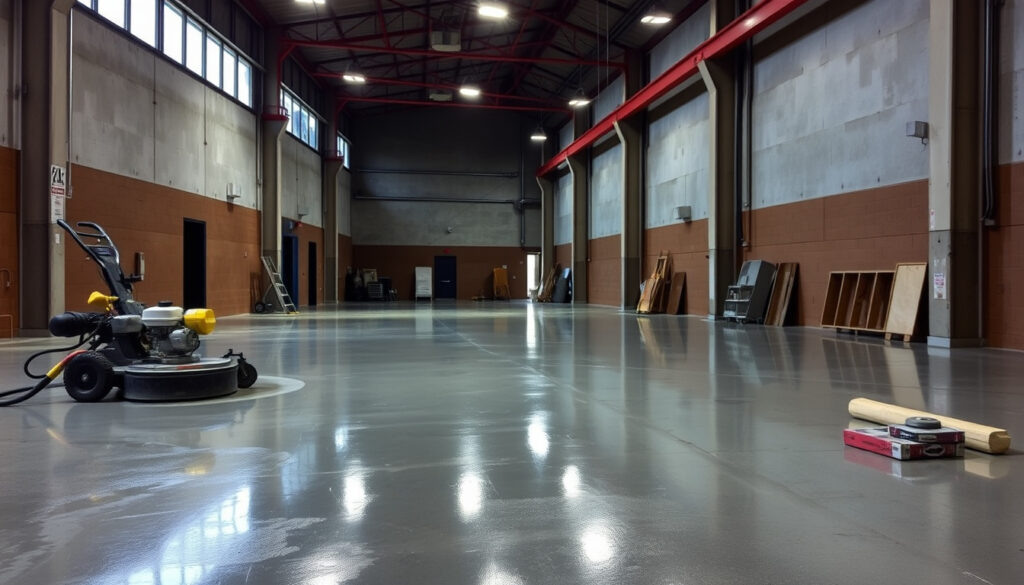
Concrete floor troweling transforms freshly placed concrete into an industrial-grade surface that resists forklifts, heavy loads, and decades of foot traffic. The process uses power machines and mineral or metallic hardeners—like Sika’s dry shake formulations—to create flat, wear-resistant floors in warehouses, factories, and logistics facilities across Vietnam.
Common Technique: Power troweling with hardener · Key Brands: Sika products · Process Steps: 5 main steps · Surface Types: Super flat or textured · Preparation Need: Clean concrete surface
Quick snapshot
- 5-step process confirmed across sources (Sika ZA Cementitious Flooring)
- Exact unit prices vary by region and supplier (Sika Knowledge Hub)
- Power troweling timing is critical—finish too early or late and the hardener won’t bond properly (Sika Knowledge Hub)
- Machine rental availability depends on local supplier inventory (Sika Global Concrete Floors)
The table below summarizes key technical parameters for Sika hardener applications in Vietnam’s industrial flooring context.
| Label | Value |
|---|---|
| Definition | Finishing concrete for flatness and durability |
| Main Steps | Prepare, mix, trowel, cure |
| Products | Sika hardener (green, gray, powder) |
| Curing Method | Nylon cover or water spray |
What is concrete floor troweling?
Concrete floor troweling is a finishing technique that uses power trowels and mineral or metallic hardeners to smooth and harden freshly placed concrete. Construction teams in Vietnam commonly use this method for industrial floors in warehouses, factories, and logistics facilities. Sika’s dry shake hardeners improve wear and impact resistance, according to the Sika Knowledge Hub.
Troweling Types
- Super flat surfaces achieved with hardener additives
- Textured rough finishes for slip resistance
- Standard smooth finishes without hardener
Super flat vs textured
Super flat troweling uses hardener products like Sikafloor-3 QuartzTop applied at 5 kg/m² total, according to the product datasheet. Textured troweling intentionally leaves a rough surface, achieved by stopping the power trowel earlier or using hand techniques for areas requiring grip.
Choosing between smooth and textured surfaces depends on your operational priorities: smooth finishes handle forklifts better but become slippery when wet, while textured floors sacrifice some flatness for grip in loading zones and ramps. Sika products cover the full spectrum—SikaColor-200 adds pigment to the hardener layer, Sikafloor MetalTop-200 delivers metallic aggregate for extreme durability, and Sikafloor-2 SynTop handles regional Vietnamese conditions.
What is the unit price for concrete floor troweling?
Unit pricing for concrete floor troweling varies based on material costs, labor rates, and project location. Hardener product costs depend on the specific formulation—metallic aggregates cost more than mineral options. Regional supplier pricing differs across Vietnam, and smaller projects often carry higher per-square-meter rates than large industrial installations.
Factors affecting price
- Hardener type: mineral vs metallic vs colored formulations
- Project size: economies of scale for large warehouse floors
- Labor costs: regional wage variations across Vietnam
Regional variations
USA specifications for SikaColor-200 list 70-90 lb/100 sq ft application rates, according to the Sika USA Datasheet. Vietnam uses Sikafloor-2 SynTop for local conditions, while Ethiopia relies on liquid hardeners like CureHard-24 for hot climates. The implication: exact monetary unit prices require direct quotes from local suppliers—the kg/m² application rates are standardized, but material costs fluctuate by region and product formulation.
How to rent a concrete floor troweling machine?
Renting concrete floor troweling equipment involves contacting industrial construction suppliers, confirming machine availability, and arranging delivery to your site. Standard rental terms typically span daily to weekly periods depending on project scope. Walk-behind power trowels work for smaller areas, while ride-on machines handle large warehouse floors.
Machine types
- Walk-behind power trowels for detailed work
- Ride-on power trowels for large industrial floors
- Combination units with adjustable blade angles
Rental process
The rental process requires defining your project area, selecting appropriate machine horsepower, and confirming the supplier has compatible equipment. Power troweling is faster than hand methods and produces flatter surfaces, according to Sika Global Concrete Floors.
Ride-on trowel rental costs run higher than walk-behind units, but the productivity gains on large floors often justify the expense. Factor in transportation logistics—these machines require flatbed delivery.
The pattern: equipment rental availability depends on your location—major urban centers in Vietnam have more supplier options, while rural sites may face limited inventory and longer delivery lead times.
What is the standard for concrete floor troweling?
Concrete floor troweling standards define acceptable flatness tolerances, thickness requirements, and durability benchmarks for different usage scenarios. Professional contractors follow industry norms for concrete compressive strength, surface regularity, and joint spacing. Sika’s technical documentation provides specific parameters for each product application.
Norm levels
- Flatness tolerance measured by F-number system or SR1/SR2 classifications
- Thickness requirements based on expected traffic loads
- Joint spacing typically 6m x 6m for industrial floors
Quality checks
Application temperature for Sikafloor-3 QuartzTop requires substrate between +5°C and +35°C, with ambient conditions within the same range. Relative humidity for application spans 30-98% r.h., and concrete compressive strength must reach 25 N/mm² minimum, according to the Sikafloor-3 QuartzTop datasheet.
Application rates vary by traffic: foot traffic needs 3 kg/m², while heavy forklift traffic requires 5-7 kg/m². The catch: these standards exist on paper, but actual compliance depends on contractor experience—overworking the floor during troweling causes defects, so finish edges manually where needed, according to the Sikafloor-3 QuartzTop PDF.
What are the steps for concrete floor troweling?
The concrete floor troweling process follows five main steps: surface preparation, product selection and mixing, hardener application, power floating, and final curing. Each stage has specific timing requirements and technique variations depending on whether you choose hand or mechanical application.
Surface preparation
- Clean concrete of debris, laitance, and loose material
- Fill or repair cracks before hardener application
- Verify substrate temperature meets product specifications
Mixing and application
Hand application of dry shake hardeners happens after the initial concrete set and floating, typically at 4-5 kg/m². Mechanical application follows immediately after concrete placement, before the initial set, with 5 kg/m² being ideal, according to the Sika Knowledge Hub. Timing for hardener application occurs when light foot traffic leaves 3-5mm imprint on the concrete.
Apply Sikafloor-3 QuartzTop in two stages: 60% first (broadcast and compact with low-speed trowel), then 40% perpendicular. Treat edges and joints first with a steel trowel before full broadcast. For contractors new to the process, this two-pass method prevents the aggregate sinking that plagues single-pass applications.
Final curing
Curing after troweling uses Sika Antisol A/E, Proseal 22, or CureHard-24 to prevent cracks. Air-entrained concrete is not suitable for dry shake hardeners, according to the product datasheet. The implication: the five steps look straightforward on paper, but each transition requires judgment calls on timing, pressure, and machine speed—a contractor who’s done this 50 times reads the concrete differently than someone on their first project.
Upsides
- 5-step process confirmed across sources
- Sika hardeners standardize the approach globally
- Durable surface lasts decades with proper maintenance
Downsides
- Exact unit prices unclear—regional variation significant
- Machine rental costs vary by availability
- Timing window for application is narrow
To finish a first-class dry shake hardener floor requires strict planning, coordination and control.
Sika (dry shake hardener manufacturer) via Sika Knowledge Hub
Mechanical application is ideal for application rates of 5 kg/m² and are not advisable for lower application rates due to the potential of the aggregate sinking.
Sika (dry shake hardener manufacturer) via Sika Knowledge Hub
For industrial property developers in Vietnam, the concrete floor troweling decision comes down to balancing upfront hardener costs against long-term durability. Using Sika products means following a proven five-step process: prepare the surface, select your hardener, apply it at the correct rate, power trowel with proper timing, and cure to prevent cracks. Skip any step and you’re gambling with the floor’s performance.
Related reading: Intl Cement Share Price
usa.sika.com, youtube.com, eth.sika.com, homedepot.com, vnm.sika.com, scribd.com, zaf.sika.com
Frequently asked questions
How to choose cement for troweling?
Use concrete with minimum 25 N/mm² compressive strength for Sikafloor-3 QuartzTop applications. Sika recommends superplasticisers like Sikament or Sika Viscocrete for optimal workability without compromising strength.
What is hardener in concrete troweling?
Hardeners are dry shake mineral or metallic aggregates applied to fresh concrete surfaces. They increase wear resistance, impact resistance, and ease of cleaning. Sika products like Sikafloor-3 QuartzTop and MetalTop-200 are pre-blended formulations that broadcast onto concrete and get power troweled into the surface.
How to cure troweled concrete?
Apply curing compounds immediately after final power floating. Sika Antisol A/E, Proseal 22, or CureHard-24 prevent moisture loss and surface cracks. Cover with nylon sheets if environmental conditions are extreme.
Differences between rough and smooth troweling?
Smooth troweling uses power floats at higher speeds to create flat, glossy surfaces suitable for warehouses and logistics. Rough troweling stops earlier or uses hand techniques for textured finishes that provide slip resistance on ramps, parking areas, or wet environments.
Common mistakes in concrete troweling?
Starting too early before the concrete sets, overworking the surface which causes defects, neglecting edge treatment, and applying hardener at incorrect rates. Timing matters most—trowel when footprints leave 3-5mm impressions.
Best time to trowel concrete?
The ideal timing is when concrete has reached plasticity—typically after bleeding stops but before initial set. Test by pressing lightly: if a 3-5mm footprint remains without sinking or dragging, you’re ready to apply hardener and begin troweling.
Tools needed besides machine?
Steel trowels for hand work and edges, mixing equipment for any additives, curing compound sprayers, measuring tools for application rate verification, and personal protective equipment including knee pads for hand finishing work.
More related posts
 Ejen Ali The Movie 2: Release Date, Netflix, Villain, and More
 Singapore Jobs for Malaysians: Salary, Costs & Work Passes
 Philippians 4:6-7 Meaning: Overcome Anxiety with Prayer
 iPhone 14 Pro Max Price in Ireland: New, Refurbished & Trade-In
 Evelyn Lam Leaves Mediacorp: What’s Verified and Unclear
 Kaiden Cheng Nail Palace: Controversy, Jail & Background
 Mega Evolution Booster Box: Price, Contents & Buy Guide
 Li Auto HK Share Price: Buy, Hold, or Sell Now
