What to Do in Shenzhen: Top Attractions, Costs & Itineraries
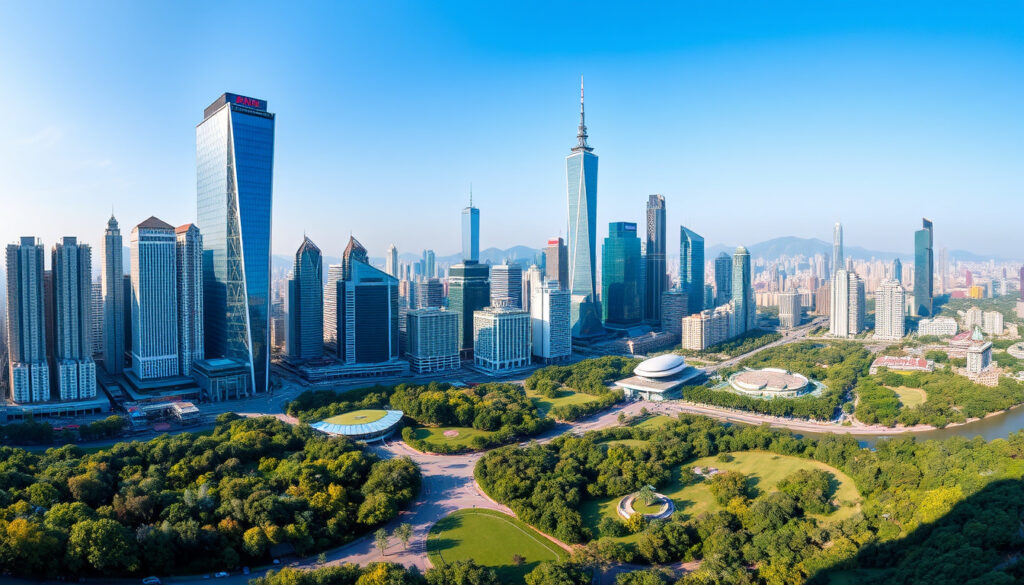
Few cities reinvent themselves the way Shenzhen has. In just over 40 years, it went from a sleepy fishing village to a global technology powerhouse—and that same energy now fuels one of Asia’s most surprisingly diverse travel destinations. Whether you’re eyeing its skyline from the Ping An Finance Centre or exploring art districts that rival Beijing’s 798, this guide breaks down the best attractions, costs, and timing so you can plan a trip that actually fits your style.
Ping An Finance Centre height: 599 m (Alternative Airlines (travel guide)) · Free Sky observation deck: 547.6 m · Window of the World ticket: ∼¥220
Quick snapshot
- Nanshan District is home to many tech businesses and top attractions (Sapore di Cina (travel blog))
- Window of the World has scaled replicas of Eiffel Tower, Taj Mahal, Sydney Opera House (Sapore di Cina (travel blog))
- Lianhua Mountain Park offers free city views with a short uphill walk (Sapore di Cina (travel blog))
- Annual tourist numbers fluctuate; 2019 figures are most recent (YouTrip (travel blog))
- Pricing data for tours and meals may vary by season and location (YouTrip (travel blog))
- Established as a Special Economic Zone in 1979 (Sapore di Cina (travel blog))
- Tech boom accelerated in the 2000s with companies like Tencent and DJI (Sapore di Cina (travel blog))
- Nanshan District continues to attract tech talent and cultural developments (Sapore di Cina (travel blog))
- Day trips from Hong Kong remain popular, with high-speed rail connecting in ∼30 min (Sapore di Cina (travel blog))
Here are the key facts about Shenzhen to set the stage.
| Label | Value |
|---|---|
| Official Name | Shenzhen, Guangdong Province |
| Area | 1,997 km² |
| GDP (2023) | ¥3.2 trillion (≈ $440 billion) |
| Language | Mandarin (Cantonese widely spoken) |
| Currency | Chinese Yuan (CNY) |
| Time Zone | CST (UTC+8) |
What is Shenzhen best known for?
Shenzhen earned its global reputation as China’s most successful Special Economic Zone—a laboratory for economic reform that transformed a rural backwater into a metropolis of 17.5 million people. Today it’s synonymous with innovation: Huawei, Tencent, and DJI all call this city home, and the skyline tells the story with gleaming towers like the 599‑m Ping An Finance Centre. But beyond the tech narrative, Shenzhen offers a surprisingly layered visitor experience—a mix of world‑class theme parks, coastal parks, art districts, and a food scene that draws from every corner of China. The catch is that most guides treat it as a one‑day add‑on to Hong Kong, when in reality three days let you sample the real variety.
Is there anything worth seeing in Shenzhen?
Top attractions
- Window of the World – 480,000 m² park with 100+ scaled global landmarks. Adult tickets ∼¥220. The Eiffel Tower replica and evening light shows are crowd‑pleasers.
- Ping An Finance Centre – 599 m tower with Free Sky observation deck at 547.6 m. Tickets ∼¥200; weekends are busy.
- Splendid China Folk Village – Culture‑focused park with miniature landmarks and ethnic performances. Entry from ¥220 (YouTrip (travel blog)).
- Lianhua Mountain Park – Free entry, short uphill walk to Deng Xiaoping statue with panoramic Futian views.
- OCT Loft – Creative arts district in Nanshan, good for an afternoon stroll.
Shenzhen’s theme parks are bigger and cheaper than comparable ones in Shanghai or Beijing, but they eat up half a day each. Travelers who want a cultural experience often find the free parks (Lianhua, Shenzhen Bay) more memorable than the paid ones.
“Lianhuashan Park is a must – the view from the top is incredible.” – Reddit user u/chinalife on r/chinalife
Hidden gems and local favorites
- Dafen Oil Painting Village – A district where artists produce and sell oil paintings at bargain prices. Not in most tourist itineraries but a favorite among art buyers (Expedia (travel guide)).
- Shenzhen Bay Park – Coastal walkway perfect for sunset and a quick break between districts.
- Dongmen Pedestrian Street – Bustling shopping area with street food and electronics stalls (Expedia (travel guide)).
The pattern: Shenzhen’s best experiences balance paid attractions with free natural spots, giving visitors a reason to stay longer than a day trip.
Is 3 days enough in Shenzhen?
Yes—three days let you cover the three main districts (Futian, Nanshan, Luohu) plus a coastal break. Here’s a tested sequence.
Day 1: Tech and city center
- Morning: Ping An Finance Centre or Lianhua Mountain Park (free, less crowded).
- Afternoon: Shenzhen Bay Park coastal walk.
- Evening: Dinner in Futian or Dongmen food street.
Day 2: Culture and parks
- Morning: Window of the World or Splendid China Folk Village (choose one).
- Afternoon: OCT Loft art district.
- Evening: Explore Nanshan district bars and restaurants.
Day 3: Day trip or coastal relaxation
- Option A: Day trip to Hong Kong (∼30 min by high‑speed rail).
- Option B: Dameisha beach (if weather permits) or Dapeng Peninsula for hiking.
The pattern: Shenzhen rewards travelers who mix skyline, green space, and food rather than trying to cram five theme parks. For layovers (6–8 hours), stick to Lianhua Mountain + Shenzhen Bay Park + a quick meal near the station.
“No longer a place solely for cheap massages and counterfeit handbags, Shenzhen city boasts creative art.” – Timeout Shenzhen editor
What this means: If you are short on time, prioritize the skyline and a single park rather than overplanning.
Is it better to visit Guangzhou or Shenzhen?
One pattern emerges from user data: Guangzhou offers deeper Cantonese culture and history, while Shenzhen is modern, tech‑oriented, and generally cheaper for accommodation and dining. Both have excellent metro systems, and the high‑speed rail connects them in about 30 minutes. Here’s the breakdown:
Three major differences, one trade-off: Guangzhou wins for heritage (Chen Clan Academy, Shamian Island, Cantonese opera), Shenzhen wins for skyline, theme parks, and tech tours. Prices tilt toward Shenzhen for budget travelers.
| Category | Guangzhou | Shenzhen |
|---|---|---|
| Best for | History, Cantonese culture, food | Modern architecture, tech, theme parks |
| Budget hotel (night) | ¥250–400 | ¥200–350 |
| Metro coverage | Extensive, 16 lines | Extensive, 12+ lines |
| Can’t‑miss attraction | Chen Clan Academy (¥10) | Ping An Finance Centre (∼¥200) |
| Travel time between | 30 min by high‑speed rail | |
The trade-off: If you have only one city, pick based on your interests. If you have three days, split them—Shenzhen for 2 days, Guangzhou for 1, connected by rail.
When is the best time to visit Shenzhen?
Seasonal weather
Shenzhen has a subtropical monsoon climate. The most comfortable months are October to December, when temperatures range 20–28°C and humidity drops. January–February is cooler (10–18°C) but still pleasant, though rain showers occur. The heat and humidity peak June–September, coinciding with typhoon season—avoid this period for outdoor sightseeing.
Peak vs off‑peak
- Peak: October–December (mild weather, but also many domestic tourists). Chinese National Day (October 1–7) brings crowds and high prices.
- Off‑peak: November–early December (if you avoid National Day) offers good weather and fewer crowds. January–February (excluding Lunar New Year week) is quiet but cooler.
- Avoid: June–September (typhoons, extreme heat). Chinese New Year week sees widespread business closures and inflated hotel rates.
Booking flights and hotels in October–December costs 20–30% more than in January–February, but the trade-off is comfort. Budget travelers who can brave mild winter weather save significantly.
The implication: Timing your visit to avoid both heat and holidays ensures the best balance of cost and comfort.
Is Shenzhen cheap or expensive?
Accommodation budget
- Hostel dorm: from ¥80/night.
- Budget hotel: ¥200–350/night (¥200 is minimum for a private room in a decent area).
- Mid‑range: ¥400–600/night.
Compared to Beijing and Shanghai, Shenzhen is moderately priced—cheaper than Beijing for mid‑range hotels, similar to Shanghai for hostels (YouTrip (travel blog)).
Food and transportation costs
- Street food meal: ¥15–25 (e.g., dumplings, noodle bowls).
- Sit‑down restaurant: ¥60–100 per person.
- Metro ride: ¥2–15.
- Taxi start: ¥10.
A daily budget of ¥200 (≈ $28) covers accommodation, food, and transport—generous for a thrifty traveler, tight for a splurger.
Tourist spending tips
- Buy tickets online (e.g., Viator lists a 9‑hour private highlights tour from $179) to avoid queue surcharges (Viator (tours platform)).
- Pre‑paid metro card (Shenzhen Tong) cuts per‑ride cost slightly.
- Street food near Dongmen is cheapest and most diverse.
Five attractions that define Shenzhen’s appeal, one pattern: they cluster around two spectrums—cultural/paid vs natural/free. The table below shows how to choose based on your time and budget.
| Attraction | Entry fee | Time needed | Best for |
|---|---|---|---|
| Window of the World | ∼¥220 | 3–4 hrs | Families, theme park fans |
| Splendid China Folk Village | ∼¥220 | 3 hrs | Culture enthusiasts |
| Ping An Finance Centre | ∼¥200 | 1.5 hrs | Skyline lovers, photographers |
| Lianhua Mountain Park | Free | 1–2 hrs | Budget travelers, quick visit |
| Shenzhen Bay Park | Free | 1–2 hrs | Relaxation, sunset walks |
The pattern: Free parks offer better value for time-pressed travelers, while paid attractions suit families or those with half a day to spare.
Related reading: Where to Stay in Guangzhou · Where to Stay in Chengdu
After mapping out your itinerary, you’ll want to check out the top areas to stay in Shenzhen to find the neighborhoods that suit your travel style and budget.
Frequently asked questions
When to avoid Shenzhen?
June to September for typhoon season and extreme heat. Also avoid Chinese New Year week (business closures) and National Day week (crowds).
Is Shenzhen expensive for tourists?
Moderate. Budget travelers can spend ¥200/day (hostel + street food). Mid‑range travelers budget ¥400–600/day.
What can you do on a layover in Shenzhen?
A 6‑8 hour layover allows visiting Lianhua Mountain Park (free) and Shenzhen Bay Park, plus a meal near Futian station. Consider a private tour from $149.
What tech attractions are there in Shenzhen?
Ping An Finance Centre (skydeck), Huaqiangbei electronics market, and visits to company showrooms (Huawei, Tencent) by appointment.
How to spend a day trip to Shenzhen from Hong Kong?
Take the MTR to Lo Wu or high‑speed rail from West Kowloon (∼30 min). Visit Lianhua Mountain, Dongmen food street, and Ping An Finance Centre.
What is nightlife like in Shenzhen?
Futian has rooftop bars, Nanshan has live music clubs, and Shekou has expat‑friendly pubs. Entry usually free, drinks from ¥30–50.
How many days should you spend in Shenzhen?
Two days for a quick tour (skyline + park + theme park), three days to add a day trip or coastal break. Four days allows exploring Dapeng Peninsula.
For the tourist evaluating a multi‑city itinerary in southern China, the choice is clear: Shenzhen rewards those who want modern energy and budget‑friendly options, while Guangzhou offers history and Cantonese culture. If you can only pick one, Shenzhen wins for first‑timers looking for a vibrant, easy‑to‑navigate city that shows China’s future rather than its past.
More related posts
 Punggol Coast Indoor Playground: Tickets, Price, Hours & Reviews
 3 Million Rupiah to SGD: Live Rate & Fee Comparison
 Universal Studios Singapore Timings: Hours & Visit Guide
 China Food Near Me: Be t Chine e Takeaway in Dublin
 Swansea vs Nottm Forest: TV, result, Snoop Dogg & rivalry
 SSC Napoli vs Genoa CFC Lineups: Feb 7 Match
 RV Living Full Time: Costs, Legality, and Practical Tips
 Employment Contract Lawyer Singapore: Termination & Breach
