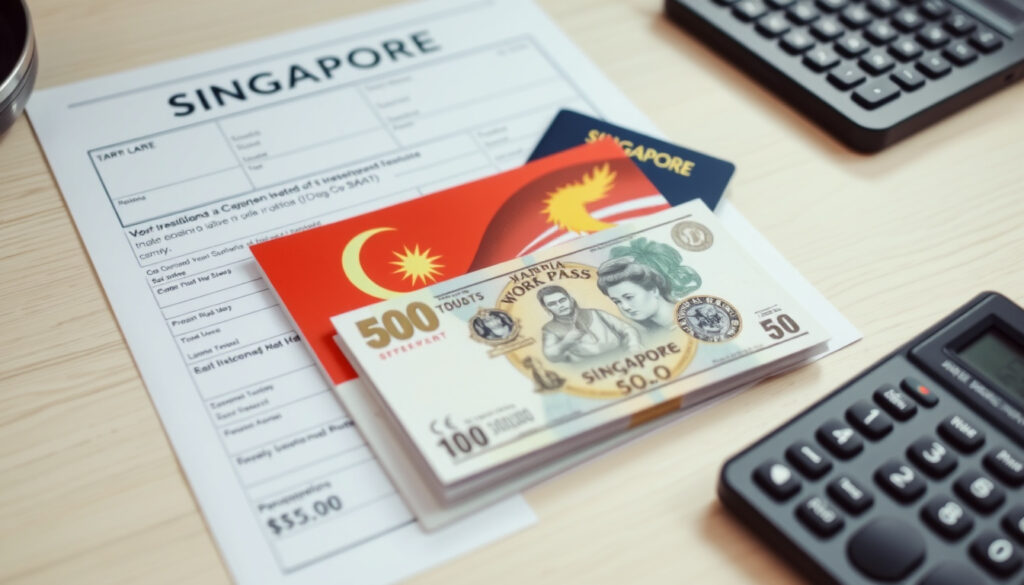
Singapore Jobs for Malaysians: Salary, Costs & Work Passes
If you’re a Malaysian eyeing the job market across the Causeway, you’ve probably heard the numbers: higher salaries, a different currency, and a cost of living that can catch you off guard, and around 350,000 Malaysians already work in Singapore, drawn by wages that often double what they’d earn at home, but the real question is whether the math works for you. This guide walks through work passes, salary benchmarks, living costs, and the hidden challenges so you can decide if that Singapore job offer adds up.
Malaysians working in Singapore: ~350,000 ·
Median monthly salary (Singapore, 2023): SGD 5,170 ·
Average HDB 3-room rent: SGD 2,200 ·
Monthly expenses (excl. rent) for single: SGD 1,200 ·
Minimum salary for Employment Pass (2024): SGD 5,000
Quick snapshot
- Malaysians must hold a valid work pass to work in Singapore (MOM)
- Median full-time salary is around SGD 5,170 (Singapore Department of Statistics)
- Construction, services, and marine sectors actively hire Malaysians (MOM foreign workforce data)
- Exact number of Malaysians working in Singapore varies by source (MOM estimates)
- Future work pass salary threshold adjustments are proposed but unconfirmed (EDB proposal)
- Long-term impact of COMPASS framework on Malaysian workers is still unfolding (MOM COMPASS info)
- Sep 2023: EP minimum salary raised to SGD 5,000 from SGD 4,500 (MOM)
- Jan 2024: COMPASS framework introduced for EP renewal (MOM)
- 2025: Further EP salary threshold rise to SGD 5,600 proposed (EDB)
- Higher salary thresholds for Employment Pass from 2025 (EDB)
- Increased focus on COMPASS points-based assessment (MOM)
- More competitive landscape for mid-skilled S Pass holders (MOM)
Upsides of working in Singapore
- Salaries often double Malaysian wages for similar roles
- Proximity to Malaysia – weekend trips and daily commute possible
- Exposure to a global economy and career growth
Downsides to consider
- Housing is the biggest cost – HDB 3-room rent averages SGD 2,200
- Long working hours and competitive pace
- Separation from family, especially for those with children
The table below summarizes the key financial figures every Malaysian should consider before moving.
| Metric | Value |
|---|---|
| Minimum salary for S Pass (2024) | SGD 3,150 |
| Minimum salary for Employment Pass (2024) | SGD 5,000 |
| Median gross monthly income (2023) | SGD 5,170 |
| Average HDB 3-room rent | SGD 2,200 |
| Monthly transportation cost | SGD 100–150 |
Is it easy for Malaysians to get a job in Singapore?
For many Malaysians, the answer is yes — with the right qualifications and a valid work pass. Singapore’s Ministry of Manpower requires foreign workers to hold one of three main passes: Work Permit for unskilled or semi-skilled roles, S Pass for mid-skilled positions (min SGD 3,300 monthly), and Employment Pass (EP) for professionals earning at least SGD 5,600 starting 2025.
“Singapore’s Employment Pass requires a job offer and a qualifying salary benchmarked against the top one-third of local PMET salaries by age.” – Ministry of Manpower
Work pass requirements
- Work Permit: No minimum salary threshold. For semi-skilled jobs in construction, manufacturing, marine, and services. Lower levy for Malaysian workers.
- S Pass: Minimum salary of SGD 3,300 (SGD 3,800 for financial services) as of 2024, per MOM. Up to SGD 4,800 at age 45+.
- Employment Pass: Minimum SGD 5,600 (2025), up to SGD 10,700 at age 45+ (EDB). Requires COMPASS assessment unless exempted.
Industry demand for Malaysians
Construction, services, marine, and manufacturing sectors actively recruit Malaysians. The MOM foreign workforce data shows high demand for roles in retail, F&B, cleaning, and warehouse operations. Due to proximity and cultural familiarity, Malaysians have an advantage over other foreign applicants.
“Employment Pass applicants must earn at least SGD 5,600 a month, or at least SGD 6,200 for financial services roles.” – Baker McKenzie
Job competition is real, especially for mid-skilled S Pass roles. A Malaysian applicant may find it easier to get interviews than someone from farther afield, but salary expectations must match MOM thresholds.
The implication: Getting a job is easier for Malaysians than for many other nationalities, but the pass threshold sets a floor on salary that employers must respect.
Can Malaysians work in Singapore?
Yes, but not without a valid work pass. Working on a tourist visa is illegal, and penalties include deportation and a ban from re-entering Singapore. MOM explicitly requires all foreign workers to have an approved pass before starting work.
Eligibility criteria
- Valid passport and job offer from a Singapore-registered employer
- Educational qualifications matching the job role (Employment Pass requires a recognized degree)
- S Pass candidates need at least a diploma; Work Permit applicants need no formal qualification
- Employer must apply on your behalf — you cannot self-sponsor
Types of work passes
Three passes dominate for Malaysians. The Work Permit covers low-skilled roles with no salary minimum. The S Pass (min SGD 3,300) suits diploma holders in technical positions. The Employment Pass (min SGD 5,600 from 2025) is for degree-qualified professionals. Baker McKenzie confirms these thresholds.
From 2025, the EP minimum rises to SGD 5,600, and the COMPASS framework adds points for education, diversity, and skills. Malaysians without degrees may find S Pass the more accessible route.
Why this matters: Getting a pass is step one. The pass type determines salary, rights, and long-term options for PR or renewal.
Is 8000 SGD a good salary in Singapore?
Yes — SGD 8,000 is above Singapore’s median gross monthly income of SGD 5,170 as reported by the Singapore Department of Statistics. For a single person, this leaves room for comfortable living, savings, and even sending money back to Malaysia.
Salary levels in Singapore
- Entry-level graduates: SGD 3,500–4,500
- Mid-career professionals: SGD 6,000–9,000
- Senior roles: SGD 10,000+
- Median across all sectors: SGD 5,170
Livable salary for a single person and family
A single person can get by on SGD 3,500–4,500 monthly including rent and expenses. For a family of three, the figure jumps to SGD 6,000–8,000, especially with school fees. The data.gov.sg CPI dataset confirms housing and education as the largest cost drivers.
The trade-off: High salary relative to Malaysia, but Singapore’s cost of living means the premium shrinks fast once rent, transport, and childcare are factored in.
Is it expensive to live in Singapore?
Yes — and housing is the biggest shock. A 3-room HDB flat rents for around SGD 2,200, while a room in a shared flat runs SGD 800–1,200. Monthly expenses for a single person excluding rent total about SGD 1,200, per the Singapore Department of Statistics household expenditure data.
Housing costs
- HDB 1-room rental: SGD 1,000–1,500
- HDB 3-room rental: SGD 2,200 average
- Private condo (2-bed): SGD 3,500–5,000
- Room in HDB: SGD 800–1,200
Monthly expenses
Groceries cost SGD 400–600, transport SGD 100–150 (MRT + bus), utilities SGD 100–150, and meals out SGD 300–500. Total non-housing expenses for a single: roughly SGD 1,000–1,500.
How much to survive
A single Malaysian can survive on SGD 1,500–2,000 monthly excluding rent. With a modest HDB room, the total monthly burn is around SGD 2,500. HSBC Singapore advises expats to budget SGD 3,500 for a single and SGD 6,000 for a family.
A salary of SGD 4,500 looks great in ringgit (about RM 15,000) but in Singapore that’s survival-level. The ringgit-to-SGD conversion masks the real purchasing power.
The pattern: Housing consumes 30–50% of income for most Malaysians, making room sharing or staying in Johor and commuting daily a popular cost-saving strategy.
What are the biggest challenges of living in Singapore?
Beyond the higher salary, Malaysians face three main hurdles: long working hours, a high cost of living, and separation from family. These aren’t deal-breakers, but they matter for long-term planning.
Work–life balance
Singapore’s average workweek is around 44 hours, with many roles pushing 50+. Construction and service jobs often include Saturday shifts. The trade-off for higher pay is less personal time, a trade many Malaysians accept for short-term savings goals.
Cost of living
A meal at a hawker centre costs SGD 5–7; in Kuala Lumpur it’s RM 8–12. A pint of beer is SGD 10; in KL it’s RM 15. The Singapore Department of Statistics data shows that overall household expenditure for a family is SGD 7,118.70 monthly, far above Malaysian averages.
Cultural adjustment
Singapore’s work culture is fast-paced and hierarchical. Malaysians who grew up with a more relaxed pace may find the adjustment tough. Separation from family, especially for those married with children, is emotionally taxing and often underestimated.
The daily commute across the Causeway is an option — about 60,000 Malaysians do it — but it adds 2–4 hours to each day. The trade-off is lower rent in Johor for less free time.
The trade-off: Higher savings potential versus lower quality of life in terms of time, space, and proximity to family. Know which matters more before you sign.
What is the best job in Singapore?
That depends on your qualifications and goals. For Malaysians without higher education, the strongest options are in retail, F&B, manufacturing, and cleaning. For diploma and degree holders, roles in finance, tech, and logistics offer better pay and career progression.
Jobs for females
Retail assistant, F&B server, housekeeper, and factory operator roles are common. MOM data shows high demand in the services sector, which employs more women than manufacturing.
Jobs for SPM holders
Warehouse assistant, 7-Eleven staff, cleaner, and operator jobs are open to SPM holders. These roles typically pay SGD 1,600–2,500 and qualify for a Work Permit. Walk-in interviews are common at hiring centres in Singapore.
Walk-in interviews
Many employers in cleaning, security, and F&B hold walk-in interviews daily or weekly. Job boards like JobStreet and Facebook groups like “Singapore Jobs for Malaysians” list timings and locations. No appointment needed, but bring your passport and a recent photo.
High-demand roles for Malaysians
- Manufacturing operator (electronics, pharmaceutical)
- Construction worker (general labourer, crane operator)
- Service staff (retail, F&B, hotel housekeeping)
- Cleaning supervisor
- Logistics coordinator (diploma-level)
The implication: The “best” job for a Malaysian is the one that meets the minimum threshold for the correct pass while leaving enough after expenses to make the move worthwhile.
mom.gov.sg, mom.gov.sg, singstat.gov.sg, data.gov.sg, mom.gov.sg, mom.gov.sg, excellencesg.com
Frequently asked questions
How do I apply for a work pass in Singapore?
Your Singapore employer applies for the work pass through MOM’s Work Permit Online (WPOL) or Employment Pass Online system. You cannot apply as an individual. Your employer must provide your passport details, educational certificates, and job description.
What documents do I need to work in Singapore as a Malaysian?
You need a valid Malaysian passport (minimum 6 months validity), educational certificates, and a job offer letter. For Employment Pass, degree certificates and transcripts are required. For Work Permit, no educational documents are needed but a medical check-up is mandatory.
Can I work in Singapore without a work pass?
No. It is illegal to work in Singapore on a tourist visa. Doing so can result in deportation, a fine of up to SGD 20,000, and a ban from future entry. Always secure the correct pass before starting employment.
What is the difference between Work Permit, S Pass, and Employment Pass?
Work Permit is for low-skilled jobs with no salary minimum. S Pass (min SGD 3,300) is for mid-skilled diploma holders. Employment Pass (min SGD 5,600 from 2025) is for degree-qualified professionals. Pass type determines your eligibility for PR, dependent passes, and renewal.
Is it legal to work in Singapore on a tourist visa?
No. Working on a social visit pass is illegal under Singapore law. MOM conducts regular inspections and can arrest and deport violators. If caught, you risk a ban from re-entering for up to 5 years.
How much does a 2-room HDB flat rent cost?
A 2-room HDB flat (about 45 sqm) rents for SGD 1,000–1,600 depending on location. Older flats in areas like Woodlands or Jurong East are cheaper, while newer ones in central areas like Toa Payoh cost more.
What are the taxes for a Malaysian earning SGD 4,000 in Singapore?
Singapore taxes are low. For SGD 48,000 annual income (SGD 4,000 × 12), the tax is roughly SGD 550–700 after personal reliefs. That’s about 1.2–1.5% effective tax rate. No CPF contributions for Malaysians, so take-home is close to gross.
Related reading: S Pass Status Check Singapore · 300 Ringgit to SGD: Current Rate and Conversion Tips
For the Malaysian job seeker, the choice is clear: a Singapore job offers higher take-home pay and career exposure, but the real test comes from managing housing costs, commuting time, and family separation. Plan your salary threshold around your expenses, not the other way around.
More related posts
 How to Use Instagram: Beginner’s Guide, Rules, and Privacy Tips
 American Express Black Card: Requirements, Benefits, and Exclusivity
 Marina One West Tower: Address, MRT Access, Tenants & More
 Singapore 2025 Low Income Cash Payout: Eligibility, Amounts
 Translate Korean to English – Best Free Tools Guide
 How to Create Ghibli Style Photo: Free vs Paid Methods
 Intl Cement Share Price: KUO.SI Live Quote & Analysis
 Pizza Capricciosa Near Me: Irish Menus, Delivery & Top Spots
