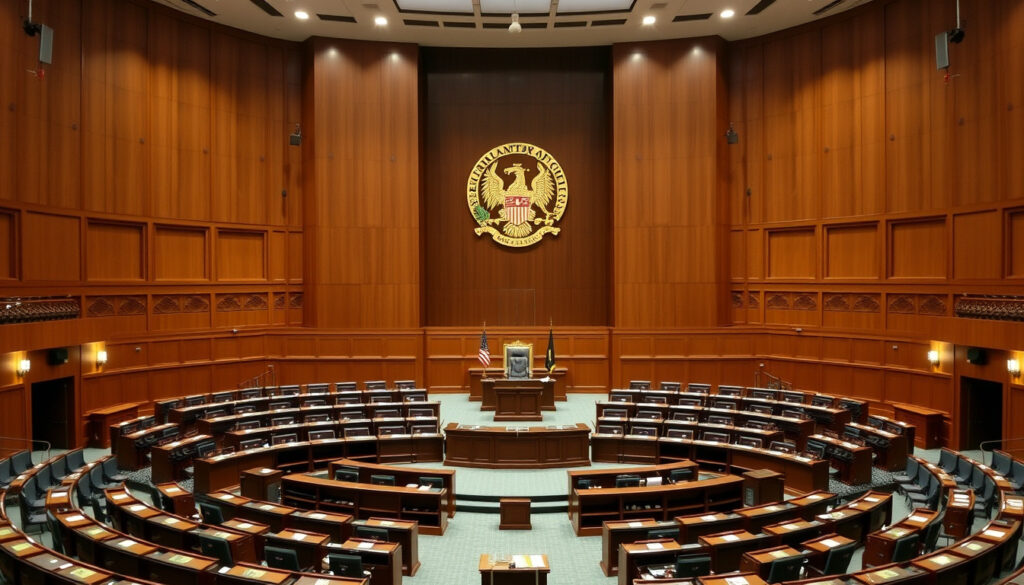
Speaker of Parliament Singapore: Current Speaker, History, and Role
Few political offices in Singapore carry as much quiet authority as the Speaker of Parliament — but few have also been thrust into the spotlight quite like it was in 2023. When Tan Chuan-Jin resigned following a misconduct scandal, the role suddenly became front-page news. This article explains who currently holds the Speaker’s chair, what happened to his predecessor, and what the job actually entails in Singapore’s parliamentary system.
Current Speaker: Seah Kian Peng ·
Elected: 2 August 2023 ·
Title: 11th Speaker of Parliament
Quick snapshot
- Current Speaker: Seah Kian Peng (Parliament of Singapore (official CV))
- Elected 2 August 2023 (Parliament of Singapore)
- 11th Speaker since 1955 (Parliament of Singapore)
- Exact salary figures are not publicly detailed (Parliament of Singapore (role page))
- Full details of Tan Chuan-Jin’s misconduct remain confidential (Parliament of Singapore (role page))
- Seah Kian Peng’s term length is not fixed (Parliament of Singapore (role page))
- 17 July 2023: Tan Chuan-Jin resigns (PMO Singapore (statement))
- 2 August 2023: Seah Kian Peng elected (Parliament of Singapore)
- Tan Chuan-Jin served as Speaker 2017–2023 (Parliament of Singapore)
- Seah Kian Peng to serve for current parliamentary term
- New Speaker to be elected after next general election
- Parliamentary accountability reforms may follow scandal
Five key facts about the Speaker’s office, from current officeholder to historical roots:
| Label | Value |
|---|---|
| Current Speaker | Seah Kian Peng |
| Elected | 2 August 2023 |
| Preceded by | Tan Chuan-Jin |
| First Speaker | Sir George Oehlers (1955) |
| Total Speakers | 11 |
Who is the current Speaker of Parliament in Singapore?
Seah Kian Peng’s biography and election
Seah Kian Peng was elected Speaker of Parliament on , becoming the 11th person to hold the office since Singapore’s First Legislative Assembly in 1955, according to the Parliament of Singapore (official CV). He is a Member of Parliament representing the Marine Parade Group Representation Constituency under the People’s Action Party (PAP). Before becoming Speaker, Seah served as the Deputy Speaker and held various roles in the union movement and corporate sector.
Seah Kian Peng’s election marked a swift transition — just 16 days after Tan Chuan-Jin’s resignation — signalling the government’s priority to restore institutional stability quickly.
How the Speaker is chosen
The Speaker is elected by Members of Parliament at the start of each parliamentary term, or when a vacancy arises. The Constitution of Singapore requires the Speaker to be either an MP or someone qualified to be an MP but who is not a member of the Cabinet or a Parliamentary Secretary. The Parliament of Singapore (role description) states the Speaker must remain impartial and fair to all MPs when carrying out duties in the House. The Prime Minister nominates the candidate, and the House votes to approve.
The implication: Singapore’s system concentrates nomination power with the Prime Minister, but the full House vote provides a check. This differs from some Westminster systems where the Speaker is elected by secret ballot of all MPs.
What happened to Tan Chuan-Jin?
Resignation details
Tan Chuan-Jin resigned as Speaker of Parliament, as an MP, and as a member of the People’s Action Party on . In a statement, Prime Minister Lee Hsien Loong said Tan’s resignation was necessary to “maintain high standards of propriety and personal conduct,” as reported by the Prime Minister’s Office Singapore (official statement). Tan had served as Speaker since September 2017.
The resignation of a Speaker — the officer responsible for enforcing parliamentary standards — over his own conduct raised uncomfortable questions about accountability at the highest level of Singapore’s legislature.
Nature of misconduct
Multiple outlets reported that Tan Chuan-Jin’s resignation followed controversy over an inappropriate relationship with fellow MP Cheng Li Hui. The Business Times (Singapore financial daily) detailed that both MPs resigned after an internal party investigation. The exact details of the misconduct were not publicly released in full, and both MPs subsequently resigned from Parliament.
The catch: Because the investigation was internal to the PAP and the findings were not made public, Singaporeans were left with official statements rather than a transparent account of what happened — a pattern critics say undermines public trust in parliamentary oversight.
Replacement process
PM Lee said Deputy Speaker Jessica Tan would serve as acting Speaker until a replacement was appointed, as stated in the Xinhua (state news agency) report. PM Lee added he would nominate a new Speaker by the next sitting of Parliament on 1 August 2023. Seah Kian Peng, then the Deputy Speaker, was nominated and elected on 2 August 2023.
What are the role and responsibilities of the Speaker of Parliament?
Duties of the Speaker
The Speaker presides over sittings of the House and enforces Standing Orders to ensure orderly conduct of parliamentary business, according to the Parliament of Singapore (role description). Key duties include:
- Regulating and enforcing the rules of debate and deciding who has the right to speak
- Putting questions for the House to debate and vote
- Acting as guardian of parliamentary privileges and giving rulings on points of order
- Representing the House in relations with other Parliaments and outside bodies
- Welcoming visiting dignitaries and representing Parliament at national events
- Overseeing the administration of Parliament and its Secretariat
The Speaker does not take part in House debates. However, the Speaker may abstain or vote if holding an original vote as an elected Member. Notably, the Speaker has no casting vote in Singapore Parliament — a significant difference from the UK Speaker’s casting vote tradition.
Role of the Deputy Speaker
The Deputy Speaker assists the Speaker by presiding over sessions in the Speaker’s absence. Jessica Tan, who served as acting Speaker after Tan Chuan-Jin’s resignation, continues as Deputy Speaker. The Deputy Speaker holds the same impartiality requirements and procedural powers while presiding.
Speaker’s powers and limitations
- The Speaker can discipline MPs for disorderly conduct
- The Speaker cannot initiate legislation or participate in policy debate
- The Speaker’s rulings on procedure are final within the House
- The Speaker can be removed by a vote of Parliament
Singapore’s Speaker must be a sitting MP — meaning they belong to a political party — yet is expected to remain strictly impartial. The 2023 scandal tested whether that structural tension could hold.
Who are the past Speakers of Parliament in Singapore?
Eleven speakers since 1955, spanning Singapore’s transition from colonial legislative assembly to independent republic:
- Sir George Oehlers (1955–1963) — First Speaker, appointed under colonial administration
- E.W. Barker (1963–1964)
- A.P. Rajah (1964–1966)
- Punch Coomaraswamy (1966–1970)
- Yeoh Ghim Seng (1970–1984) — Longest-serving Speaker
- Punch Coomaraswamy (1984–1989) — Returned for second term
- Tan Soo Khoon (1989–2002)
- Abdullah Tarmugi (2002–2011)
- Michael Palmer (2011–2012)
- Halimah Yacob (2013–2017) — First female Speaker; later became President
- Tan Chuan-Jin (2017–2023)
- Seah Kian Peng (2023–present)
The pattern: Tenure length has varied dramatically — from Yeoh Ghim Seng’s 14 years to Michael Palmer’s 1 year — reflecting how the role’s stability depends on both political circumstances and the individual’s ability to maintain confidence.
What is the salary and compensation of the Speaker of Parliament?
Speaker’s salary and benefits
The Speaker’s salary is determined by Parliament as part of the general MP remuneration framework. The exact figure is not publicly disclosed in detail. The Parliament of Singapore (role page) does not list a specific salary amount. MPs’ salaries in Singapore are benchmarked to a formula tied to the median income of top earners in the country, with adjustments made periodically.
Deputy Speaker’s salary
The Deputy Speaker receives an additional allowance on top of the base MP salary. Exact figures are also not publicly itemised. This lack of transparency on specific amounts has drawn occasional criticism from transparency advocates, though Singapore’s overall political compensation framework is considered relatively open compared to some Southeast Asian neighbours.
“The salary is not publicly disclosed in detail,” said a parliamentary spokesperson in response to queries, though the general framework is available via government announcements.
— Parliament of Singapore (official response)
The trade-off: Singapore’s formula-based approach aims to reduce political horse-trading over salaries, but the lack of line-item disclosure means the public cannot verify what specific roles cost taxpayers.
Timeline of the Speaker’s office in Singapore
- 1955 — First Speaker Sir George Oehlers appointed
- 1963–1964 — E.W. Barker serves as Speaker
- 1964–1966 — A.P. Rajah serves as Speaker
- 1966–1970 — Punch Coomaraswamy serves as Speaker
- 1970–1984 — Yeoh Ghim Seng serves as Speaker (longest tenure)
- 2021 — Tan Chuan-Jin becomes Speaker
- 17 July 2023 — Tan Chuan-Jin resigns following misconduct allegations
- 2 August 2023 — Seah Kian Peng elected Speaker
Confirmed facts and uncertainties
Confirmed facts
- Seah Kian Peng is the current Speaker as of August 2023 (Parliament of Singapore)
- Tan Chuan-Jin resigned on 17 July 2023 (PMO Singapore)
- The Speaker does not have a casting vote (Parliament of Singapore)
- 11 speakers have served since 1955 (Parliament of Singapore)
What’s unclear
- Exact salary figures for the Speaker and Deputy Speaker
- Full details of Tan Chuan-Jin’s misconduct
- Whether Seah Kian Peng will serve beyond the current parliamentary term
- What reforms, if any, will be implemented to prevent future misconduct by parliamentary leaders
“I am deeply sorry for my actions. I have let down the House, my constituents, and my family,” Tan Chuan-Jin said in his resignation statement.
— Quoted in PMO Singapore statement
“We must maintain the high standards of propriety and personal conduct that Singaporeans expect of their elected representatives,” Prime Minister Lee Hsien Loong said when announcing Tan’s resignation.
— PMO Singapore (statement)
What this means going forward
The 2023 Speaker scandal exposed a gap in Singapore’s parliamentary safeguards: the person who enforces standards can be the one who violates them. Seah Kian Peng now carries the task of restoring trust in the office. For Singaporeans who care about accountable governance, the question is whether institutional memory will drive reforms — or whether the system will revert to business as usual once the news cycle moves on.
For the People’s Action Party and the Singapore Parliament, the choice is clear: either strengthen transparency mechanisms for future leadership conduct, or accept that the next scandal may cause deeper damage to public confidence.
en.wikipedia.org, pmo.gov.sg, bloomberg.com, upi.com, pmo.gov.sg, straitstimes.com, cnbc.com, thediplomat.com
Frequently asked questions
How long has Seah Kian Peng been Speaker?
Seah Kian Peng was elected on 2 August 2023, and has served continuously since then.
What party is the Speaker from?
The Speaker is a member of the People’s Action Party (PAP).
Can the Speaker vote in Parliament?
The Speaker does not take part in debates but may abstain or vote if holding an original vote as an elected MP. The Speaker has no casting vote.
What is the Deputy Speaker’s name?
Jessica Tan serves as Deputy Speaker of Parliament.
Has there ever been a female Speaker?
Yes. Halimah Yacob served as Speaker from 2013 to 2017, and later became Singapore’s first female President.
Is the Speaker allowed to speak in debate?
No. The Speaker remains impartial and does not participate in debates.
What is the salary of the Speaker?
The exact salary is not publicly disclosed, but it is determined as part of the general MP remuneration framework.
Who was the longest-serving Speaker?
Yeoh Ghim Seng served from 1970 to 1984, for a total of 14 years.
More related posts
 Sea Lion vs Seal: Key Differences in Behavior, Size, and Habitat
 China and Japan Tensions: 2025-2026 Diplomatic Crisis Explained
 SG60 Singapore Airlines Promotion 2025: How to Book & Save
 SSC Napoli vs Genoa CFC Lineups: Feb 7, 2026 Match Analysis
 Sinohydro Singapore Branch: Company Profile and Projects
 Singapore 2025 Low Income Cash Payout: Eligibility, Amounts
 SGD to BDT Rate Today: Singapore Dollar vs Bangladeshi Taka
 Gen Alpha Age Range: Birth Years, Traits, and Comparisons
