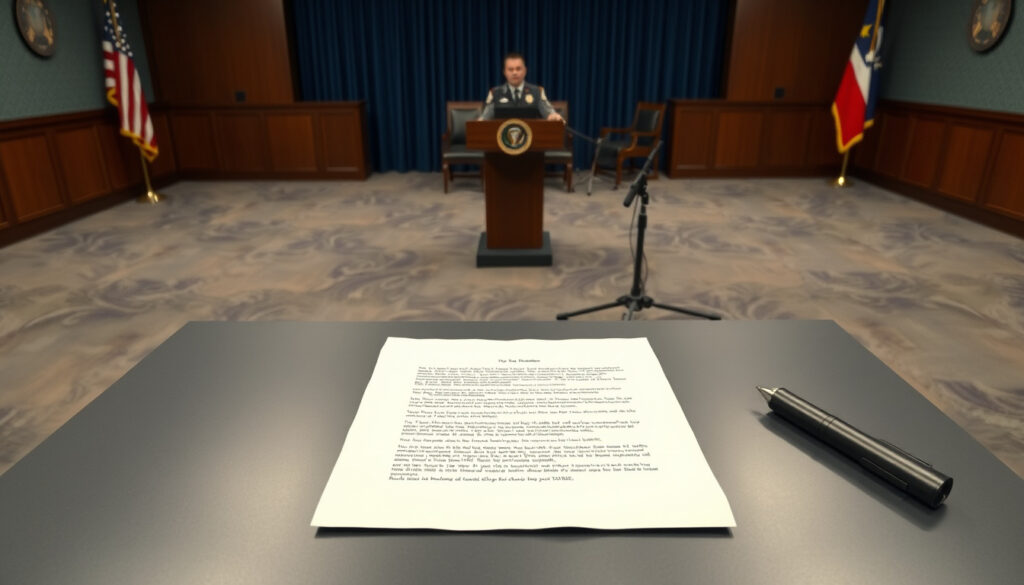
Kenneth Tiong Apologizes to Chee Hong Tat Over ‘Stupid’ Remark
Some apologies in Parliament are quiet procedural footnotes. Kenneth Tiong’s was not. On 5 November 2025, the Workers’ Party MP withdrew the word “stupid,” absorbed a rebuke from the Speaker, and apologised to National Development Minister Chee Hong Tat — all in the same sitting. The clash grew out of a debate on family-office tax incentives and Singapore’s approach to financial risk, and it ended the way such episodes usually do: with a formal apology, an accepted handshake, and a rule everyone already knew.
Incident Date: 5 November 2025 ·
Apologizing MP: Kenneth Tiong (Workers’ Party) ·
Minister Involved: Chee Hong Tat (Minister for National Development) ·
Context: Parliamentary debate on financial system risks ·
Outcome: Formal apology issued and accepted
Quick snapshot
- Tiong used the word “stupid” about Chee’s question during the 5 November sitting (CNA (Singapore news broadcaster))
- The Speaker called the remark “quite insulting” and reprimanded Tiong (CNA’s parliamentary video)
- Chee accepted the apology before the exchange closed (CNA (local news authority))
- Whether any further parliamentary or party-level review of Tiong’s conduct follows
- What precisely drove Tiong to describe the minister’s question as “not meaningful”
- The remark, the reprimand, and the apology all took place inside one sitting on 5 November 2025 (CNA’s account)
- MAS has cancelled tax incentives for two family offices linked to Prince Holding Group (Monetary Authority of Singapore (central bank))
- The “risk-proportionate” versus zero-risk regulatory debate continues (Mothership’s account)
Ten facts, one pattern: a single word escalated a financial-policy debate into a formal test of parliamentary discipline.
| Item | Detail |
|---|---|
| Person 1 | Kenneth Tiong |
| Role | Workers’ Party Member of Parliament, Aljunied GRC (The Straits Times (Singapore’s paper of record)) |
| Person 2 | Chee Hong Tat |
| Role | Minister for National Development |
| Incident Date | 5 November 2025 (The Straits Times (Singapore news report)) |
| Context | Debate on financial system risks and family-office tax incentives (MAS reply) |
| Regulatory trigger | US sanctions on Prince Holdings; two single family offices linked to the group (MAS (policy reply)) |
| The remark | Called Chee’s question “stupid” |
| Speaker’s assessment | “Quite insulting” and “beneath the dignity of the House” (CNA video) |
| Resolution | Apology issued by Tiong, accepted by Chee (CNA) |
What did Kenneth Tiong say?
The exchange was brief, but it moved through four moments: the remark, the pushback, the reprimand, and the apology.
The exact quote
In Singapore’s Parliament, “stupid” is not treated as a slip of the tongue. The Speaker’s language rules classify insulting remarks as conduct that undermines the House — which is why a single adjective produced a formal rebuke.
- Tiong called Chee’s question “stupid” during the debate (CNA’s parliamentary video)
- Chee replied that the word was “not quite appropriate” in Parliament (The Straits Times (Singapore’s paper of record))
- Tiong withdrew the word “stupid” but maintained the question was “not meaningful” (CNA (Singapore news broadcaster))
- Speaker Seah Kian Peng said the remark was “quite insulting and beneath the dignity of the House” (CNA’s video of the sitting)
Tiong’s first move was a partial withdrawal: he removed the word without removing the criticism. The Speaker’s intervention made clear that the adjective was not the real issue — the insult itself was.
The pattern: a withdrawal that preserves the insult is not a withdrawal at all. The reprimand forced the apology to become unconditional.
Context of the parliamentary debate
- MAS identified two single family office funds with tax incentives linked to Cambodia’s Prince Holding Group and its founder Chen Zhi (CNA (Singapore news broadcaster))
- The tax incentives for both entities were cancelled, following US sanctions on Prince Holdings (Monetary Authority of Singapore (central bank))
- Chee argued that Singapore takes a risk-proportionate, not zero-risk, approach to maintaining high regulatory standards (Mothership (Singapore news outlet))
Singapore’s high-trust financial model depends on exactly the kind of scrutiny Tiong tried to mount — but when scrutiny turns into insult, the regulator’s message gets buried under the conduct story.
Chee’s broader point was that regulators should respond to identified threats rather than ban whole categories of activity. Tiong’s question challenged whether that approach was strict enough. The substance was a legitimate policy dispute; the delivery, at least at that moment, was not.
Where is Chee Hong Tat now?
Chee Hong Tat remains a full Cabinet minister. He is the Minister for National Development, a portfolio he has held since 2024 (Wikipedia (biographical reference)).
Current role: Minister for National Development
- Chee is Singapore’s Minister for National Development as of 2025 (CNA (local news authority))
- He is a member of the People’s Action Party (Wikipedia (biographical reference))
His portfolio sits at the intersection of housing, land use, and urban planning — not directly the subject of the family-office exchange, which is why the incident stood out: the question was about financial regulation, but the sharp words landed on a minister who answers for a different domain.
The implication: Tiong’s remark was aimed at the messenger, not just the message. That made the apology about respect for office, not about conceding the policy point.
Previous ministerial positions
- Chee previously served as Minister for Transport (Wikipedia’s biography of Chee)
- He has held multiple full ministerial positions since entering the Cabinet (Wikipedia (biographical reference))
That record matters to this episode: when Tiong’s word reached a minister with Chee’s depth of frontbench experience, the House’s reflex was to protect the institution, not the individual.
What this means: the rebuke was not a senior minister shielding a junior one — it was an institution enforcing the standard every MP, including Tiong, is expected to meet.
Is Chee Hong Tat a minister?
Yes. Chee Hong Tat is a full minister in Singapore’s Cabinet, not a minister of state or a parliamentary secretary.
Current portfolio
- Minister for National Development (CNA (Singapore news broadcaster))
- A full Cabinet member who answers for his ministry in Parliament (Prime Minister’s Office (official government site))
Appointment history
- Appointed to the National Development portfolio in 2024 (Wikipedia (biographical reference))
- Previously appointed Minister for Transport before the 2024 reshuffle (Wikipedia’s biography)
In Singapore’s parliamentary system, full ministers sit in the Cabinet and their answers carry the government’s authority. The distinction matters for this episode: an apology to a full minister is an institutional acknowledgment, not a personal nicety.
The answer is yes — and the fact that the question keeps coming up after the apology reflects how quickly ministerial portfolios shift in Singapore’s compact political structure.
What happened to Goh Chok Tong?
Goh Chok Tong is not connected to the 5 November exchange, but he remains part of the institutional memory of Singapore’s Parliament: a former prime minister who stayed on in Cabinet after stepping down, reinforcing the continuity that makes today’s decorum rules feel settled.
Post-Prime Minister career
- Goh was Singapore’s second Prime Minister, serving from 1990 to 2004 (Wikipedia (biographical reference))
- Lee Hsien Loong succeeded him in 2004 (Wikipedia’s biography of Goh)
- Goh stayed on as Senior Minister before stepping down after the 2011 election (Wikipedia (biographical reference))
Where Goh stands today
- Goh holds the title Senior Minister Emeritus (Wikipedia (biographical reference))
- The title recognises his post-Prime Minister service without carrying Cabinet authority (Wikipedia’s biography)
The link to the Tiong episode is structural: the Parliament that reprimanded Tiong is the same institution Goh helped mature. Its conventions — ministers answer questions, the Speaker polices language, apologies close breaches — were built through decades of practice.
What this means: the rules that caught Tiong’s word were not invented on 5 November. They are the settled architecture of Singapore’s House.
Who is higher, president or prime minister in Singapore?
The short answer: the Prime Minister holds executive power. The President is the head of state with ceremonial duties and specific custodial powers.
Head of state vs. head of government
- The President is Singapore’s head of state (Wikipedia (government overview))
- The Prime Minister is the head of government and leads the Cabinet (Wikipedia (government overview))
- Executive power sits with the Prime Minister and the Cabinet in Singapore’s parliamentary system (Prime Minister’s Office (official government site))
Executive powers
- The Prime Minister sets the government’s agenda and commands the confidence of Parliament (Wikipedia’s overview of the PM)
- The President holds custodial powers, particularly over national reserves and key public appointments (Wikipedia’s overview of the President)
- In the Tiong exchange, the deciding authority was neither — it was the Speaker, who ruled on the conduct (CNA’s parliamentary video)
For a reader following this incident, the hierarchy between President and Prime Minister matters less than the referee. The Speaker’s ruling is what turned a word into a withdrawal, and a withdrawal into an apology.
Singapore separates head of state from head of government, but inside the Chamber the highest authority is the Speaker — and on 5 November, he used it.
The practical order inside the Chamber was visible that day: the Speaker moved first, the minister responded, and the MP apologised — which is the hierarchy that mattered at that moment.
Timeline: how the exchange unfolded
One sitting, four beats: the clash moved from remark to reprimand to apology without leaving the chamber.
| Date | Beat | What happened | Reference |
|---|---|---|---|
| 5 November 2025 | The remark | Tiong called Chee’s question “stupid” | The Straits Times |
| 5 November 2025 | The pushback | Chee said the word was “not quite appropriate” | The Straits Times |
| 5 November 2025 | The ruling | Speaker Seah reprimanded Tiong | CNA |
| 5 November 2025 | The apology | Tiong apologised; Chee accepted | CNA |
The timeline’s signal: the Speaker did not wait for a complaint. He intervened directly, which indicates the phrase crossed a line the House treats as serious.
Confirmed facts vs. what’s still unclear
Confirmed facts
- Tiong made the remark and apologised on 5 November 2025 (The Straits Times)
- The Speaker reprimanded Tiong on the same day (CNA)
- Chee accepted the apology before the sitting ended (CNA)
- MAS cancelled the tax incentives for the two family offices (Monetary Authority of Singapore)
What’s still unclear
- Whether any further disciplinary or party-level review of Tiong follows the reprimand
- Whether the Workers’ Party will issue an additional public statement on the episode
- The full transcript wording of the apology before it appears in the official record
The asymmetry here is the story: what’s confirmed is a complete record of a single day; what’s unclear is everything after it.
In their own words
Three statements capture how the House recalibrated after the word landed.
“Quite insulting and beneath the dignity of the House.”
— Speaker of Parliament Seah Kian Peng, describing Tiong’s remark (CNA’s parliamentary video)
“Using the word ‘stupid’ was not quite appropriate in Parliament.”
— Minister Chee Hong Tat, in response to Tiong (The Straits Times’ report)
“Future discussions should be conducted in a civilised and polite manner and a respectful manner.”
— Minister Chee Hong Tat, after accepting the apology (CNA’s account)
The striking part: in the recorded accounts, nobody defends the word “stupid.” The only disagreement was about how quickly and completely it had to be undone.
What this apology changes
For the Workers’ Party, the episode is a reminder that hard scrutiny has a price: once the language turns personal, the scrutiny itself becomes the story. For Chee Hong Tat, the accepted apology closes the exchange while setting a quiet precedent — ministers can insist on civility without conceding the policy point. For Kenneth Tiong, the implication is clear: keep the sharp questions and drop the sharp adjectives, or prepare for another conversation with the Speaker.
Related reading: Kenneth Tiong apologises to Chee Hong Tat over ‘stupid question’ comment in Parliament · Speaker reprimands Kenneth Tiong, Tiong apologises for ‘stupid question’ remark
mothership.sg, mothership.sg, sg.news.yahoo.com, parliament.gov.sg, wp.sg, parliament.gov.sg, straitstimes.com, straitstimes.com
Frequently asked questions
What exactly was the “stupid question” exchange?
During the 5 November 2025 sitting, Tiong called Chee’s question “stupid.” Chee said the word was “not quite appropriate.” Tiong withdrew the word, the Speaker reprimanded him, and Tiong apologised (The Straits Times).
Why did Kenneth Tiong apologize?
Because the Speaker ruled the remark “quite insulting and beneath the dignity of the House.” Under the rules of Singapore’s Parliament, MPs cannot use offensive language in debate, and the Speaker can require a withdrawal and an apology (CNA’s parliamentary video).
What was the policy context behind the clash?
The debate covered family-office tax incentives cancelled by MAS after links emerged to Prince Holding Group and US sanctions. Tiong pressed on whether Singapore’s “risk-proportionate” approach was robust enough (Monetary Authority of Singapore).
Did Chee Hong Tat accept the apology?
Yes. CNA’s report from the sitting says Chee accepted Tiong’s apology before the exchange closed (CNA).
What are Singapore’s parliamentary decorum rules?
Singapore’s Standing Orders and the Speaker’s rulings prohibit offensive or insulting language. The Speaker reminded MPs of those rules after the 5 November incident and can order a withdrawal and apology when words cross the line (CNA’s report of the reprimand).
Has a similar incident happened before in Singapore Parliament?
Speakers have repeatedly ruled on unparliamentary language, and the 5 November reminder sits within that history. Each episode is judged on its own facts, with withdrawal and apology the standard remedies (CNA).
Has Chee Hong Tat held other ministerial portfolios?
Yes. Chee previously served as Minister for Transport before moving to the National Development portfolio (Wikipedia).
What is Kenneth Tiong’s role in the Workers’ Party?
Tiong is a Workers’ Party Member of Parliament for Aljunied GRC (The Straits Times).
These answers provide a clear overview of the most common questions surrounding the incident.
More related posts
 Wedding Car Rental Singapore: Prices & Top Reviews
 Soo Kee Jewellery Employee Fraud: Case, Signs & Prevention
 Shakespeare in the Park 2026: Free NYC Tickets Guide
 BitMine Immersion Technologies (BMNR): Buy or Sell
 Lucky Plaza Money Changer: Best Rates, Locations & Tips
 SSC Napoli vs Genoa CFC Lineups: Feb 7 Match
 GST in Singapore 2025: 9% Rate, Refund & Calculation
 Kate Spade New York: Is It Luxury? Comparisons & Facts
